

The speech that María Corina Machado was unable to deliver in Oslo, due to being in hiding because of persecution by the Nicolás Maduro regime, was given by her daughter, Ana Corina Sosa Machado, and included one of the most poignant moments. It recounted the Venezuelan opposition leader's encounter with Colombian guerrillas in Delicias, a hamlet in Táchira state marked by armed control.
Sosa Machado recounted an episode that occurred during his mother's campaign, when, he said, they arrived in Delicias,"a small hamlet taken over by the Colombian guerrillas and drug traffickers, where not even a chicken can be sold without the criminals' permission."
Delicias, located in the municipality of Pedro María Ureña and a few kilometers from the border with Norte de Santander, has been marked for years by the presence of the ELN and FARC dissidents who operate in irregular crossings and smuggling corridors.
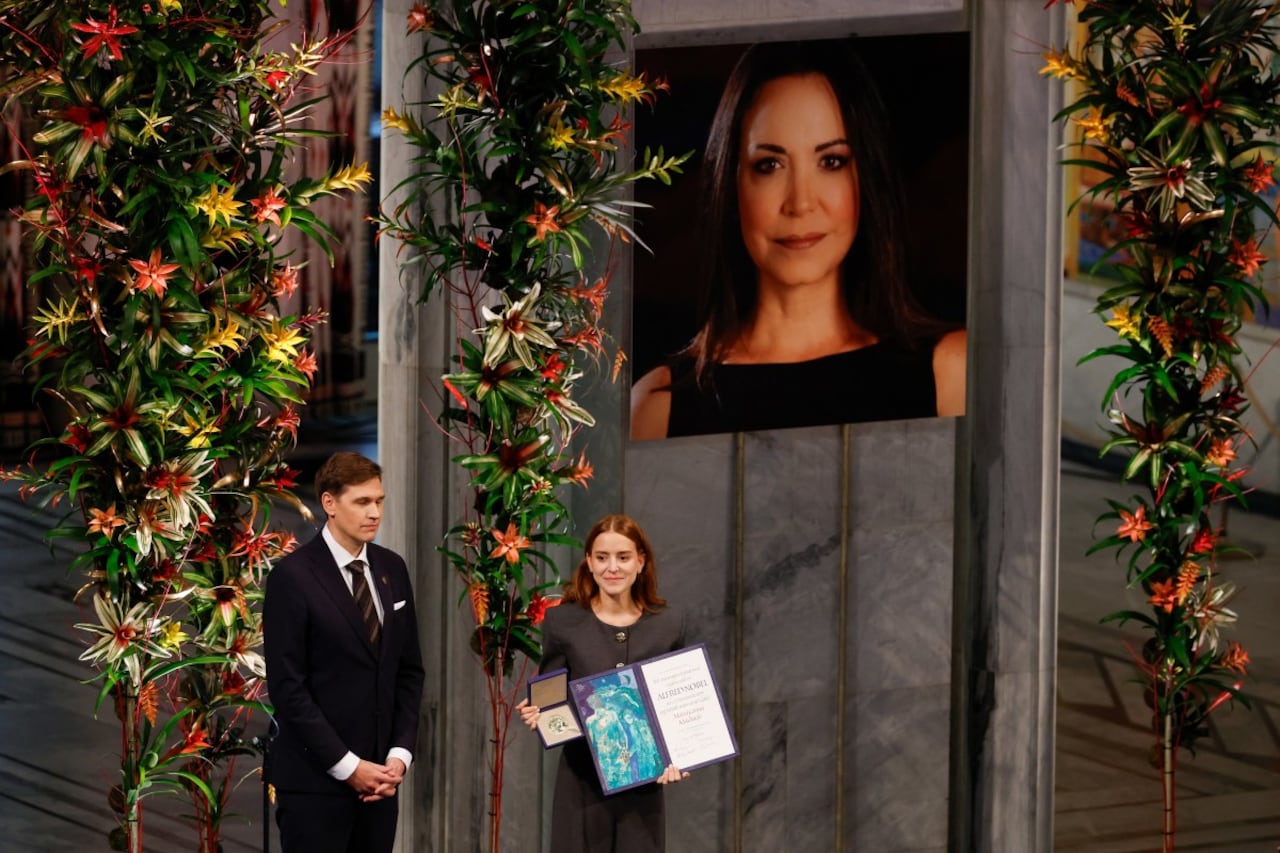
The speech recounted that no candidate had visited the area since 1978.
“As we climbed the mountain, I saw Venezuelan flags waving from each of those humble houses. I asked, naively, if it was a national holiday. Someone whispered to me, ‘No. Here the flag is kept hidden. Bringing it out is dangerous. Today people raised it to thank you for daring to come,’” said her daughter, quoting Machado’s testimony.
The episode included a moment that the leader herself described as decisive, when families from the hamlet confronted the armed groups that dominated their lives.
Then, they sang the national anthem together with her, a gesture that Sosa Machado defined as"a fragile and defiant act of sovereignty in an area where fear has reigned for years."
The reading also emphasized that those journeys transformed the campaign into “intimate gatherings of thousands of people” who, amidst hugs, prayers, and tears, understood that “the struggle was not only electoral, but ethical, existential, and spiritual.” With one year to go before the presidential elections that the Nicolás Maduro regime stole, Sosa Machado said, the challenge was to unite democratic forces and restore confidence in the vote.
The primaries achieved that goal, she said, by building an unprecedented citizen network in Venezuela that gave the opposition leader the victory, who was later sanctioned by the regime.
SEMANA continues its coverage from Oslo, Norway, with special correspondent Salud Hernández-Mora, who stated that, regarding the award ceremony, “the most important thing about the prize, the most important thing, is to put the case of Venezuela back in the global spotlight. That the world realizes what is happening in Venezuela, that there has been a dictatorship for years and that the people, as María Corina says, have been crying out for freedom for years.”