Go to latest
Here is the latest this evening
By Chris Paine
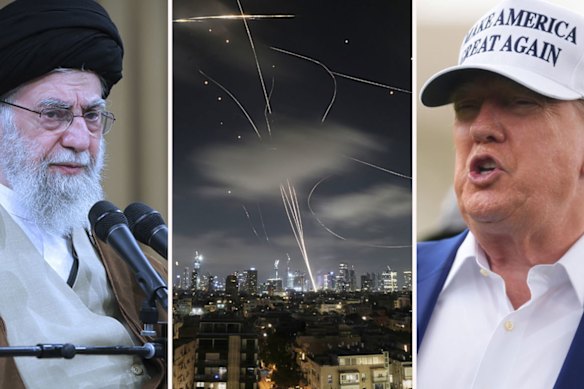
The United States has launched a heavy military assault on three nuclear sites in Iran, bringing the country directly into a conflict that threatens to escalate through the region.
US President Donald Trump said in an address to the nation that nuclear facilities in Natanz, Isfahan and – crucially – Fordow, the “nuclear mountain” that could only be penetrated by American military technology, had been “completely and totally obliterated”.
Trump said he hoped that Iran would now engage in peace talks but also threatened any retaliatory action would be met with force and lead to “tragedy for Iran far greater than we have witnessed over the last eight days”.
- What comes next? Iran has threatened to withdraw from the Nuclear Non-proliferation Treaty, while the Pentagon is set to hold a briefing tonight about 10pm AEST. The International Atomic Energy Agency has called an emergency meeting as fears grow of escalation in the Middle East. As for Trump? North America correspondent Michael Koziol writes: “Despite his declaration of success, it is too soon to tell whether this was a masterstroke or a mistake.”
- How will Iran respond? The regime has threatened a full and ferocious response with “everlasting consequences”, and had already flagged its intention to target US military and diplomatic sites. However, Iran’s options are limited, according to Middle East and security analyst Rodger Shahanan, who writes: “It is relatively weak militarily and Israel has air supremacy. Iran’s armed non-state supporting actors have either been degraded, or internal political or broader national considerations have forced them to critically re-evaluate that support.”
- What about the enriched uranium? A senior Iranian source has told Reuters that most of the highly enriched uranium had been removed from the Fordow nuclear facility before the US attack. Experts meanwhile have said chemical contamination was the most likely consequence of damage to Iranian nuclear facilities and the prospect of nuclear fallout or widespread contamination was low. More on this from science reporter Angus Dalton, here.
Map: Nuclear sites hit by US military bombing raid
Watch: Donald Trump’s address to the nation
Stay with us as we bring you the latest developments.
7.55pm
Iran’s top diplomat will meet Putin tomorrow
By Chris Paine
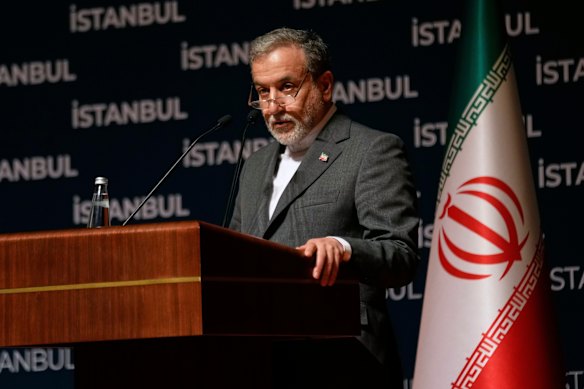
Iranian Foreign Minister Abbas Araghchi has revealed he will meet with Russian President Vladimir Putin tomorrow in Moscow.
Araghchi announced the meeting during a press conference he was giving in Istanbul, during which he repeatedly condemned the US strikes on three nuclear sites in Iran and threatened retaliatory strikes.
I will have serious consultations with the Russian President tomorrow, and we will continue to work with each other.”
This is significant because of Russia’s close ties to Iran. Indeed, political and international editor Peter Hartcher describes Putin’s Russia as “the most important foreign sponsor of Iran’s ayatollah regime”.
Russia has long supplied Iran with weapons and air defence systems, while Iran has given Russia thousands of drones for its war against Ukraine.
7.40pm
US ‘fully responsible’ for consequences of its strikes, Iran warns
By Chris Paine
Iran’s top diplomat is giving a press conference in Istanbul, condemning the US military action on three nuclear sites in his country.
Foreign Minister Abbas Araghchi said the US was “fully responsible” for the consequences of its actions and that “there was no red line they have not crossed”.
The warmongering, a lawless administration in Washington is solely and fully responsible for the dangerous consequences and far-reaching implications of its act of aggression.”
He also said diplomacy at this stage was not an option, having earlier accused the US and Israel of “blowing up” diplomatic efforts sought through recent rounds of negotiations.
My country has been under attack, under aggression, and we have to respond based on our legitimate right of self-defence.”
7.25pm
Satellite images show damage to Fordow nuclear site
We’re getting our first look at damage to Fordow, the underground nuclear facility targeted by the US overnight.
Satellite images by Planet Labs PBC, analysed by the Associated Press, show damage to the entryway. They also appeared to show damage to the mountain itself that Fordow is under.
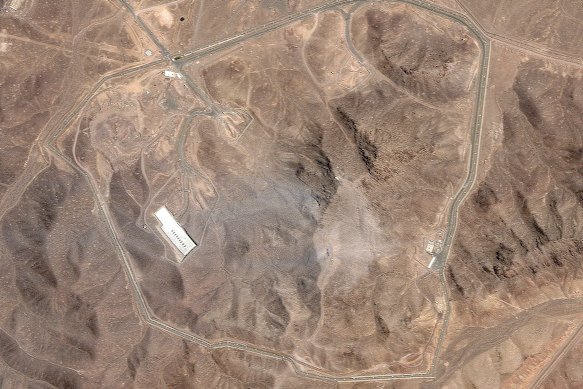
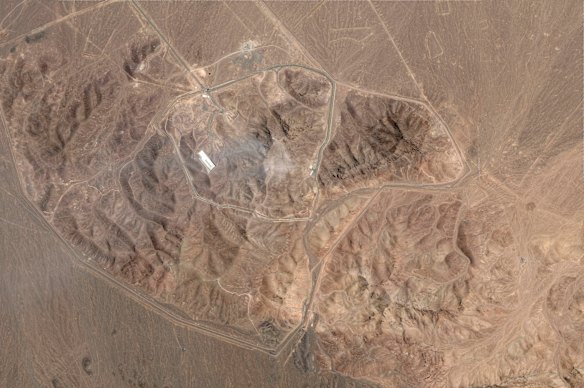
Sealing those entry tunnels means Iran would have to dig out the facility to reach anything inside.
The once-brown mountain had parts turned grey, and its contours appeared slightly different than in previous images, suggesting a blast threw up debris around the site. That suggests the use of specialised American bunker-buster bombs on the facility. Light grey smoke also hung in the air.
Iran has yet to offer a damage assessment of the site.
7.12pm
How world leaders are reacting
United Nations Secretary-General Antonio Guterres
This is a dangerous escalation in a region already on the edge – and a direct threat to international peace and security. There is a growing risk that this conflict could rapidly get out of control – with catastrophic consequences for civilians, the region, and the world.”
Israel Prime Minister Benjamin Netanyahu
History will record that President Trump acted to deny the world’s most dangerous regime the world’s most dangerous weapons.”
Australian government
The security situation in the region is highly volatile. We continue to call for de-escalation, dialogue and diplomacy.”
Prime Minister of the United Kingdom Keir Starmer
Iran can never be allowed to develop a nuclear weapon and the US has taken action to alleviate that threat. The situation in the Middle East remains volatile, and stability in the region is a priority.”
European Union foreign policy chief Kaja Kallas
Iran must not be allowed to develop a nuclear weapon, as it would be a threat to international security. I urge all sides to step back, return to the negotiating table and prevent further escalation.”
7.04pm
Israel recovers remains of three hostages from Gaza
The Israeli military says it has recovered the remains of three hostages held in the Gaza Strip.
It identified them as Yonatan Samerano, 21; Ofra Keidar, 70; and Shay Levinson, 19.
All three were killed during Hamas’ October 7, 2023, attack into Israel that ignited the ongoing war. The militant group is still holding 50 hostages, less than half of them believed to be alive.
6.49pm
US and Israel ‘blew up diplomacy’, Iran claims
Iran’s foreign minister Seyed Abbas Araghchi has not minced his words in his latest public statement.
He’s accused both Israel and the United States of breaching the diplomatic spirit of recent negotiations.
5.51pm
Iran calls for investigation into US strikes
By Reuters
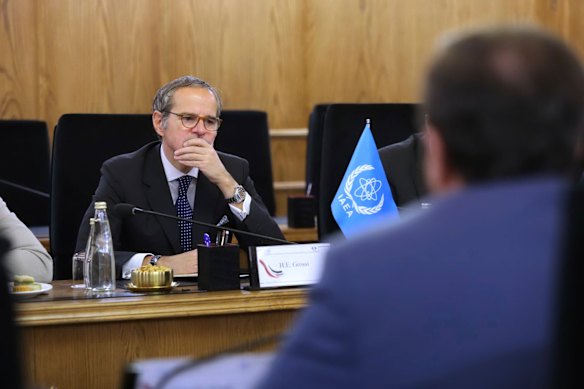
Iran wants an investigation of the US strikes on its nuclear sites, its nuclear chief Mohammad Eslami said in a letter to International Atomic Energy Agency chief Rafael Grossi, urging him to condemn the US action and take appropriate measures, according to Iran’s SNN news network.
Eslami criticised Grossi for his “inaction and complicity”, and added that Iran would pursue appropriate legal measures to tackle the matter.
Grossi said on Sunday that he was calling an emergency meeting of his agency’s 35-nation Board of Governors after the US said it carried out military strikes on Iranian nuclear facilities.
5.45pm
Iran’s talking tough. But the regime’s out of options
By Rodger Shanahan
In the end, Israel’s leader Benjamin Netanyahu got what he wanted – the United States involved in his aerial campaign against Iran. And in a timeframe determined by Israeli, rather than US, calculations.
It is an extraordinary turn of events. Neither the International Atomic Energy Agency nor America’s own Director of National Intelligence Tulsi Gabbard supported Netanyahu’s claim about the “golden information” possessed by Israel indicating an imminent threat posed by any weaponised nuclear program.
Yet, US President Donald Trump has variously told reporters not to listen to Gabbard, and later simply that “she’s wrong”. Once again, the White House has committed its forces to a conflict in the Middle East without making the case as to why it needed to.
The world now waits for Iran’s response to the attacks by the US. Its options are limited. It is relatively weak militarily and Israel has air supremacy. Iran’s armed non-state supporting actors have either been degraded – as is the case with Lebanese Hezbollah – or internal political or broader national considerations have forced them to critically re-evaluate that support. A wariness about Trump’s unpredictability also makes support for Iran more challenging than was the case before October 7, 2023.
Read Rodger Shanahan’s full opinion piece here.