

Talks between Israel and the terrorist organization Hamas have repeatedly failed. Now the first phase of the plan is underway, and Trump is portraying himself as a peacemaker. But how did the agreement come about?
US President Donald Trump promised reporters on Thursday that the hostages could be returned to their families on Monday or Tuesday. The whole process, he said, was a complicated one. But the good news is that many Arab countries are supporting him – from Qatar to Saudi Arabia to the United Arab Emirates.
A 20-point plan published by Trump at the end of September finally brought about the breakthrough. A key accompanying confidence-building measure that wasn't even included in the 20 points was a public apology by Israeli Prime Minister Benjamin Netanyahu to Qatar for the Israeli airstrike on Doha. It targeted Hamas leaders and killed six people, including a Qatari security official.
Israel's attack on Doha as a turning point
This attack likely marked the turning point in relations between Trump and Netanyahu. Qatar is a US ally and important trading partner. While Trump has a lot of sympathy for Netanyahu, he's also a businessman, Gershon Baskin emphasized on NPR radio. Baskin is a hostage negotiator and was involved in the talks on the agreement. The Israeli peace activist was in constant, close contact with Hamas. The attack on Doha suddenly jeopardized US relations with its Arab partners, he said.
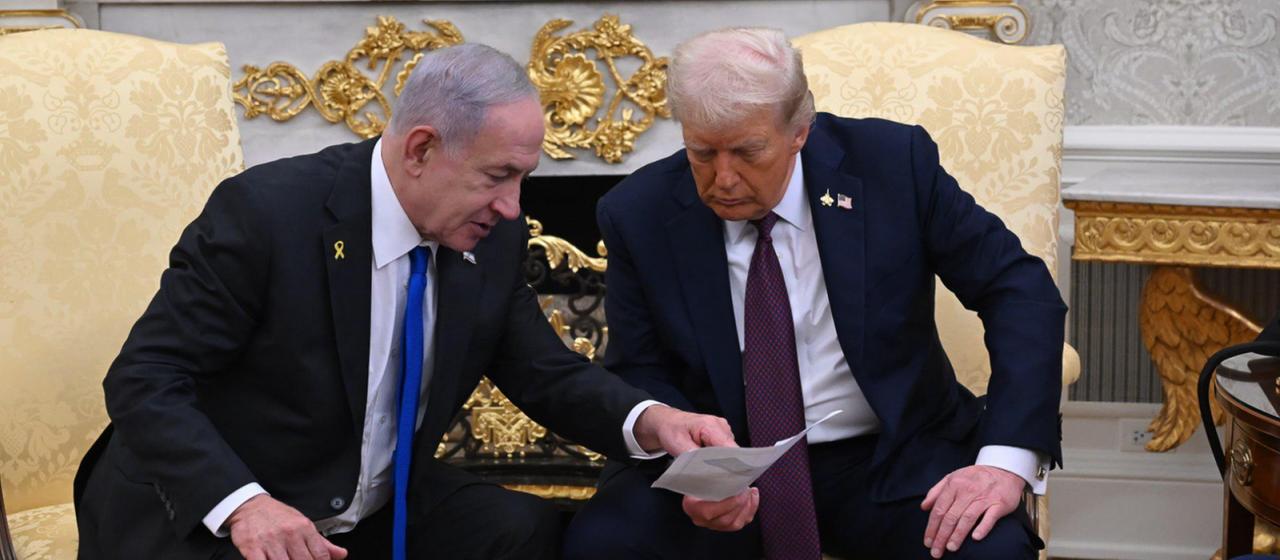
The images of the phone call in the Oval Office speak volumes: With a grim expression, Trump listens to Netanyahu's apology while still holding the phone in his lap. Jonathan Rynhold, political scientist at Bar Ilan University, also considers this call a turning point in the struggle for a ceasefire in the Gaza Strip. At the same time, Trump had signed an executive order with a security guarantee for Qatar.
In the phone call, Netanyahu had to declare that Israel would not carry out any further attacks on Qatar. Rynold is convinced that this strengthened Hamas's confidence that the ceasefire would remain in place even after the hostages were released.
Pressure on Hamas and Israel
Without Trump and his special envoy Steve Witkoff, this agreement would not have been possible, says mediator Gershon Baskin. Hamas's distrust of Israel was too great. Baskin repeatedly told Hamas that they had to imagine they weren't sitting in the same room with Netanyahu, but with Trump.
He was ultimately able to convince the Hamas negotiating delegation that Trump would force a deal on Israel when the time was right. That is, Trump was convinced that Hamas was serious about ending the war, returning the hostages, and relinquishing control of the Gaza Strip.
Trump has influence on Netanyahu
Whether the ceasefire will hold is uncertain. Nevertheless, the question remains as to why former President Joe Biden was never this close to a ceasefire. There's a very clear reason for this, says Baskin: Biden never had the influence over Netanyahu that Trump does.
Trump wants to go down in history as a peace president. He has made this clear time and again. And, as he himself says, he was personally heavily involved in the negotiations. Whether his plan will work remains to be seen in the coming days and weeks.