

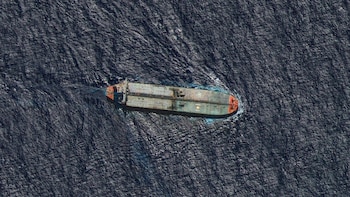
A US military operation culminated this week with the seizure of the Venezuelan oil tanker Skipper off the coast of Venezuela. The vessel, loaded with nearly two million barrels of Venezuelan crude and registered to Triton Navigation Corp. in the Marshall Islands, represented a central link in the energy and financial cooperation network between the regime of Nicolás Maduro and that of Cuba, according to investigations cited by The New York Times and The Economist.
The Skipper set sail on December 4 with its cargo of heavy crude oil from Venezuela. Internal documents from Petróleos de Venezuela S.A. (PDVSA) and statements from oil industry officials collected by The New York Times identify the vessel's declared destination as the Cuban port of Matanzas, under a joint contract between Cubametales, the Cuban state-owned trading company, and a company linked to Panamanian businessman Ramón Carretero.
This businessman, sanctioned by the United States Treasury Department, has handled a substantial fraction of the flow of crude oil between Caracas and Havana, facilitating operations that, in many cases, circumvent the traditional international market.
According to data presented in The New York Times, Carretero's firms have managed up to a quarter of the crude oil exported by PDVSA, while Cubametales obtained contracts for about 65,000 barrels per day so far this year, a figure that grew 29% compared to 2024 and far exceeds the purchases of the previous year.
The Skipper's transit included the transfer of a modest amount of crude oil—50,000 barrels—to the Neptune 6, which then headed for Cuba, according to maritime data firm Kpler. The remainder of the Skipper's cargo, however, was destined for Asia, a common practice: some of the oil supposedly intended for the island ends up being resold in the Asian market, particularly in China, to obtain essential foreign currency that alleviates the Cuban regime's economic situation.
The seizure operation took place on December 10, when elite US troops boarded the Skipper from Black Hawk helicopters. The Economist reported that there were no clashes and that the crew, composed mostly of Russian sailors, offered no resistance.
The US government announced that the seizure of the tanker was part of its sanctions policy against the Maduro regime and its allies. US Attorney General Pam Bondi asserted that the action was justified because the vessel was transporting Venezuelan and Iranian crude oil in violation of sanctions, while President Donald Trump stated, “It was seized for a very good reason,” and estimated the value of the crude oil at around $80 million.
Cuban regime authorities described the seizure as an “act of piracy and maritime terrorism,” denouncing the policy as an attempt to obstruct the exchange of energy resources between Venezuela and Cuba. Caracas declared the intervention another instance of what it considered “piracy” and “kidnapping” in international waters by Washington.
The White House and US officials told The Economist that the action on the Skipper will not be the last, adding that there are plans to seize other vessels involved in the Venezuelan oil export network.
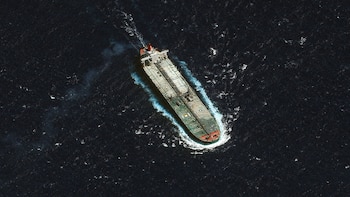
The deployment of a US naval force in the Caribbean is officially presented as part of a campaign against drug trafficking, but sources cited by The Economist also link this deployment to pressure for Maduro's removal from power. In this regard, experts consulted, such as Francisco J. Monaldi of Rice University, highlight the operation of a fleet of"ghost ships" linked to Venezuela, Iran, and Russia. These vessels have been operating since 2019 with changing names and flags, deactivated transponders, and ownership registered to shell companies, making them difficult to track and allowing them to circumvent trade sanctions.
The cost of these maneuvers for the Venezuelan regime is projected in the increased freight rates and commissions for the intermediaries who operate these vessels, whose risk premiums rise with each new operation. Businesspeople collaborating with the Venezuelan regime, interviewed by The Economist, estimate that this price increase could further reduce PDVSA's profit margin and complicate access to buyers willing to assume increased legal and financial risks. For months, the Venezuelan state-owned company has demanded advance payment for cargo before the ships sail, a condition that, after the Skipper incident, few intermediaries would accept without greater guarantees.
US sanctions and operations affect not only the Venezuelan economy, but also the Cuban economy, given the island's energy dependence. The New York Times documented that Venezuelan crude shipments are insufficient to resolve supply crises and blackouts in Cuba, although they remain a decisive factor in the political and financial survival of the Havana regime.
The operation, according to analysts cited by both media outlets, also marks a new episode in the geopolitical confrontation between the United States, Venezuela, Cuba, Iran and Russia, actors that compete and cooperate at the same time in the global market for sanctioned crude oil.