
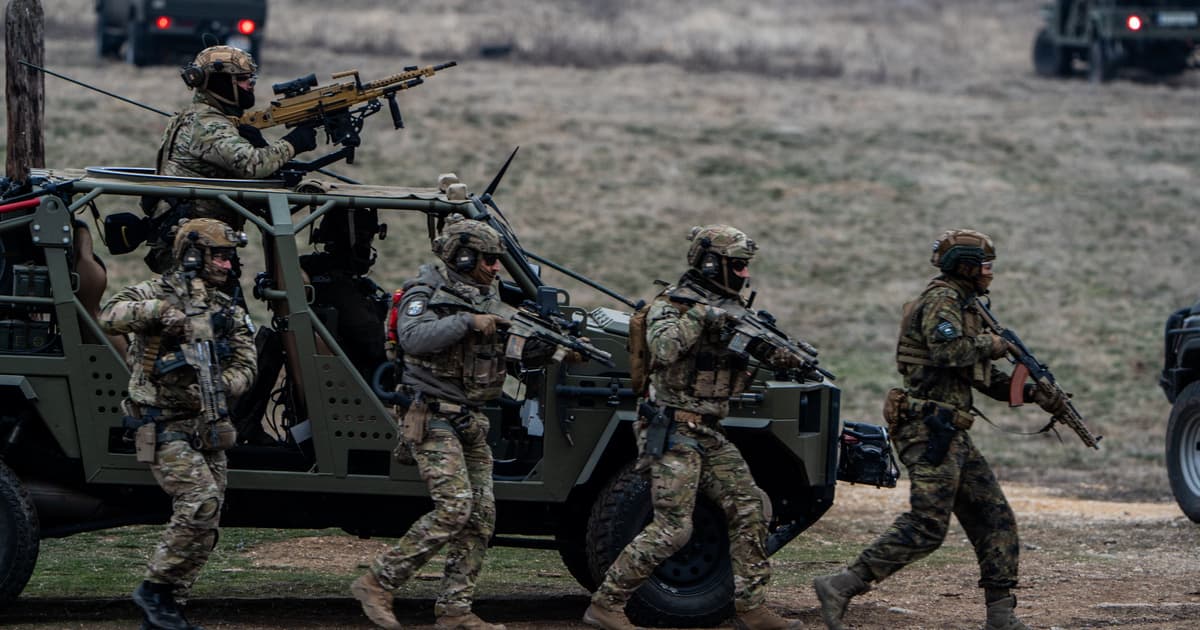
The United States wants Europe to take over most of NATO's conventional defense capabilities, from intelligence to missiles, by 2027, Pentagon officials told weekly meetings in Washington, according to Reuters. The deadline was considered unrealistic by several European officials. The message, which was cited by five sources familiar with the discussions, including a U.S. official, was delivered to European delegations by Pentagon officials responsible for NATO policy at the Washington meeting.
According to the sources, US officials have told their European counterparts that if Europe fails to meet the 2027 deadline, the United States could end its participation in some NATO defense coordination mechanisms.
A U.S. official said there are those on Capitol Hill who are familiar with the Pentagon’s message to the Europeans and find it worrisome. Shifting the burden from the United States to NATO’s European members would fundamentally change how the United States, a founding member of the postwar alliance, works with its key military partners. Pentagon officials said in the meeting that Washington is not satisfied with the progress Europe has made in strengthening its defense capabilities since Russia’s 2022 invasion of Ukraine.
The deadline may be tight.
Conventional defense capabilities refer to non-nuclear assets, from soldiers to weapons. Officials did not elaborate on how the United States would measure Europe’s progress in taking on the burden. It is also unclear whether the 2027 deadline reflects the Trump administration’s position or simply that of some Pentagon officials, who are divided in Washington about what military role the United States should play in Europe.
Several European officials have said that the 2027 deadline is unrealistic by any standard, as Europe needs not only money and political will, but also time to replace American capabilities.
NATO allies are also facing challenges such as backlogs in military equipment orders. While US officials have encouraged Europe to buy more US-made war materiel, some critical US weapons and defence systems could take years to arrive, even if ordered immediately.
The United States also contributes capabilities to NATO defense that cannot be replaced by simple procurement, such as specialized intelligence, surveillance, and reconnaissance assets that have played a crucial role in Ukraine's war effort.
A NATO official, speaking on behalf of the alliance, said European allies were taking on more responsibility for the continent’s security, but he would not comment on the 2027 deadline. He said: “Allies have recognized that they need to invest more in defense and shift the burden of traditional defense from the United States to Europe.” The EU has set a goal of being able to provide its defense by 2030, filling gaps in air defense, drones, cyber defense, ammunition stocks and other areas.
The Trump administration has consistently argued that European allies should contribute more to NATO, but it is unclear how US President Donald Trump views the alliance. He frequently criticized European allies during the 2024 campaign and said he would encourage Russian President Vladimir Putin to attack NATO members that fail to meet their defense spending commitments. At the annual NATO summit in June, however, Trump praised European leaders for supporting the US plan to raise their defense spending target to 5 percent of GDP.
Europe should take responsibility for the continent's defense, says US
At the weekly meeting of NATO foreign ministers, US Deputy Secretary of State Christopher Landau said it was “obvious” that NATO allies must take responsibility for the defense of Europe.
Europe must take responsibility for its own security first. Successive American governments have been saying this in one form or another throughout my life – just look up the Nixon Doctrine of 1969 – but our government means it.
– said Christopher Landau.
I appreciated the opportunity to represent @POTUS @realDonaldTrump and @SecRubio at the NATO Ministerial Meeting in Brussels. I emphasized what should be obvious: Europe must take primary responsibility for its own security. Successive US Administrations have been saying this in…
— Christopher Landau (@DeputySecState) December 4, 2025
NATO's top commander says the continent's defenses are not at risk if fewer U.S. troops are stationed here. General Alexus Grynkewich's optimism contrasts sharply with European concerns about Trump withdrawing troops, Secretary of State Marco Rubio skipping a NATO meeting and Washington pressing for Germany to take over the supreme command.