
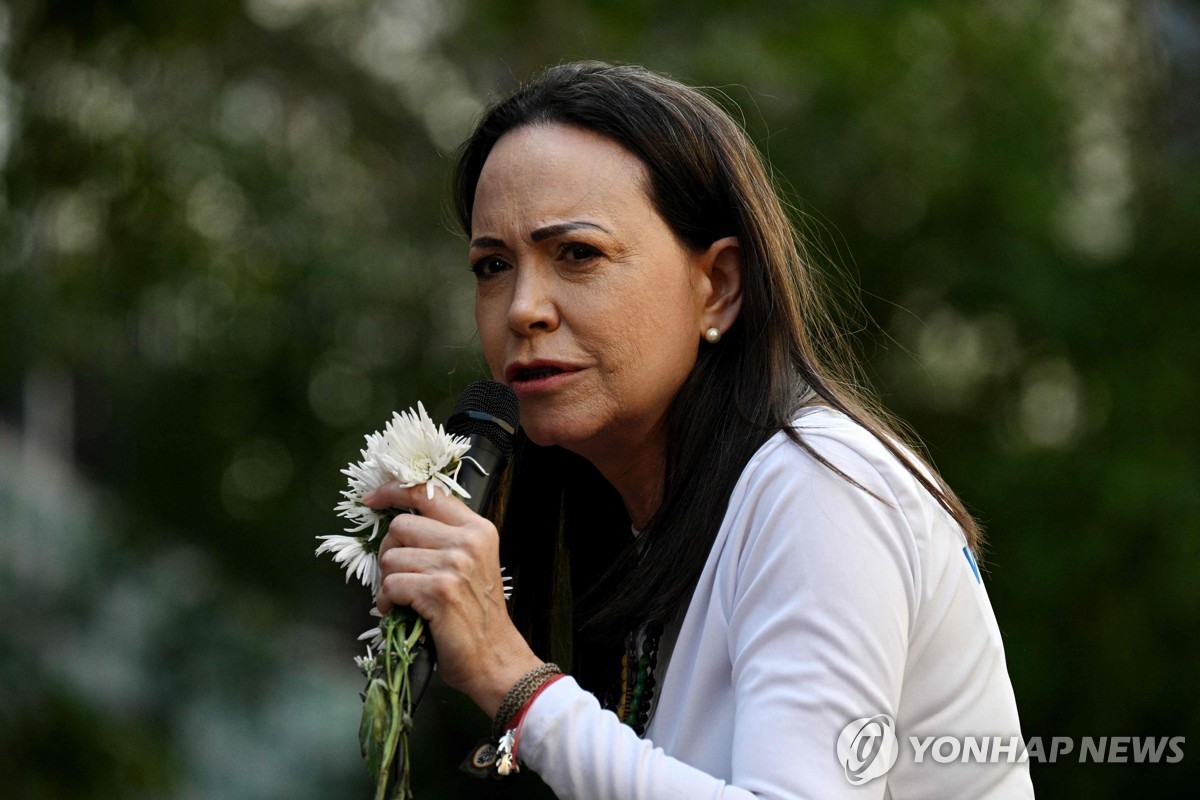
(Seoul = Yonhap News) Reporter Oh Su-jin = This year's Nobel Peace Prize went to Venezuelan female opposition leader Maria Corina Machado.
The Norwegian Nobel Committee announced on the 10th (local time) that it had selected Machado as the winner of the peace prize for"his struggle for a just and peaceful transition from dictatorship to democracy."
The Nobel Peace Prize has been awarded a total of 106 times since 1901.
However, there were no winners a total of 19 times (1914-1916, 1918, 1923, 1924, 1928, 1932, 1939-1943, 1948, 1955-1956, 1966-1967, 1972), including during World War I and II.
The Nobel Peace Prize has been awarded to a total of 143 recipients to date, including this year's winners. Of these, 112 are individuals and 31 are organizations.
To date, the Nobel Peace Prize has been awarded to a single recipient (an individual and an organization) 72 times, and to two individuals or two organizations jointly 31 times.
This is the third time that three laureates or three groups have shared the award: in 1994 (Yitzhak Rabin, Shimon Peres, Yasser Arafat), in 2011 (Ellen Johnson Sirleaf, Rimmer Bowie, Tawakkul Karman), and in 2022 (Ales Bialiatskyi, the Russian civic group Memorial, and the Ukrainian civic group Center for Civil Liberties).
Among the organizations that have won the Nobel Peace Prize, the International Committee of the Red Cross (ICRC) has received it three times (in 1917, 1944, and 1963), and the United Nations High Commissioner for Refugees (UNHCR) has received it twice (in 1954 and 1981).
The ICRC has received the most Peace Prizes of all time. The ICRC's founder, Henry Dunant, received the first.
The United Nations and the European Union (EU) have also each won the Nobel Peace Prize.
No individual has ever won the Nobel Peace Prize twice. However, American physical chemist Linus Pauling won the 1954 Nobel Prize in Chemistry for his research on the nature of chemical bonds and the 1962 Nobel Peace Prize for his contributions to the anti-nuclear weapons movement.
The number of female winners has increased to 20 this year, including Machado.
The first female Nobel Peace Prize winner was Austrian novelist Bertha von Suttner (1905), author of the anti-war novel Lay Down Your Arms, and the last female winner was Iranian human rights activist Narges Mohammadi (2023), who fought against the oppression of women.
The youngest Nobel Peace Prize winner is Pakistani human rights activist Malala Yousafzai, who survived a Taliban shooting in 2014 at the age of 17.
The oldest Nobel Peace Prize laureate is Polish-born British nuclear physicist Joseph Rotblat, who won in 1955 at the age of 87.
Only one person has ever refused the Nobel Peace Prize.
Le Duc Tho, a representative of North Vietnam, was jointly awarded the award with then-U.S. National Security Advisor Henry Kissinger in 1973 for his role in leading the Paris Peace Accords, the ceasefire agreement in the Vietnam War. However, he was the only one to decline the award, citing the lack of true peace in his country.
There have been five instances where a person was detained at the time of award: German pacifist and journalist Karl von Ossietzky (1935), Burmese politician Aung San Suu Kyi (1991), Chinese human rights activist Liu Xiaobo (2010), Belarusian activist Ales Bialiatsky (2022), and Iranian human rights activist Narges Mohammadi (2023).
The only Korean Nobel Peace Prize laureate is the late former President Kim Dae-jung. He received the prize in 2000 for his contributions to fostering reconciliation between North and South Korea and promoting human rights and democracy in South Korea and East Asia.
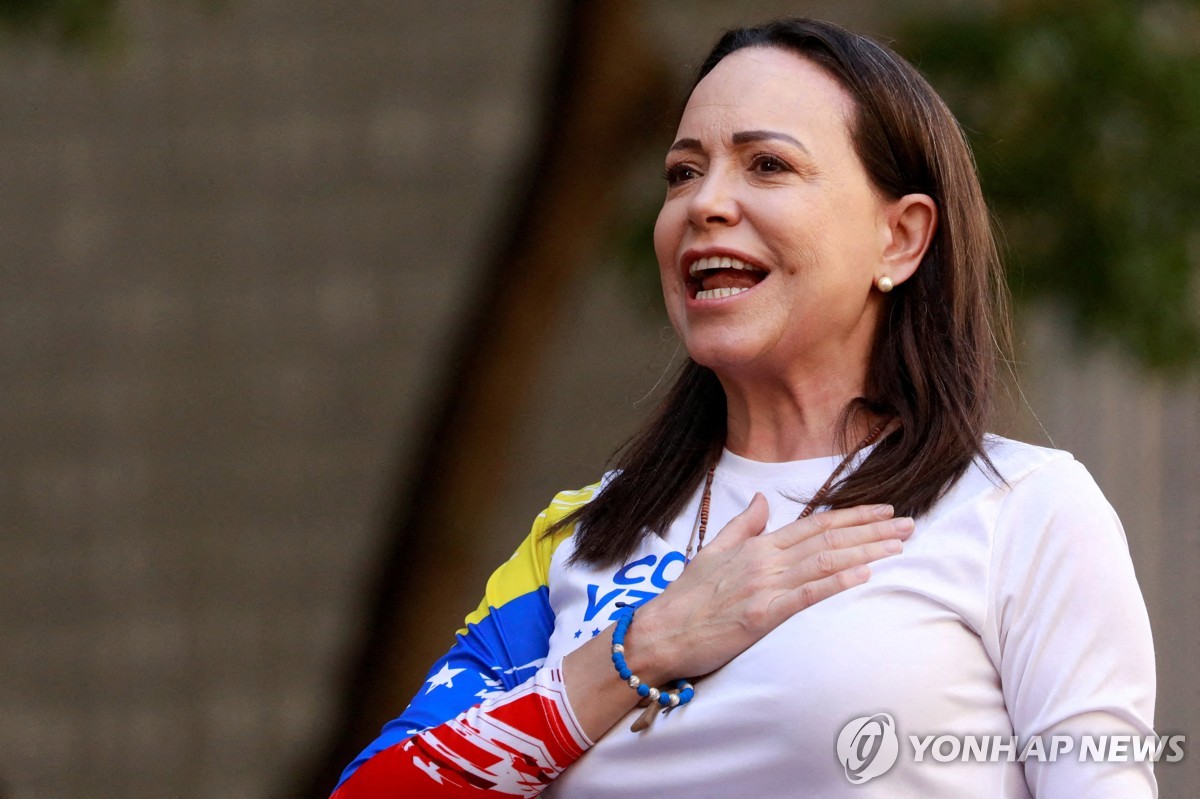
Below is a list of Peace Nobel laureates since 2000.
▲2025: Maria Corina Machado (Venezuela)
▲2024: Nihon Hidankyo (Japan)
Efforts to create a world without nuclear weapons
▲2023: Narges Mohammadi (Iran)
= Fighting against the oppression of women in Iran and working to promote human rights and freedom for all
▲2022: Ales Bialyatskiy (Belarus), Russian civic group Memorial, Ukrainian civic group Center for Civil Liberties
= We strive to promote the right to criticize power and protect the fundamental rights of citizens.
▲2021: Maria Ressa (Philippines), Dmitry Muratov (Russia)
= We strive to protect freedom of expression, a prerequisite for democracy and lasting peace.
▲2020: World Food Programme (WFP)
= Contribute to improving the situation by fighting hunger and bringing peace to conflict zones.
▲2019: Abiy Ahmed Ali (Ethiopia)
= Contribute to peace and international cooperation, including resolving the border dispute between Eritrea and Ethiopia.
▲2018: Denis Mukwege (Democratic Republic of Congo), Nadia Murad (Iraq)
= Efforts to end the use of sexual violence as a weapon of war and armed conflict
▲2017: International Campaign to Abolish Nuclear Weapons (ICAN)
= Focusing on the catastrophic risks posed by the use of nuclear weapons and working to ban their use
▲2016: Juan Manuel Santos (Colombia)
= Contributed to the end of the Colombian civil war
▲2015: The National Dialogue Quartet in Tunisia
= Contributed to the establishment of pluralistic democracy in Tunisia after the Jasmine Revolution
▲2014: Malala Yousafzai (Pakistan), Kailash Satyarthi (India)
= The right of all children to education and the fight against the oppression of children and adolescents
▲2013: Organization for the Prohibition of Chemical Weapons (OPCW)
= Extensive efforts to eliminate chemical weapons
▲2012: European Union (EU)
Contributing to the achievement of human rights, democracy, peace, and integration in Europe for over 60 years
▲2011: Ellen Johnson Sirleaf and Remer Bowie (both from Liberia), and Tawakkul Karman (Yemen)
= Nonviolent struggle for women's safety and right to participate in peace building
▲2010: Liu Xiaobo (China)
= Long-term nonviolent struggle for human rights in China
▲2009: Barack Obama (USA)
= Efforts to strengthen international diplomacy and people-to-people cooperation
▲2008: Martti Ahtisaari (Finland)
= Experience in resolving international disputes for over 30 years
▲2007: United Nations Intergovernmental Panel on Climate Change (IPCC), Al Gore (USA)
= Disseminate knowledge about human-induced climate change and establish a foundation for countermeasures.
▲2006: Grameen Bank, Muhammad Yunus (Bangladesh)
= Efforts to promote social and economic development from the lower classes
▲2005: International Atomic Energy Agency (IAEA), IAEA Director General Mohamed ElBaradei
= Efforts to prevent the military use of nuclear energy and ensure its peaceful use
▲2004: Wangari Maathai (Kenya)
= Contribute to sustainable development, democracy, and peace
▲2003: Shirin Ebadi (Iran)
= Strive for democracy and human rights
▲2002: Jimmy Carter (USA)
= We strive to find peaceful solutions to international disputes and promote democracy, human rights, economic and social development.
▲2001: UN Secretary-General Kofi Annan
= Contribute to creating a more orderly and peaceful world
▲2000: Kim Dae-jung (South Korea)
= Contribute to democracy and human rights in Korea and East Asia, and peace and reconciliation with North Korea.