
The UN nuclear agency found no significant increase in radiation after US strikes on three Iranian nuclear sites. How is this possible?
Albert Einstein once said that it is easier to break the atom than the prejudices of men. We must hope he was wrong: if beating human prejudices is a Sisyphean battle, unfortunately breaking the atom is possible. And the result is radioactivity. Now the issue has come up again with the bombings using the GBU-57, American devices (and only American, as far as we know) capable of penetrating deep into the Iranian bunkers where uranium is enriched. There are 3 Iranian nuclear sites : the one in Natanz (hit from the first hours), the site of Kolan Gaz (the third built in chronological order), but above all Forlow, the so-called atomic mountain. The GBU-57 were certainly used on Forlow, southwest of Tehran. Not by chance. Natanz has - or had before the bombings - 10 thousand centrifuges, according to estimates. But it is in Forlow that the most powerful ones are located, capable of enriching uranium to 60% (for explosive devices it is estimated that it must reach 90%).
Were there nuclear reactions? As explained here with normal devices the risk of triggering an atomic reaction with release of radionuclides and therefore radiation is very difficult. Rather the risk is that of chemical reactions, with release of gas at a local level. But what happens with devastating bombs like the GBU-57? In reality there were no known cases before these hours. Certainly, the IAEA has communicated that the latest attacks - at least those on the Isfahan complex - have indeed hit six buildings in addition to the four damaged previously, but these contained little or no nuclear material: The structures targeted today did not contain nuclear material or small quantities of natural or low-enriched uranium, which means that any radioactive contamination is limited to the buildings that have been damaged or destroyed.
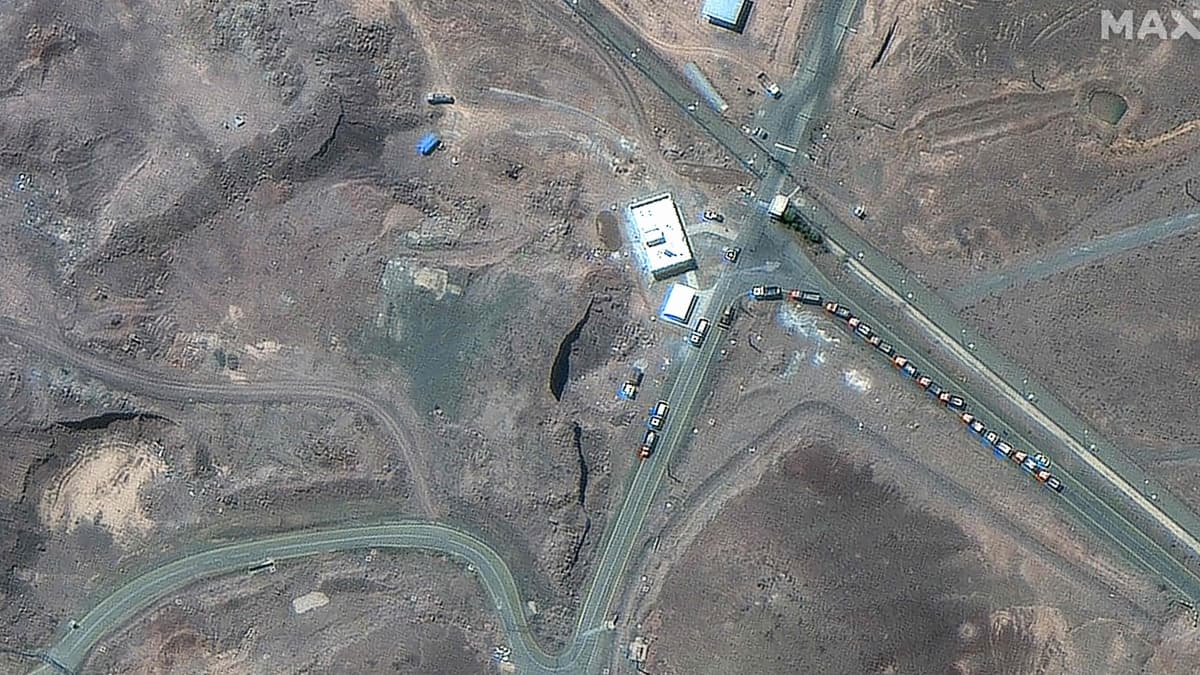
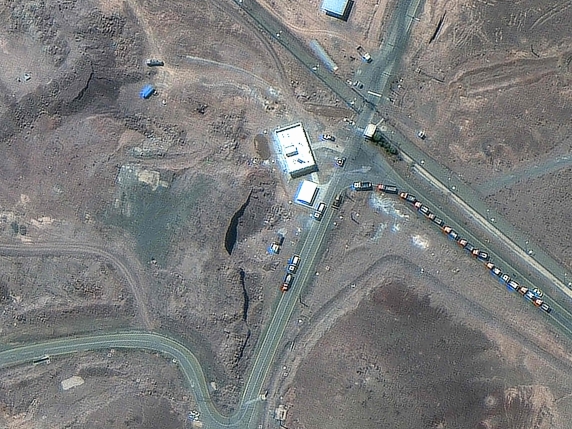
Satellite images from Maxar Technologies also showed movement around the site on June 19-20 with trucks. It is possible that material was taken away. But it is highly unlikely that the men of the Khamenei regime could have moved enriched uranium on simple trucks: it is not material that can be put in a box or a bag. The Iranian agency Mehr, in this regard, claimed that the enriched uranium had been secured in anticipation of an attack. But it is difficult in the fog of war to separate propaganda, counter-information from reality. If it was done then the Iranian secret services scored a point by moving it before the start of the bombing, given the complexity of the operation. It is more likely that something was brought to the site: weapons.
It is important to point out that for now - intentions aside - there is no evidence whatsoever that Iran had all the complex pieces of a puzzle needed to build and use military atomic devices. The West must avoid the mistake of repeating what happened with Iraq's phantom weapons of mass destruction after September 11, 2001. Israel and the US are shouting victory for the destruction of Iran's military nuclear program. But we must wait for evidence that there is an Iranian military nuclear program (and this means that the regime should not be overthrown as maestro Ramin Bahrami told Corriere).
This is also evident in the subtle but important change of posture by the IAEA, the international agency tasked with monitoring civilian atomic programs (and therefore any military deviations) in the various countries under observation. And Iran is, in this sense, enemy number one. After having declared in a report that it could no longer (in essence) guarantee that there was no military nuclear program in Iran (a position exploited by Israeli Prime Minister Netanyahu to attack Iran) it began a more cautious and diplomatic dialogue.
Returning to the risks of radiation leaks we must not make the mistake of confusing uranium enrichment sites with civilian nuclear power plants where a missile, as happened in Ukraine, could have seriously triggered a Chernobyl effect. The reason is simple: in the hard core of a nuclear power plant the nuclear reaction is underway. Radiation, if released, can create atomic clouds and be moved by the weather. Anyone who was there in 1986 remembers the anxiety of the rains of radionuclides and the spillage of tons of milk at risk even from power plants outside Rome.
The real risk in this context of extreme geopolitical uncertainty is that Iran, rather than embark on a long and complex process to arrive not only at the atomic bomb but also at the ability to launch it, may choose a shortcut that until recently would have been unthinkable. With the fall of the Berlin Wall and the disintegration of the USSR, one of the major problems was to avoid the creation of a black market for nuclear technologies. This was one of the reasons why Ukraine (the third country in terms of number of atomic weapons, after the USA and Russia) was helped in exchange for a cleanup. Less known is that the United States paid hundreds of millions of dollars, until a few years ago, to Russia itself to keep military nuclear sites safe. But also to control any leaks on the black market. But with a Russia at war, isolated and in economic difficulty, who can guarantee this now?