
The barrage of Ukrainian strikes deep inside Russia on Sunday, in addition to causing significant losses to the operational capabilities of Moscow's armed forces, also affected the Kremlin's confidence in the security of its military bases, even those located far from the Ukrainian border.
On the eve of the (brief) peace talks with Russia in Istanbul, Ukraine managed a series of strikes, proving that it is capable of overturning the balance on the battlefield, forcing the Kremlin to accept a new reality.
The drone raid deep inside Russian territory shows that some targets are vulnerable, even without the use of Western weapons.
Bombers that Russia may never be able to replace, a fleet so damaged that it may force Moscow to rewrite its plans for an attack on Ukraine, strikes deep into the Russian interior – as the drone raid comes to an end, satellite images and expert assessments reveal the scale of the Ukrainian operation.
The strength of Ukraine — which had been planning for 18 months to secretly transport drones in trucks to surprise military airfields thousands of kilometers away from Kiev — is reflected in the major blow suffered by the Russian bomber force.
Although the impact on Russia's nuclear capabilities is not expected to be serious, the attack is expected to affect operations planned on a daily basis against Ukraine, according to analysts who spoke to the Financial Times.
The numbers of the attack
Ukraine has targeted at least four Russian air bases, using 117 unmanned aerial vehicles launched from containers near the targets. Drone footage captured during the operation and verified by Reuters shows several aircraft hit at at least two locations.
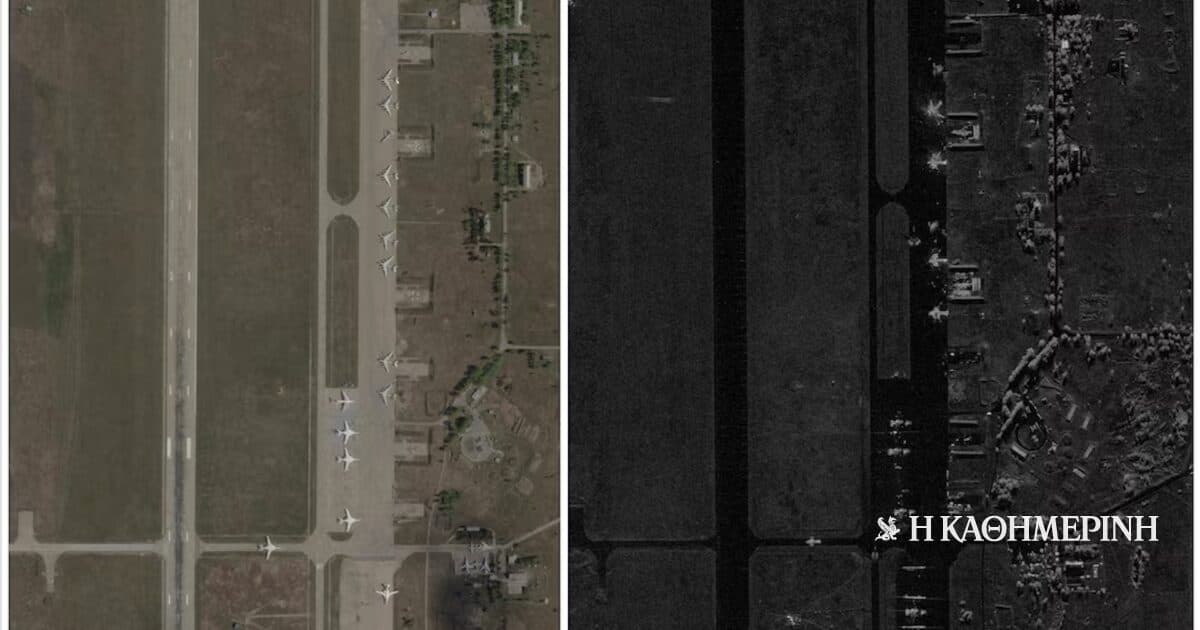
Capella Space, a satellite services company, provided Reuters with the above image, from an airport in Irkutsk. The image was taken on June 2, the day after the attack - one of the most complex and effective operations Ukraine has launched in its three-year war.
SAR satellites, which are not hindered by cloud cover, recorded the wreckage of several aircraft along the runway of the Belaya military base.
John Ford, a researcher at the California-based James Martin Center who analyzed the images, counted at least two damaged Tu-22 Backfire long-range bombers, which have been used for missile launches against Ukraine.
Drone footage posted on social media also indicated that four Tu-95 heavy bombers had been destroyed or seriously damaged.
The extent of the blow to Russia
Michael Coffman, a military analyst at the Carnegie Endowment for International Peace, estimated, speaking to the Financial Times, that the Ukrainian strikes undoubtedly weakened Russia's ability to carry out remote attacks.
While it may not be enough to stop attacks on Ukraine, given the size of the Russian bomber fleet, the strike showed that continuing the war hurts Russia's prestige as a military power, Kofman added.
The original operation struck aircraft capable of carrying both conventional and nuclear weapons.
The number of aircraft hit remains unclear. Ukraine claims that more than 40 aircraft were destroyed or damaged. In contrast, Russia only mentions some units of aviation equipment affected by fire. Other researchers analyzing open source data estimate that the actual number of aircraft destroyed is between 10 and 12.
Even on this scale, the blow is considered significant for Russia's war effort in Ukraine, both operationally and politically.
The aircraft damaged or destroyed in the strikes over the weekend represented about 20% of Russia's forces that were operationally ready for long-range strikes, according to analysts cited by the Financial Times. These are aircraft designed to fly long distances and carry heavy loads deep into enemy territory.
Fabian Hofman, a doctoral candidate at the University of Oslo, said that although many bombers were in the maintenance phase, these aircraft were among the most operationally ready, which makes these losses particularly damaging.
Russia had used these bombers to strike targets in Ukraine, including in the most recent mass attacks, said William Alberg, a former NATO arms control official and analyst at the Stimson Center.
The nuclear triad
However, of Russia's so-called nuclear triad – the structures that include land-based, sea-based and air-based launchers – the country has traditionally relied as little as possible on bombers, due to their high vulnerability.
Hoffman estimates that bombers account for about 10% of Russia's strategic nuclear weapons delivery systems. According to him, submarines account for 30% of Russia's nuclear arsenal and land-based systems about 60%.
But the attack sent a message to Moscow that even areas far from the border can no longer be considered safe. The Russians see the country's vast size as providing strategic depth — a kind of refuge, said Alberk. The Ukrainians struck at the heart of that idea.
The Crimean Bridge Strike
Against the backdrop of these serious blows that Russia has received, another blow has been added, since, as announced by the SBU security service of Ukraine , the Ukrainian army struck the bridge that connects Russia with the Crimea peninsula with explosives placed under the surface of the water.
In a statement on Telegram, the SBU said the explosion occurred early in the morning and damaged the underwater pillars of the bridge, which is a critical supply route for Russian forces operating in Ukraine. In total, 1,100 kilograms of explosives were used in the attack.
The Russian authorities announced a short while ago the restoration of traffic that had been temporarily interrupted on the bridge connecting Russia with Crimea.
Ukraine Russia