
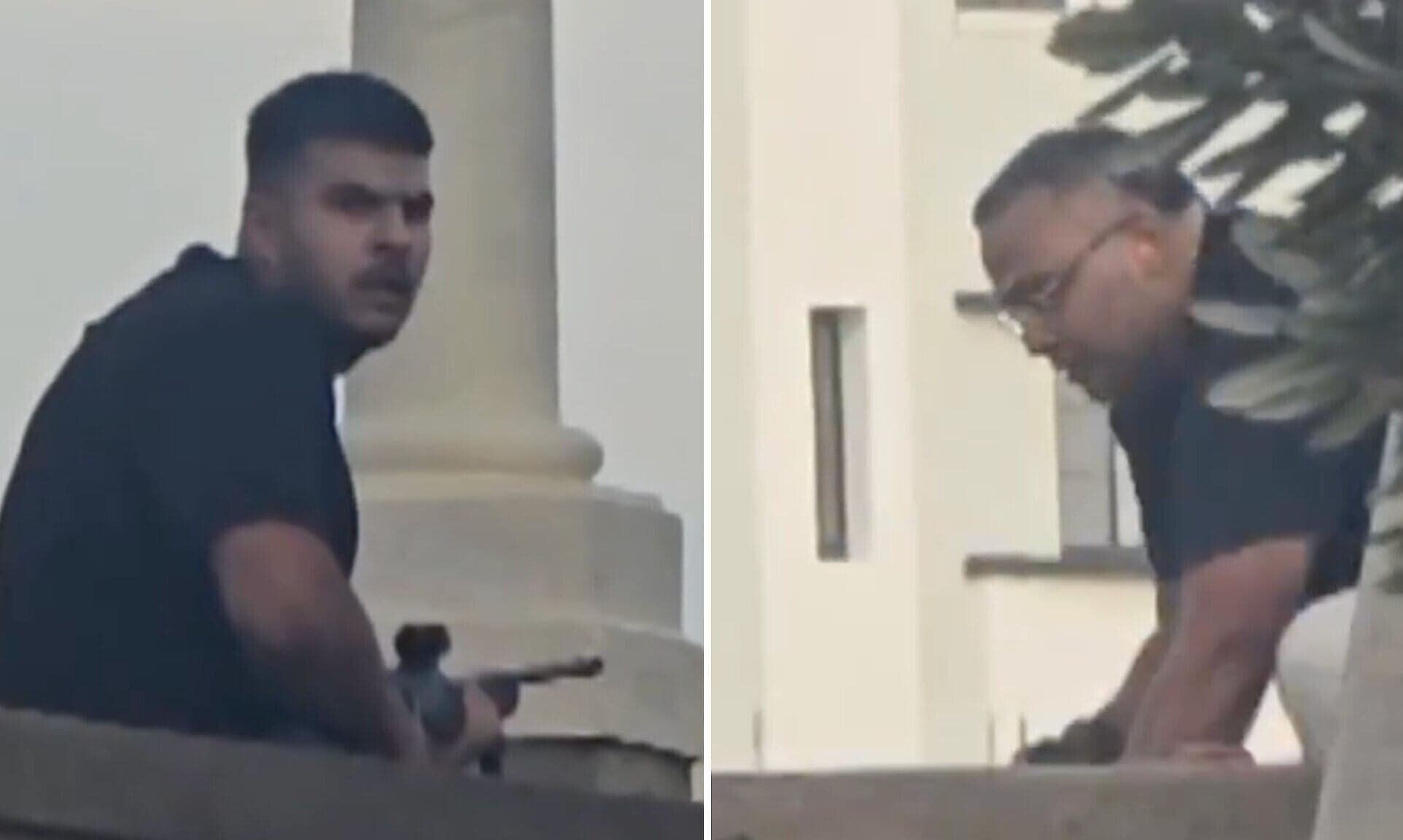
The gunmen in the terror attack that targeted a Hanukkah celebration at Sydney’s Bondi Beach, killing at least 15, have been identified by authorities as Naveed Akram, 24, and his father Sajid, 50. The son was investigated in 2019 — reportedly over ties to ISIS — but was cleared after six months, officials said.
The two men’s identities and histories were publicized as Australia, its Jewish community and the wider Jewish world continued to grapple with the fallout from the attack, which was one of Australia’s bloodiest shootings in history and the deadliest antisemitic massacre outside Israel since October 7, 2023.
According to Australia’s ABC outlet, both gunmen are believed to have pledged allegiance to the ISIS terror group.
An official from the country’s Joint Counter Terrorism Team told the outlet that an ISIS flag had been found in their car close to the attack, and police said Sunday that an improvised explosive device was found in a car linked to one of the attackers.
Sajid, who authorities said was a licensed firearm owner with six guns, was shot dead by police on the scene of the attack. Naveed is critically wounded and in the hospital under police guard, according to local reports, and will face charges if he survives.
The father first came to Australia in 1998 on a student visa, Home Affairs Minister Tony Burke told reporters on Monday.

In 2001, he obtained a visa granted to the partners of Australian citizens or permanent residents. Since then, the government says he travelled overseas three times.
The guns have since been recovered, and the pair’s home has been raided, along with an AirBnB where they were staying prior to the attack.
Naveed was probed in 2019 by ASIO, the country’s domestic intelligence agency, Australia Prime Minister Anthony Albanese told a press conference Monday.
“He was examined on the basis of being associated with others and the assessment was made that there was no indication of any ongoing threat or threat of him engaging in violence,” Albanese said. “The investigation went for a period of six months.”
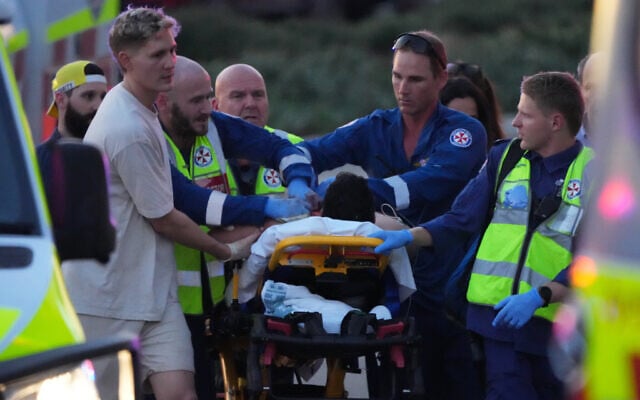
Both he and Home Affairs Minister Tony Burke declined to expand on the nature of the suspicions, but ABC News reported that Naveed was investigated for his close ties to an ISIS cell, citing an unnamed official.
According to the official, Naveed was close to members of the cell including Isaac El Matari, an ISIS terrorist arrested that year who identified himself as the group’s head in Australia. Matari is serving a seven-year prison sentence.
“One of these individuals was known to us, but not in an immediate-threat perspective, so we need to look into what happened here,” ASIO Director-General Mike Burgess said on Sunday.
Potential Iran links
Other links to terror are being probed. The attack came about a month after the Mossad notified Australian intelligence about Iranian-backed “terror infrastructure” in the country planning to carry attacks on Jewish targets, Israel’s Channel 12 reported.
Almost all of the infrastructure was taken apart by Australian authorities after receiving the Israeli warning, according to the report, and Australian intelligence is investigating whether the perpetrators of today’s attack were part of the Iranian effort.
In October, the Mossad released details about a transnational terror network run by Iran’s Islamic Revolutionary Guard Corps Quds Force, which was behind a string of recent attacks on Jewish sites in Western countries, including Australia.
According to Israel’s spy agency, senior IRGC-Quds Force commander Sardar Ammar heads the network, which intensified its efforts to attack Jewish and Israeli sites around the world since the October 7, 2023, Hamas-led attack on southern Israel.
In August, Australia blamed Iran for being involved in two 2024 arson attacks, at the Adass Israel Synagogue in Melbourne and a kosher restaurant in Sydney. Canberra also expelled Iran’s ambassador and said it would list the Islamic Revolutionary Guard Corps as a terror organization. It marked the first time Australia expelled an ambassador since World War II.
Israel’s National Security Council warned following the massacre that “past experience shows there is concern about copycat actions by supporters of terrorism who may be inspired by the event.”
The travel warning urged Israelis abroad to avoid unsecured mass gatherings, including at synagogues, Chabad houses and Hanukkah parties. The Sydney festival that was targeted was organized by Chabad.
Official response
More than 300 police officers were sent to secure local Jewish institutions in Australia following the attack, in what is being called “Operation Shelter.”
“Operation Shelter will be overwhelming and it may be an inconvenience for people in the coming days but we need to send a clear message to the people in this state and the affected community,” said Chris Minns, the premier of New South Wales, the state where Sydney is located.
He added that Jews “have every right to celebrate their faith and enjoy this festive period free from the profound worry and sadness associated with their horrible violence.”
Prime Minister Benjamin Netanyahu, as well as Australia’s opposition leader, have accused the Australian government of not doing enough to combat antisemitism.
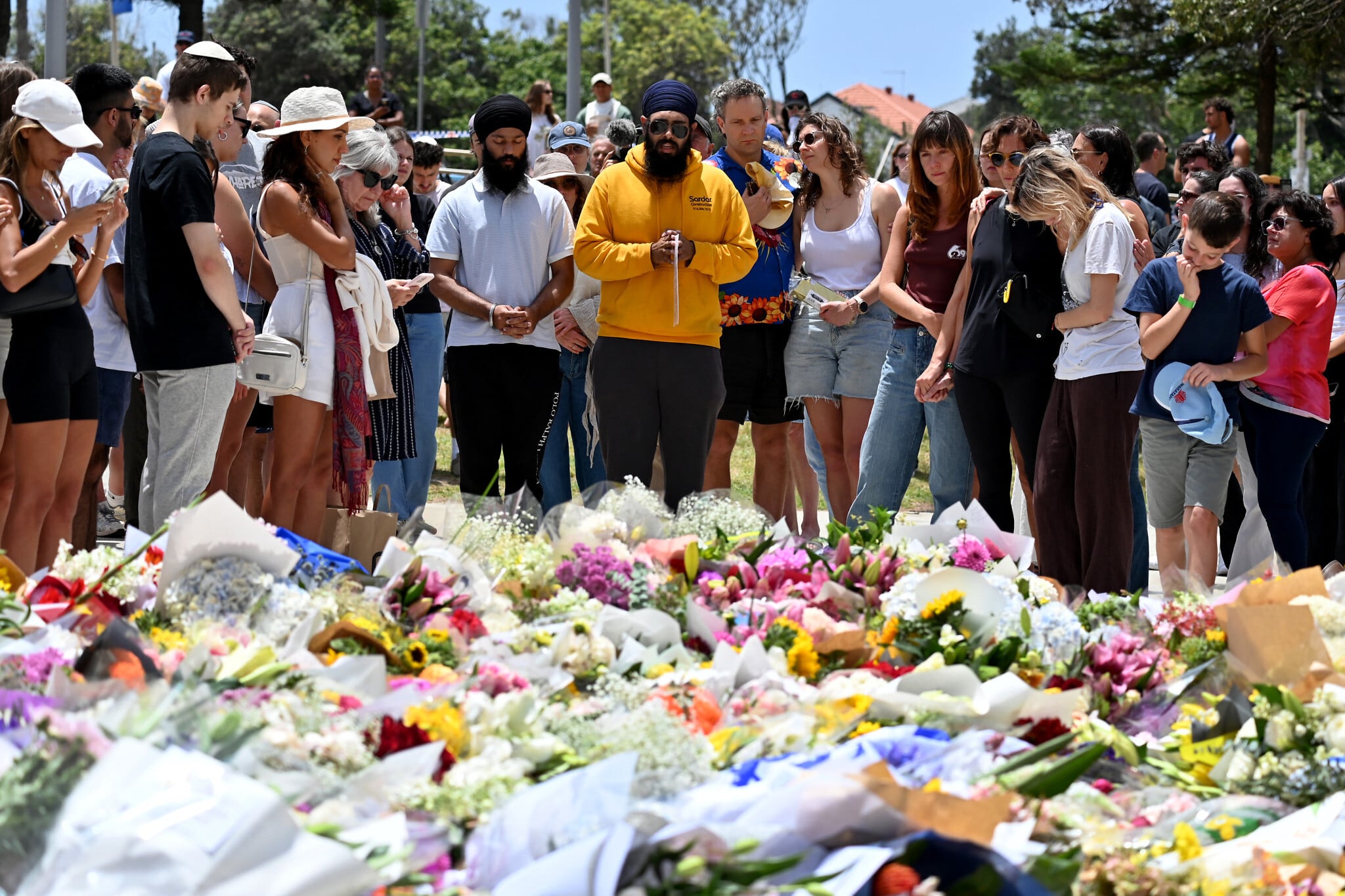
Albanese visited the scene of the attack on Monday morning, where he laid a bouquet of flowers. He also said flags would be lowered to half-mast across the country.
“Australia will never submit to division, violence, or hatred, and we will come through this together,” he said. “We refuse to let them divide us as a nation.”

Albanese has been slammed by Israeli officials for his criticism of the country, as well as for Australia’s decision to recognize a Palestinian state along with a series of other Western countries earlier this year.
Albanese, asked to respond to Netanyahu’s criticism, declined to do so, saying that “this is a moment for national unity, this is a moment for Australians to come together, that’s precisely what we will be doing.”
Asked if he has failed Jewish Australians, the prime minister said that “my government will continue to stand with Jewish Australians and will continue to stamp out antisemitism in all its forms.”

Australia’s government also came under criticism from Opposition Leader Sussan Ley, who called out a “failure” to keep Jews safe following the attack.
“We have seen a clear failure to keep Jewish Australians safe. We have seen a clear lack of leadership in keeping Jewish Australians safe,” she said, according to local reports. “We have a government that sees antisemitism as a problem to be managed, not evil that needs to be eradicated.”
The leader of Australia’s Liberal Party added, “Everything must change from today in how governments respond,” calling on the government to fully adopt the recommendations from a government report on antisemitism.
‘We cannot lose hope’
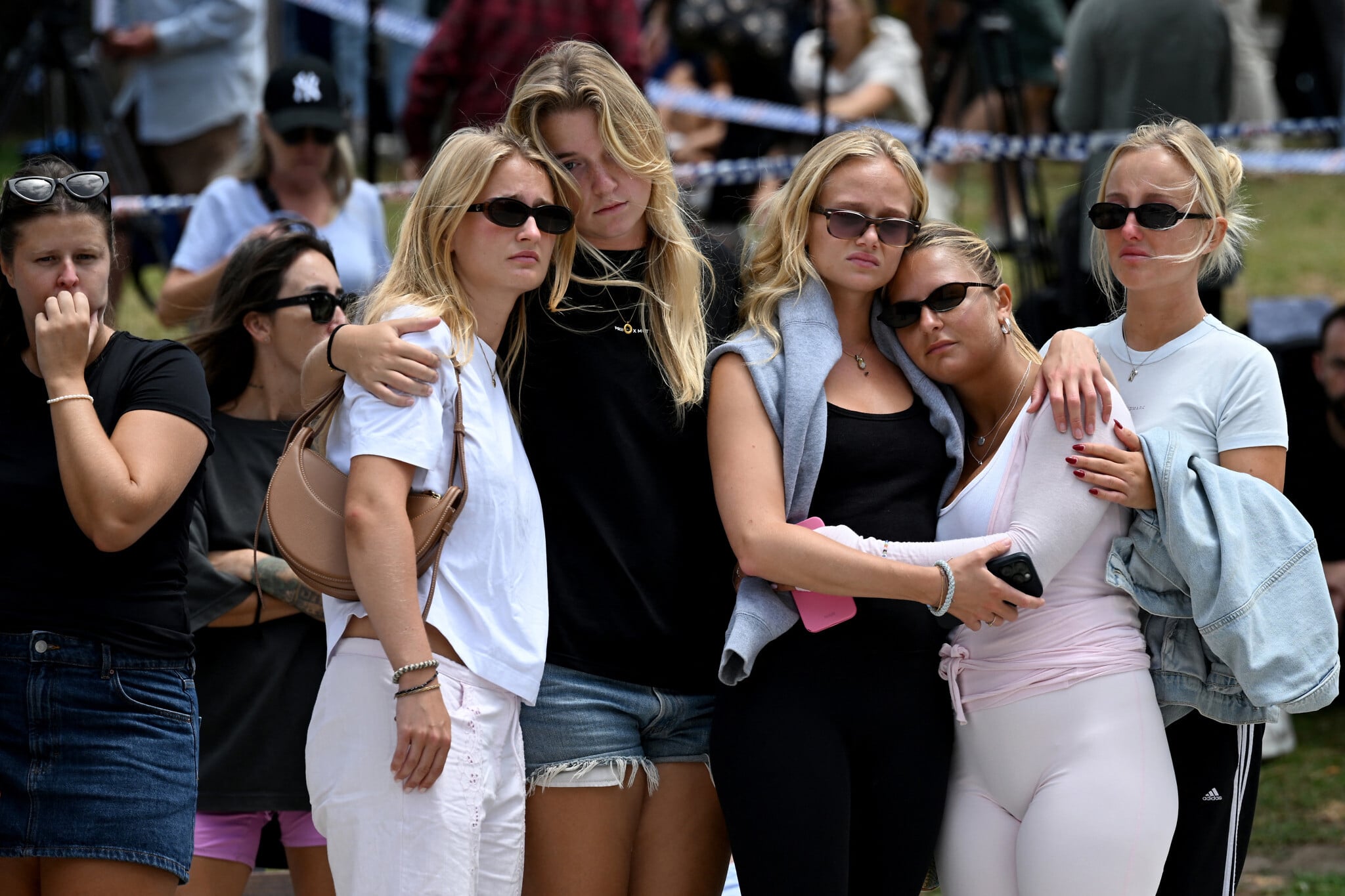
As Australian Jews faced the first day after the massacre, leaders encouraged the community to persevere.
In tearful remarks delivered during morning prayers on Monday, the father-in-law of one of the victims urged the congregation to carry on the work of those who were murdered.
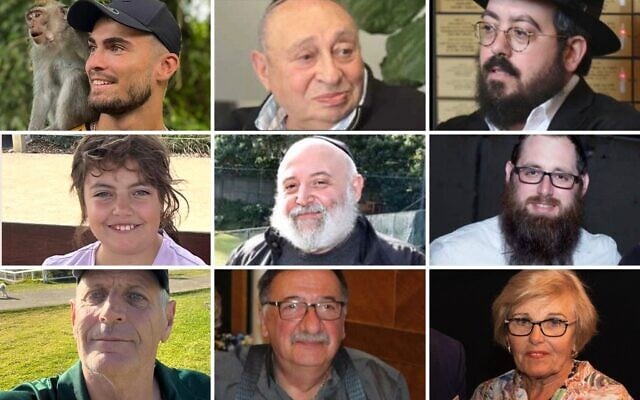
“For whatever reason, they died al kiddush hashem,” for the sanctification of God’s name, said Rabbi Yehoram Ulman, the co-founder of Chabad of Bondi, which organized the event that was targeted. His son-in-law, Rabbi Eli Schlanger, was one of those killed in the shooting.
“And now, they’re looking to us to continue, to make sure that everything they worked for, everything that they’ve done, continues stronger and stronger,” Ulman says. “We cannot allow terrorists — all they want to do is stifle our life as Jews, all they want to do is… bring us down, destroy us, make us despondent, lose hope.”
Incredibly moving
Rabbi Yehoram Ulman – Head of the Sydney Beth Din and Chabad Bondi -the community which was attacked speaks at Shacharit morning prayers, the day after the massacre.
Rabbi Ulman's son-in-law Rabbi Eli Schlanger and many of his congregants were killed.
— Australian Jewish Association (@AustralianJA) December 14, 2025
He continued, “At the moment, it seems, how can we go forward? How can we continue? But that’s not what any of the kedoshim [martyrs] would have ever agreed to. They never would have reacted in such a way, and we have to step up and do the same. We have no choice.”
He sobbed as he said “Baruch dayan emes,” or “Blessed is the true judge,” which is traditionally uttered upon hearing of someone’s death.