
All the Ayatollahs' Moves Before the Bombing of Nuclear Sites and the Effects on Iranian Plans
Among all the questions left on the table by the truce, there is a crucial one, because all the others depend on it: what happened to Khamenei's more than 400 kilograms of dangerously enriched uranium, U-235, at 60%? We need to go through here to understand what remains of the Iranian nuclear program after the powerful 14 penetrating bombs GBU-57 made available by US President Donald Trump, capable of digging into the so-called atomic mountain, that is, the Fordow site.
The US version
The versions are very distant : for Trump the attack was devastating (he used Hiroshima as an unfortunate comparison). According to the report, reported by Cnn and also by the New York Times , of the US Defense Intelligence Agency, the operational arm of the Pentagon, the uranium enrichment sites were not completely destroyed (needless to say that this unleashed the ire of Trump and also of the Israelis). For Netanyahu's secret services the program was delayed by years .
Even though the New York Times reported that for the 007s Iran could have smaller enrichment sites. Finally, for some Chinese experts, the objective has not been reached because the GBU-57 would reach 60 meters deep, while the Fordow site - the one incriminated because it contains or contained the most powerful centrifuges capable of enriching uranium to 60% - would have a depth of about 90 meters.
The reconstruction
The only possible exercise, in the absence of reliable and impartial witnesses on site, is to start from the beginning and see which are the certain points. Iran — it was no mystery — has three nuclear sites, which should not be confused with nuclear power plants for the production of electricity (otherwise an atomic cloud full of radionuclides would have been produced, as happened with Chernobyl) and not even with industries for the assembly of weapons. This is an important point because the regime itself has always played with the inspectors of the International Atomic Energy Agency — where, moreover, the number two, Massimo Aparo, is one of the greatest experts on Iranian dossiers — precisely on this point: centrifuges serve both civil and military purposes. It depends on their power.
The incriminated site
For this reason, the Fordow site is the one of the three that has been indicted and targeted by the generals. At the Natanz site, 220 km southeast of Tehran, the first to be hit by Israel, there were about 10,000 centrifuges, but enough for 5% enrichment, therefore within the limits of a civil nuclear program. And any country that has signed the Nuclear Non-Proliferation Treaty (NPT), like Iran, has the right to a program of this kind (essentially it is accepted that only countries that already have the atomic bomb can keep it in exchange for the right to develop power plants). While, precisely, at the Fordow atomic mountain, about 100 km southwest of Tehran, there were centrifuges that were enriching uranium to 60%. Smaller in quantity, but greater in power. The degree of enrichment required by a device is 90%. Protective measures
The Iranian Regime's Ambition
To understand the process, it must be remembered that U-235 is an isotope already present in uranium, but below 1%. Enrichment processes increase the concentration.
There is no doubt about the Iranian regime’s ambition to achieve the atomic bomb. And this, albeit intermittently, at least since the 2000s. The uncertainties are about the real capacity to achieve assembly and launch capability. Even though the signs of a real Iranian military nuclear program date back to the 1950s, when, as had happened in Afghanistan, it was the US that sought an ally against the advance of the USSR.
Satellite photos
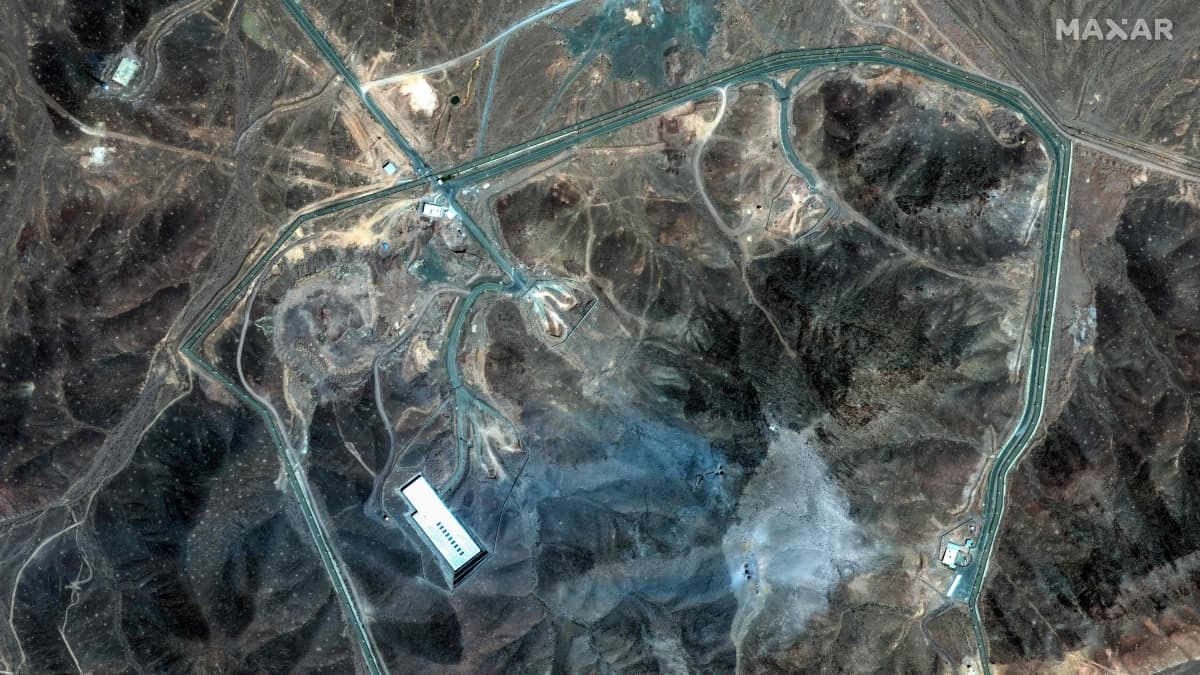
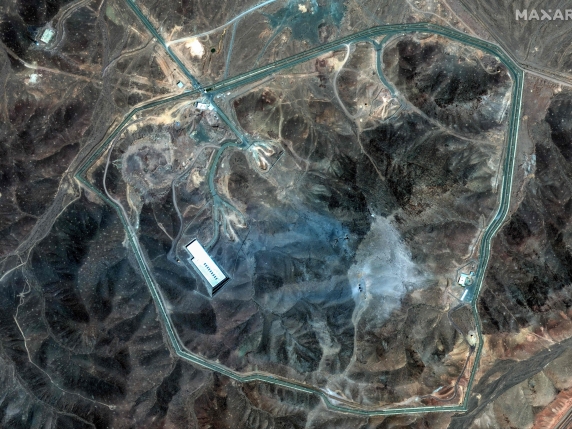
Already in the days of the bombing, satellite photos had shown a movement of trucks around the site. Did they move something to the third site, the youngest in terms of age, in Isfahan? It really remains a mystery what they could have taken away: uranium is certainly not easy to transport. The only ones who can give answers are the IAEA inspectors. Number one Rafael Grossi is expected by French President Emmanuel Macron. Grossi said that he had been informed by Iran about the protective measures taken on enriched uranium. And he added that the number one priority is for the inspectors to return to the Iranian nuclear sites. But it is difficult to decipher the mixture of propaganda and diplomatic language at the same time. What does protective measures mean?
IAEA specialists assess damage
Even in Ukraine after the Russian attacks, IAEA specialists had assessed the damage both at the Chernobyl site and at the largest European power plant, that of Zaporizhzhia. But of course here the work is not only risky but also more difficult given the historical reticence of the Khamenei regime in collaborating. The fog of war here is joined by the fog of propaganda. And the debris.