
In an already fraying global world order, the US attacks on three Iranian nuclear facilities have heightened fears of a potentially cataclysmic descent into further violence.
So far analysts and experts are struggling to grasp the full implications of the attacks. There remain far more unknowns than knowns. Here are some of the key questions.
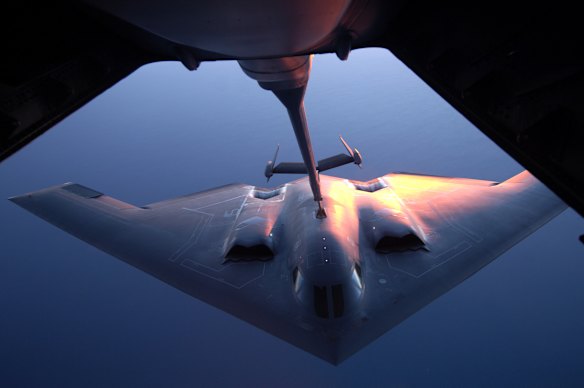
Were Iran’s nuclear sites obliterated?
We don’t know. Announcing the strikes, US president Donald Trump said Iranian nuclear enrichment capacity had been “completely and totally obliterated”, but at a Pentagon briefing held later, Defence Secretary Pete Hegseth said Iran’s “nuclear ambitions” had been obliterated. Moments later Joint Chiefs of Staff chairman General Dan Caine said damage assessments would take some time. “Initial battle damage assessments indicate that all three sites sustained extremely severe damage and destruction.”
The world’s nuclear watchdog, the International Atomic Energy Agency, has released a statement saying that at Iran’s main location for enrichin g uranium to 60 per cent, craters were visible that were consistent with the US statement. “At this time, no one – including the IAEA – is in a position to assess the underground damage at Fordow,” it said.
The IAEA said other buildings were hit at the Esfahan nuclear site, including some related to the uranium conversion process, and that entrances to tunnels used for the storage of enriched material appeared to have been hit.
At a third site, the Natanz enrichment site, the fuel enrichment plant had been hit again. The US confirmed that it used ground-penetrating munitions.
The IAEA said Iran had informed it there had been no increase in off-site radiation levels at any of the three sites.