
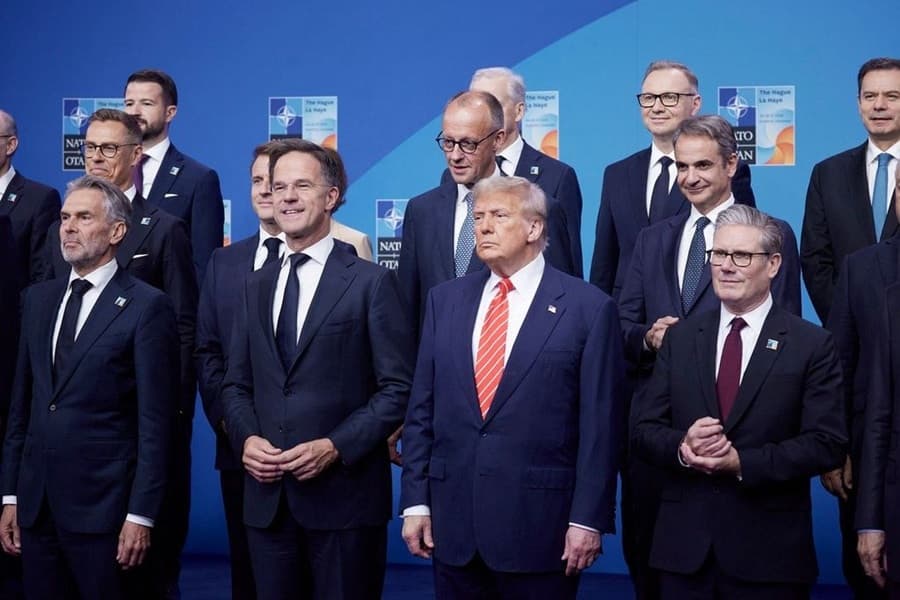

NATO leaders are expected to commit to a significant increase in defense spending, potentially reaching 5 percent of their GDP at the Alliance’s Summit taking place in The Hague.
This move comes as a direct response to President Donald Trump’s long-standing demands and reflects growing European anxieties over Russia’s increasingly aggressive posture following its 2022 invasion of Ukraine.
NATO Secretary General Mark Rutte acknowledged that it was not easy for countries to find the money for extra defense spending but said it was vital to do so.
“There is absolute conviction with my colleagues at the table that given this threat from the Russians, given the international security situation, there is no alternative,” he told reporters on Wednesday morning.
Trump calls on NATO to increase defense spending
Trump has threatened not to protect NATO members if they fail to meet spending targets and he raised doubts about his commitment again on his way to the summit by avoiding directly endorsing the alliance’s Article 5 mutual defense clause.
Speaking to reporters aboard Air Force One, he said there were “numerous definitions” of the clause. “I’m committed to saving lives. I’m committed to life and safety. And I’m going to give you an exact definition when I get there,” he said.
The new target – to be achieved over the next 10 years – is a big increase on the current goal of 2 percent of GDP, although it will be measured differently. It would amount to hundreds of billions of dollars in extra annual spending.
Countries would spend 3.5 percent of GDP on core defense, such as troops and weapons, and 1.5 percent on broader defense-related measures such as cybersecurity, protecting pipelines and adapting roads and bridges to handle military vehicles.
All NATO members have backed a statement enshrining the target, although Spain declared it does not need to meet the goal. Madrid says it can meet its military commitments to NATO by spending much less – a view disputed by Rutte.
Greece and NATO’s defense targets

Greek Prime Minister Kyriakos Mitsotakis is set to highlight Greece’s steadfast commitment, stability, and credibility as a NATO ally during his address at the Alliance’s summit in The Hague today.
According to government sources, Mitsotakis will underscore Greece’s consistent adherence to the current NATO defense spending benchmark of 2 percent of GDP, a commitment upheld even during the nation’s severe economic crisis. This consistent investment, he will argue, has significantly bolstered the Alliance’s capabilities in a region vital for both regional and international security.
“Greece spends about 3 percent of its GDP on defense, as it faces multiple security challenges,” the Prime Minister stated upon his arrival at the NATO Summit. “Our country is in the hard core of the Alliance countries that have exceeded the current commitment of 2 percent and is in 5th place among NATO countries in terms of the percentage of defense spending on GDP.”
Mitsotakis further elaborated on Greece’s robust defense posture by referencing the country’s ongoing 12-year armament program, valued at €25 billion.
“We plan to spend over 25 billion euros on defense in the next 12 years,” he said, adding that “the goal is a fair distribution of burdens, so that there are no injustices. I hope that this goal is binding for all our NATO partners.”
A central theme of the summit, as government sources explain, is the proposed update to the Defense Investment Pledge (DIP), aiming for a new target of 5 percent of GDP by 2035. This ambitious goal is reportedly structured around two pillars: 3.5 percent dedicated to purely military spending, and an additional 1.5 percent allocated to broader investments related to security and defense, encompassing infrastructure, industry, and resilience initiatives.