
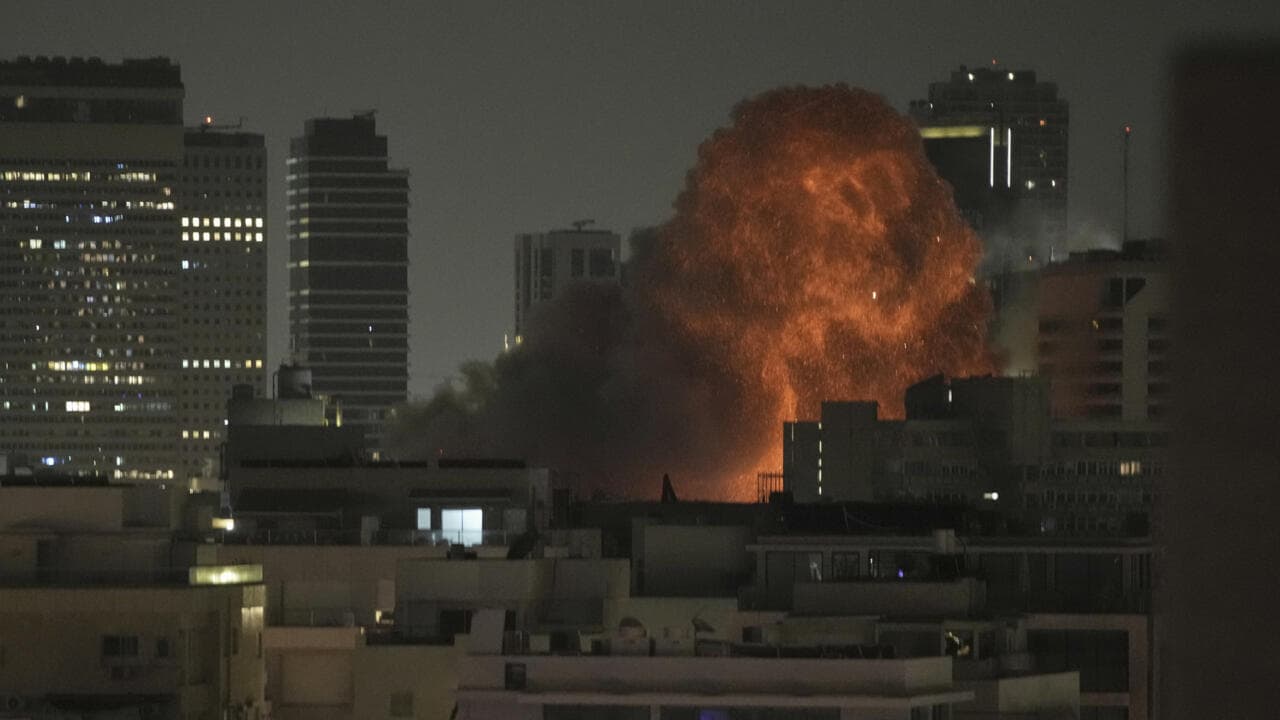
Tehran reportedly planned to rain 1,000 missiles down on Israel in response to the launch of military strikes on Iran. So far, Iran has managed to fire around 350 missiles, according to estimates published by the Israeli media citing the Israeli Defense Forces (IDF).
“As of now, Iran's counterattacks don't seem to be very effective … I think the missile threat turns out to be, to some extent, overstated,” says Pieter Wezeman, a researcher with the Arms Transfers Programme at the Stockholm International Peace Research Institute.
Before Israel launched its offensive, Iran’s missile arsenal was considered one of its principal sources of deterrence.
“[Iran’s deterrence] was very much based on two legs. One leg – which had been significantly, let's say, disturbed or destroyed by Israel – was the so-called proxies: Hezbollah, Hamas and their ability to fire missiles and do other things. And the other significant leg was the missile force,” says Wezeman, who has written about the threat posed by missile proliferation throughout the Middle East.
Estimates vary, but “Israeli intelligence – the best information on this subject – had put the number [of Iranian missiles] at 3,000 or so before the war”, says Frank Ledwidge, a specialist in military capabilities and strategy at the University of Portsmouth in the UK.
This impressive number of missiles would mean that Iran had “the largest stockpile in the Middle East”, Australian public broadcaster ABC News reported, citing the US Office of the Director of National Intelligence.
But this new war with Israel has shown a gap between theory and practice. First, the Israeli army targeted the infrastructure necessary for Iran to fire its missiles right from the start of hostilities.
“I would say that [Iran’s arsenal] has now significantly been reduced – at least 50 percent,” Ledwidge says.
Second, not all of Iran’s missiles have the capacity to reach Israel, which is more than 1,000km from Iran. This means that only the longest-range missiles can strike the Jewish state, according to an analysis by Dutch researcher Ralph Savelsberg for the BreakingDefense website on June 13. Variants of Soviet-era Scud missiles developed by Iran are able to reach targets at a maximum range of less than 700km.
Among the devices capable of hitting Israel are those"based on collaborations with North Korea, such as the Ghadr and Khorramshahr [medium-range ballistic missiles], but also advanced solid-propellant ballistic missiles,” Savelsberg writes.
These are the missiles that are most dangerous for Israel and its famous air defense systems. But the nec plus ultra of Iran’s ballistic arsenal does not represent the majority of missiles available."Most are older-generation [missiles]. We're talking a few hundred of the modern ones," says Ledwidge.
‘Haj Qassem’ and ‘Qassem Bashir'
It's difficult to assess the extent to which Iran has deployed its most effective missiles so far. One thing is certain: Iran has been deploying both drones and missiles in tandem to increase their effects.
"The drones essentially serve to distract Israeli defences to improve the missiles' chances of getting through," says Ledwige. “It's a bit more complex than decoys, but [the drones] essentially soak up Israeli air defense capability,” Ledwidge says.
Among the missiles that hit their targets,"those that struck Tel Aviv on Monday were likely the most modern versions of Iranian hypersonic missiles", Ledwige says. These include the"Fattah" models, which are among the fastest, as well as weapons that Tehran had apparently never used before.
Iran has claimed since Sunday to have fired two relatively recent models – the Haj Qassem and Qassem Bashir missiles – that are capable of defeating the world's best air defense systems, including Israeli missile shields and the US-made Patriot system.
The former was developed in 2021 and named in honour of Qassem Soleimani, the former commander of the Revolutionary Guards' elite Al-Quds Force who was assassinated in a 2020 US drone strike. The Qassem Bashir was unveiled in May.
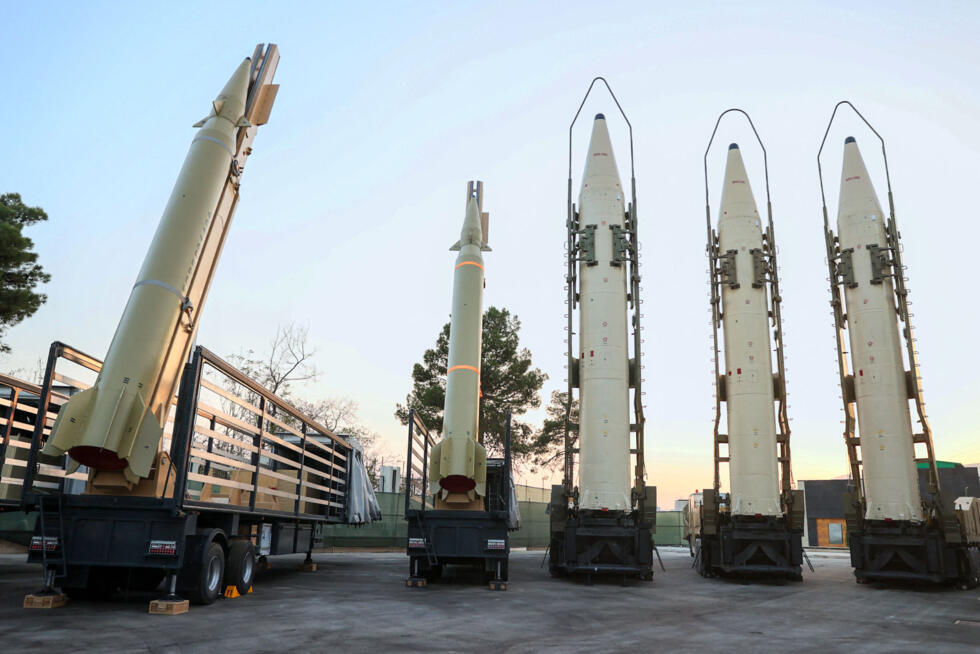
These new missiles offer more advantages: their speed – they can reach Mach 5, or more than 6,000 km/h – and the fact that they are powered by solid, rather than liquid, propellant.
Having engines running on solid fuel"makes them easier to transport, hide, and faster to deploy”, Wezeman says, because the missiles don't need to be fuelled up just before firing.
Theory vs. Practice
These new missiles offer another advantage. “The hypersonic missiles (which go beyond speeds of Mach 5) of course have a manoeuvrable re-entry vehicle," says Ledwidge.
In other words, they are harder to intercept, in that they can adjust their trajectory – either because they are remotely controlled, or because they are partially autonomous, meaning they can change course just before reaching the target co-ordinates based on the defensive measures deployed to counter them, Wezeman explained.
In theory, then, this type of missile could indeed defeat any anti-aircraft system – but everything depends on execution."As of now, Iran's counterattacks don't seem to be very effective, or as effective as they said. Israeli defenses have intercepted most of them," Wezeman says.
Analysts are sceptical that Iran is saving its most powerful missiles for later in the conflict in the hopes of not further escalating tensions.
“Iran is not making a strong impression [militarily] at the moment," says Wezeman."It cannot afford to look weak. So we could assume they are using their best missiles."
Ledwidge says that, strategically, saving the best for last makes little sense.
"it's better to use your best weapons at the beginning – before Israel destroys them – since they are priority targets," he says.