
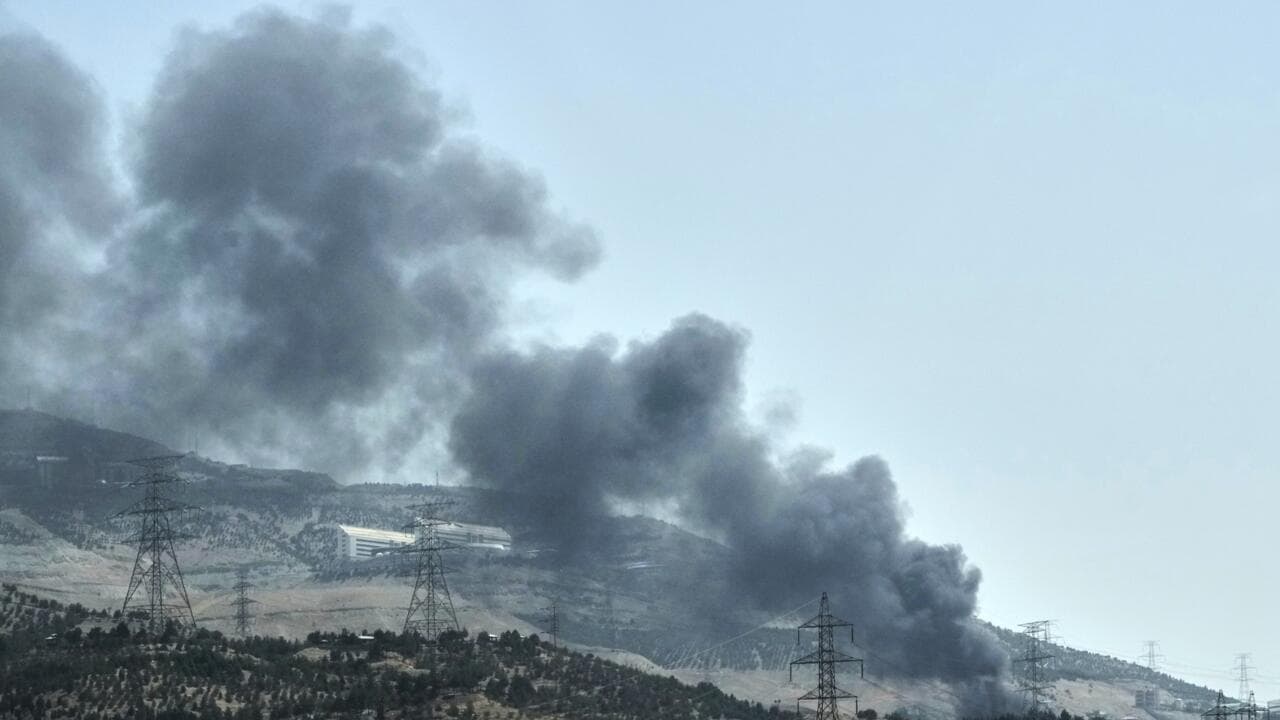
When Prime Minister Benjamin Netanyahu laid out his goals after launching strikes on Iran on Friday last week, he said that the Islamic Republic's nuclear weapons and existing ballistic missiles were the primary targets of the Israeli operation. The goal was to end the “existential threat” Israel says it faces from Iran, which has long denied Israel’s right to exist. But the latest air strikes seem to tell a different story.
Israeli attacks targeted an Iranian foreign ministry building and the defence ministry in Tehran on Sunday. Police headquarters in the city centre were also hit by Israeli jets that same day.
On Monday, Israel said it had struck the command centre of Iran’s Quds Force, the branch of the elite Revolutionary Guards that coordinates operations outside the country and reports directly to Supreme Leader Ayatollah Ali Khamenei.
These new targets are much more closely tied to the heart of the Iranian regime’s military and political decision-making fulcrum than to its nuclear programme.
Priorities
Israel on Saturday also targeted the massive South Pars gas field, which is the world’s largest reservoir of natural gas.
“The logic [for the Israeli government] is incremental. There is a priority of targets,” explained Clive Jones, professor of regional security at Durham University's School of Government and International Affairs.
The first is to significantly slow down – or potentially end – Iran’s nuclear programme. “The second is to target military delivery systems and the leadership that controls them,” Jones said.
Jones believes the second priority was the reasoning behind Israel’s attacks on the gas field.
“If you look at the strikes Israel has conducted, what they’ve tried to do is hit fuel plants that supply the Iranian military – those associated with their rockets programmes, for example, or refuelling tankers,” Jones said.
“They’ve not yet really hit civilian energy infrastructure. That may be something that comes later, depending on what happens next.”
Other targets might be chosen for shock value, according to Middle East expert Filippo Dionigi of the University of Bristol.
Attacks on buildings linked to the regime or the targeted assassinations of officials can be seen as an attempt by Israel to “shock the enemy and try to subvert its chain of command and create chaos, so that it slows down its capacity to react”, Dionigi said.
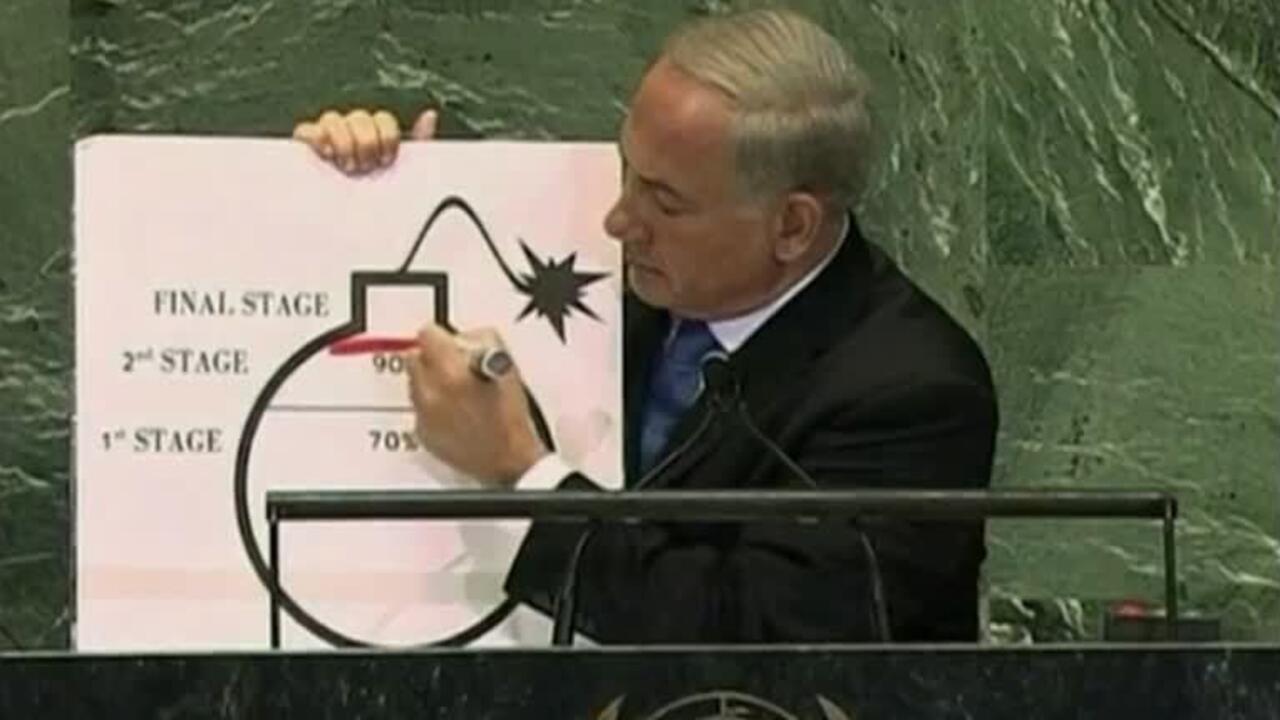
The Octopus Doctrine
Israel’s multi-pronged strategy is also known as the “Octopus Doctrine”, which was first established by former prime minister Naftali Bennett in 2021, said Veronika Poniscjakova, an expert on conflicts in the Middle East at Portsmouth University.
“Iran is the octopus with tentacles all around the Middle East,” Poniscjakova said, with proxies like Hezbollah in Lebanon or Hamas in Gaza.
Its new approach means that Israel will “no longer go after the tentacles of the octopus, [targeting these groups] or carrying out covert attacks on Iran’s nuclear facilities [as with] the Stuxnet computer virus, but go for the octopus’s head directly … striking at the source of the threat – the regime itself”.

But the scope of Israel’s strikes on Iran could suggest the country has broader geopolitical goals, some analysts believe.
“Israel is aiming for a regime collapse in Iran. That is the only reason they would attack energy infrastructures, to increase social unrest against the Islamic Republic by the Iranian people,” said Shahin Modarres, director of the Iran Desk at the International Team for the Study of Security Verona.
And if Israel decides to target civilian energy infrastructure exclusively, power cuts across the country could become more frequent, widespread, and eventually “undermine the trust the population has in its leaders”, Dionigi said.
The Iranian health ministry has said that 90 percent of casualties so far are civilians.
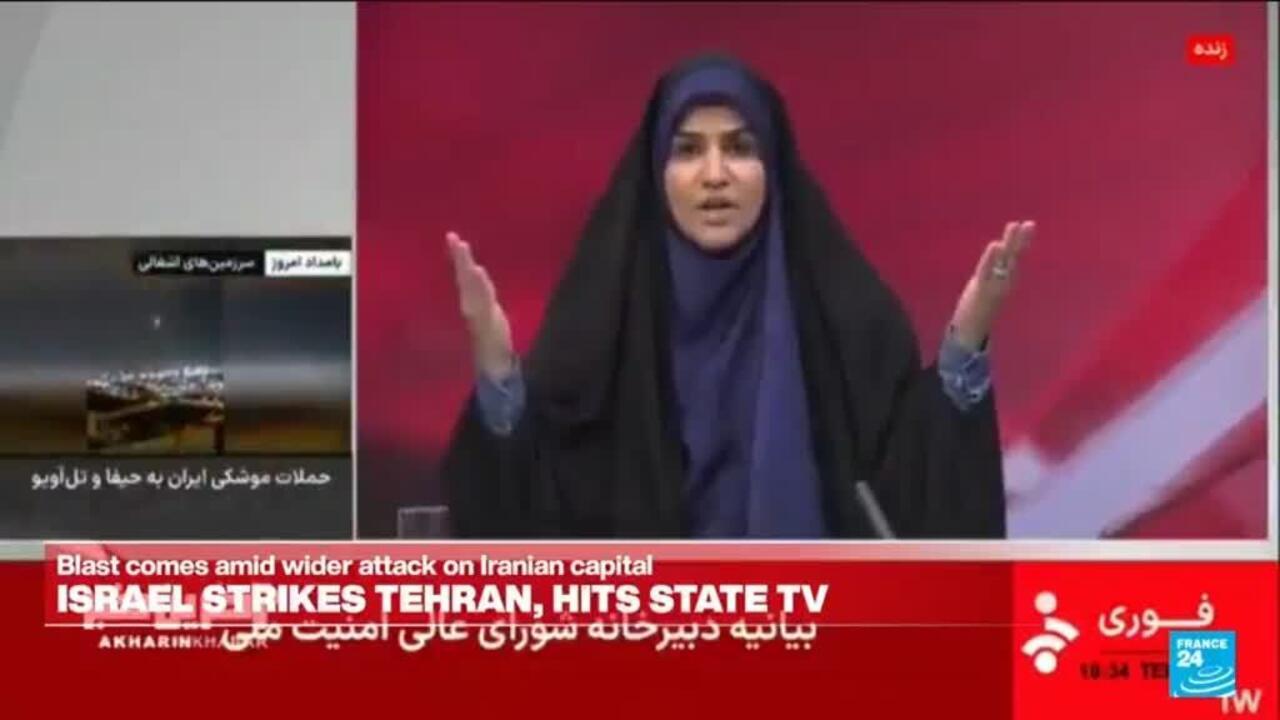
Strikes on political buildings and the targeting of the state-run TV during a live broadcast could be seen as a way to signal to the Iranian opposition that “[they] can exploit the opportunity to stand up against the regime”, Poniscjakova explained.
Most tellingly, Netanyahu issued a direct appeal to Iranians as the Israeli offensive began on Friday, saying he hoped the military operation will “clear the path for you to achieve your freedom”.
"This is your opportunity to stand up [to the regime]," he added.
Netanyahu’s “social media post aimed at the Iranian people, in which he effectively says Israel is paving the way and targeting a regime that has kept you repressed”, Jones said, adding that the post made it pretty clear the Israeli premier is hoping for regime change.
But whether an internal revolt is something that can be encouraged by a competing regional power that has long been at odds with Iran is far from certain.
An 'existential war' for Iran
Israel’s bombing of Iranian police headquarters in Tehran and its subsequent attacks on the ministry of intelligence and security “could degrade the regime’s ability to maintain internal security and social control” on a practical level, according to a report published by the Institute for the Study of War on Monday.
But it remains to be seen whether Iranian leadership can be weakened to the point where it is no longer capable of halting an uprising.
“That’s the ultimate question that nobody can really answer, at least for now,” Jones said.
Any interference from abroad could also backfire.
“External interference in the political affairs of a country rarely has the effect of simply provoking a reaction against the leadership,” Dionigi said. “Interference could have the opposite outcome and awaken a sense of national awareness, national pride and regrouping.”
In other words, in positioning himself as a supporter of the Iranian opposition, Netanyahu could actually strengthen the regime – at least for the duration of the war.
The Israeli prime minister is taking a “huge risk” by going beyond his initial aim of dismantling Iran’s nuclear programme.
“When countries are under attack, there is a tendency for people to rally around the flag, even if they dislike the regime,” Jones said.
“For the Iranian regime, this is an existential war,” Dionigi added. “They will use all of their military capacity for as long as necessary to guarantee their existence.”
For Netanyahu there is also the looming threat of greater escalation that could lead to “a higher number of civilian fatalities [in Israel], which could put more political pressure on the government”, Modarres said.
“It all depends on how [Netanyahu] ends this war. Either he dismantles the Islamic Republic’s nuclear programme and manages to conduct a regime change, or it backfires and his political career ends,” he added.