
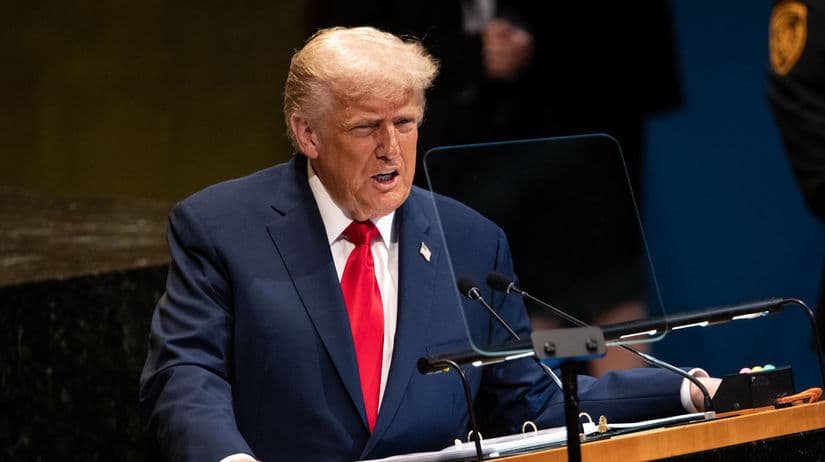
US President Donald Trump and his administration are blaming the EU and migration for what they describe as the imminent and total cultural and civilizational disintegration of Europe in their new official national security strategy, the news website Politico reported today.
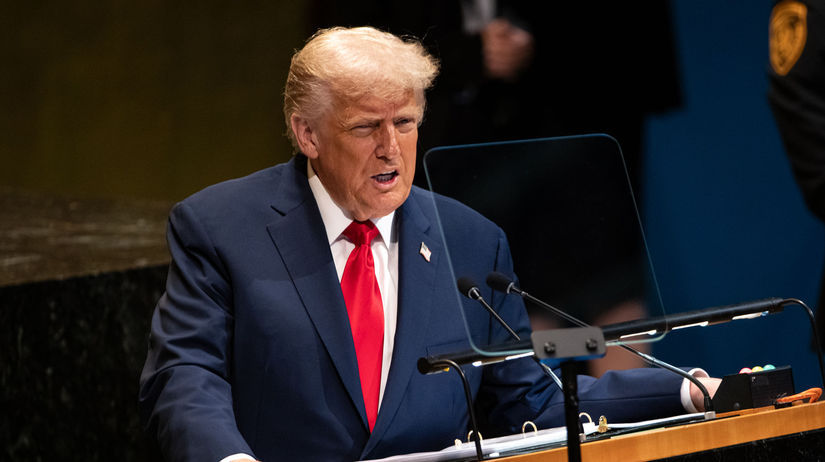
The document states that Europe faces economic problems, but these are"overshadowed by the real and much more dire prospect of the obliteration of civilization" within the next 20 years.
"Among the larger problems facing Europe are the actions of the European Union and other supranational bodies that undermine political freedom and sovereignty, migration policies that are transforming the continent and fueling conflict, censorship of free speech and suppression of political opposition, a sharp decline in the birth rate, and a loss of national identity and self-confidence," the Trump administration's 33-page document states.
Politico reports that the document will likely be welcomed by far-right European parties, whose election platforms focus on criticizing the EU and calling for restrictions on migration from non-European countries, especially those with a majority Muslim population. In practice, the document shows ideological alignment between Trump's populist MAGA movement and nationalist parties in Europe, according to the newspaper.
According to the website Politico, the Trump administration is building increasingly close ties with far-right groups in, for example, Germany and Spain, and in the document it suggests that it could help its ideological allies in Europe.
"America encourages its political allies in Europe to support this revival of spirit, and the growing influence of patriotic European parties indeed gives reason for great optimism," the strategy states.
The document is a rare official explanation of Trump's foreign policy views. Such strategies, which presidents typically release once a term, can help shape how different parts of the U.S. government allocate budgets and set policy priorities. In an introductory note to the strategy, Trump called it"a roadmap to ensure that America remains the greatest and most successful country in human history and the home of freedom on earth."
The US government admits in the strategy that Europe remains "strategically and culturally crucial" for the US, but at the same time repeats its previous criticism. Vice President J.D. Vance criticized European migration policy and questioned freedom of speech in European countries at the Munich Security Conference in February, shocking representatives of the European political mainstream.
The document also repeats the racist conspiracy theory of the “Great Replacement,” according to which elites allegedly plan to weaken the electoral votes of white Europeans by opening their countries to migration from the African continent and especially from Muslim countries.
The war in Ukraine is mentioned in a brief digression from the theme of the “civilizational erasure” of Europe. The US emphasizes that it is in the American interest for the war to end, among other things to restore “strategic stability” with Russia. However, the Trump administration claims that “unstable minority governments” in Europe have “unrealistic expectations about war” and suggests that these countries are hindering the peace process. The comments come as European leaders privately warn that Washington could betray Ukraine during peace talks with Moscow, Politico noted.
Last but not least, the document, in contradiction to NATO's open door policy, states that the US wants to end the perception of the North Atlantic Alliance as an"ever-expanding" grouping.
"In the long term, it is more than likely that within a few decades at the latest, some NATO members will become predominantly non-European. It is therefore an open question whether they will perceive their place in the world or their alliance with the United States in the same way as those who signed the NATO charter," the document continues.
The Middle East will no longer dominate American foreign policy. The region, according to Washington, is no longer “the constant source of irritation and potential source of imminent disaster that it once was” and “is evolving rather as a place of partnership, friendship, and investment.”
The strategy also calls for the United States to shift from relations with Africa focused on"spreading liberal ideology" and economic aid to relations focused on trade and investment.
In the case of China, the document repeatedly calls for a"free and open" Asia-Pacific region, but focuses more on the country as an economic competitor, AFP reported. The strategy makes it clear that the US supports the status quo in the region, but calls on Japan and South Korea to do more to defend Taiwan from China.