
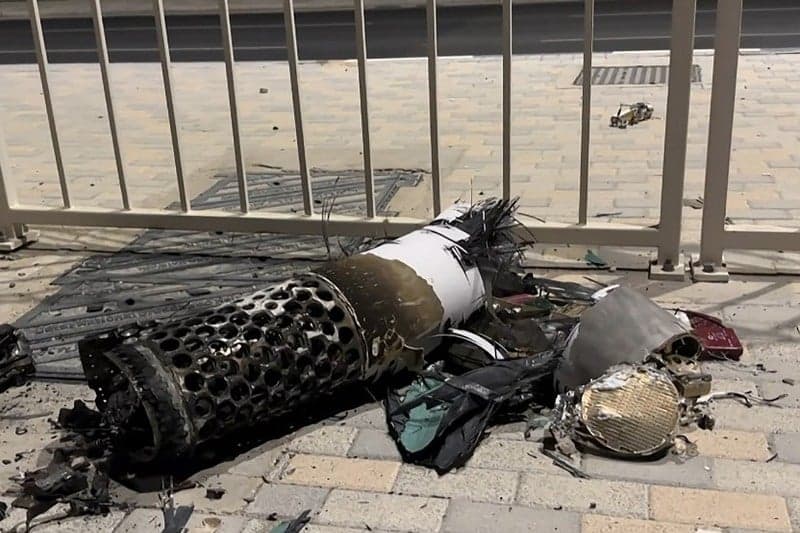
Following the missile attack, officially claimed by Iran, against the US Al Udeid base in Qatar, Algeria found itself in an unenviable diplomatic position amid a wave of explicit Arab condemnations, which viewed the attack as an infringement on the sovereignty of an Arab state.
While Algeria was expected to take a clear stance consistent with the wave of regional condemnation, its Foreign Ministry chose to issue a vaguely worded statement, referring to the"violations" without explicitly naming the aggressor or holding it accountable.
In this regard, Algeria expressed its"deep concern and grave concern" over the growing escalation in the Middle East, following what it described as"violations of the sovereignty of the sisterly State of Qatar and the sanctity of its territory," in a statement issued by the Ministry of Foreign Affairs that took a cautious stance following the Iranian attack on the US base in Doha.
The statement read that Algeria"condemns these flagrant and unacceptable violations," affirming its support for Qatar in confronting this "ordeal" and overcoming its consequences. It did not directly identify the party responsible for the attack, despite Iran's claim of responsibility.
While Arab capitals rushed to clearly condemn the Iranian attack on a sister country, Algeria preferred to play the role of"anxious mediator," simply pointing the finger at the Israeli occupation in an attempt to relieve Iran of embarrassment and ensure its relations with Tehran remain intact.
This confused stance once again highlights the many contradictions in Algerian foreign policy. Algeria continues to pursue a fragile balance between its rhetoric of Arab solidarity and its geopolitical choices, which place it at the heart of axes opposed to this consensus. This weakens the credibility of its positions and its regional effectiveness day by day.