
The United States is alarmingly close to being drawn into another military entanglement in the Middle East, this time by Israel, which looks less and less like a true ally.
Israel’s surprise attack on Iran on Friday has almost certainly destroyed any chance of reaching the nuclear deal that the United States had been pursuing for months. Israeli Prime Minister Benjamin Netanyahu has also recklessly endangered the 40,000 American troops deployed in the region, putting them at immediate risk of Iranian retaliation, which could draw the United States into a war with Iran.
Regardless of how Iran interprets our role in the attacks, Israel appears to have acted without giving the United States enough advance notice to take appropriate precautions. Although President Trump acknowledged on Thursday that an Israeli attack was imminent, the United States only began voluntary evacuations of military families and non-essential embassy personnel on Wednesday afternoon, while the State Department began developing plans for the mass evacuation of American citizens just hours before the attack.
Trump, and all Americans, should be furious. Now, Netanyahu and the most hawkish voices in the United States will almost certainly pressure Trump to help Israel destroy Iran's nuclear enrichment facilities, something that will be difficult for the Israeli military to accomplish alone and that even the U.S. military may be unable to do. It would be the worst mistake of the Trump presidency.
A war with Iran would be a catastrophe, the culminating failure of decades of U.S. regional overreach, and precisely the kind of policy Trump has long criticized. The U.S. would gain nothing by fighting a weak country halfway around the world that causes trouble in its region but poses no critical threat to our security. And the U.S. would lose a lot: most tragically, the lives of its military personnel, along with any chance of escaping our troubled past in the region.
Americans of all political persuasions oppose war with Iran, presumably because they understand the two major lessons of the American experience in the Middle East over the past 25 years. Preemptive wars not only don't work, but they also have unintended consequences with a lasting impact on U.S. national security.
The ill-fated 2003 invasion of Iraq was also a war to prevent nuclear proliferation. Disaster ensued, and not only because Saddam Hussein lacked weapons of mass destruction. The US invasion triggered chaos and civil war in Iraq and tipped the regional balance of power in Iran's favor by allowing it to establish new proxy militias in the country. It also led to the eventual rise of ISIS.
There is no reason to think a war with Iran would play out any better, and it might turn out considerably worse. If drawn in, the U.S. military’s involvement would likely begin with airstrikes rather than a ground invasion, given Iran’s vast size and forbidding mountainous terrain. But as the unsuccessful $7 billion campaign against the Houthis demonstrated, airstrikes are exorbitantly expensive, carry a significant risk of U.S. casualties, and are likely to fail anyway. The United States did not even achieve air superiority over the Houthis, a heterogeneous militant group with the resource base of an impoverished country, Yemen, over which it could not even consolidate control.
Iran has a far greater defensive capability than the Houthis. If airstrikes fail to destroy Iran's nuclear capability, pressure would increase dramatically on U.S. forces to combine an aerial bombardment with a ground component—perhaps something similar to the"Afghan model" the U.S. used to overthrow the Taliban. We know how that turned out. Despite the intention to keep that war small and short, a confrontation that began with just 1,300 U.S. troops in November 2001 spiraled into a disastrous 20-year occupation that reached 100,000 U.S. troops at its peak in 2011 and ultimately resulted in the deaths of 2,324 U.S. service members.
Even in the best-case scenario, in which the United States helped destroy most of Iran's nuclear facilities, it would only delay Iran's progress toward developing a bomb. War cannot prevent long-term weapons development, so diplomacy or benign neglect have always been the best options for dealing with Iran. Its enrichment program is more than 20 years old, spans multiple sites in the Islamic Republic, and employs untold thousands of scientists—3,000 at the Isfahan facility alone. It is likely that enough Iranian scientists know how to enrich weapons-grade uranium that Israel cannot eliminate them all, despite its airstrikes explicitly targeting them.
Assuming some continuity in technical knowledge persists, Iran could likely rebuild its nuclear facilities quickly. And a defiant Iranian regime would undoubtedly be determined to arm its facilities to deter future Israeli and US attacks.
That likelihood, coupled with Israel's insistence that Iran must never obtain the bomb, suggests that Netanyahu's theory of victory could be based on an underlying logic of regime change. In support of this argument, Israel appears to be conducting targeted attacks to dismantle the regime's leadership in Tehran. The Israeli leader has long accepted the desirability of regime change in Iran and hinted in September that it could happen"sooner than one thinks." As a French diplomatic source told Le Monde last fall,"There is an idea circulating in certain circles that perhaps the Israelis are leading us toward a historic moment, that this is the beginning of the end of the Iranian regime." The fall of Syria's Bashar al-Assad regime in December intensified speculation about a similar upheaval in Iran. Some American political hawks and members of the Iranian diaspora now claim that regime change is becoming inevitable; As former Trump national security adviser John Bolton put it:"It's time to think about the campaign for regime change in Iran."
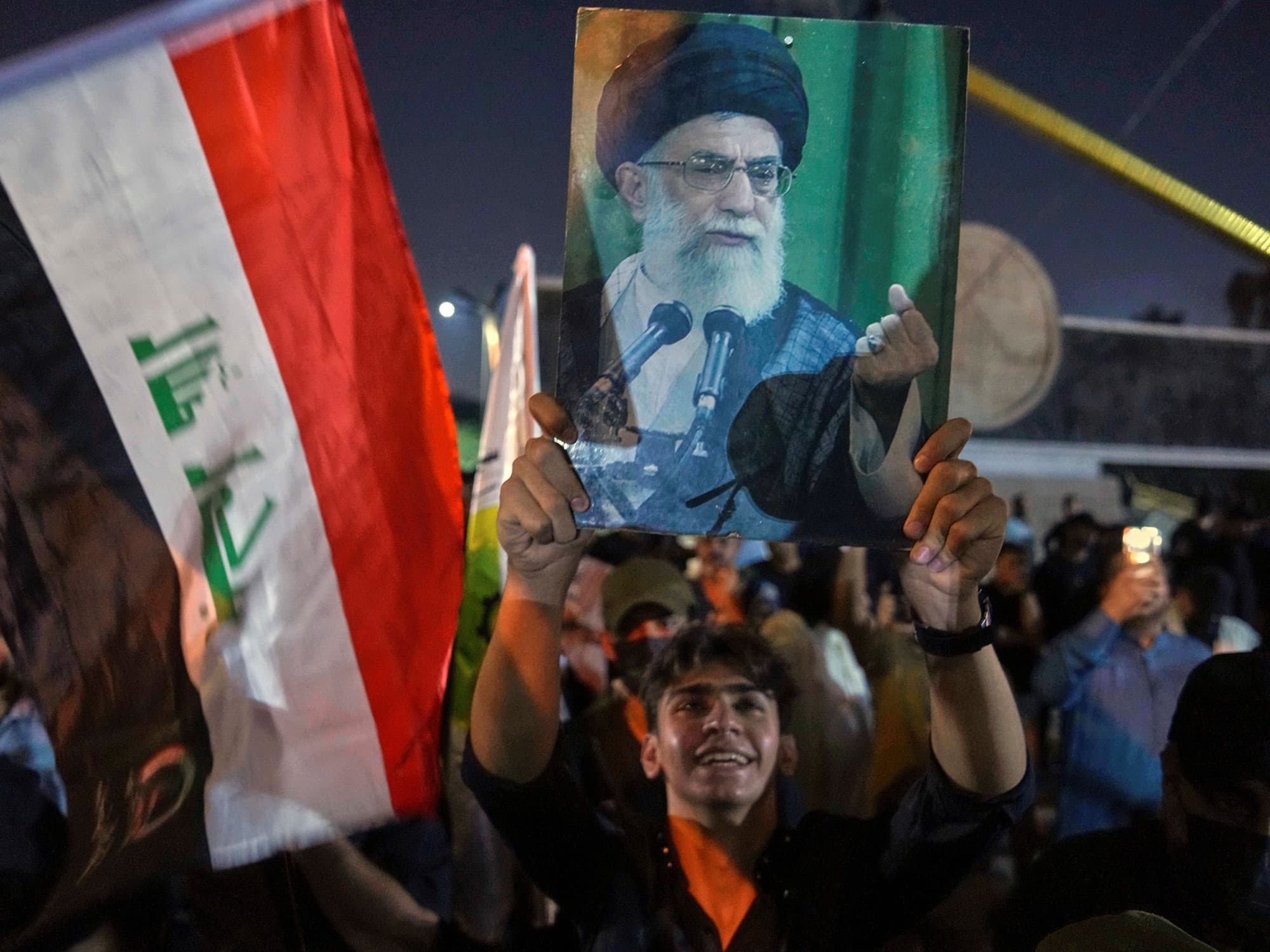
That's magical thinking. History has shown time and again that bombing a country turns its population against the attacker, not against its own regime, despite its deep unpopularity. Images already show Iranians demonstrating in the streets, not to oppose their government, but to urge retaliation against Israel. And even if the regime were to be toppled, what would happen then? For all the Iranian government's flaws, bad governance is preferable to the chaos of no government at all. Do we really want to turn Iran into a failed state, like Iraq or Libya after the US attacked those countries?
Trump often boasts about his record during his first term of not starting new wars. That record is worth turning into a legacy. He must resist pressure from Netanyahu and the hawks at home to avoid tragic and irreparable self-harm.
Kelanic is the director of the Middle East program at Defense Priorities.