
Many ifs, but two years after the bloody Hamas strike in October 2023 and the devastating Israeli response, we are at the end of the conflict after reaching an agreement - What will be the next steps?
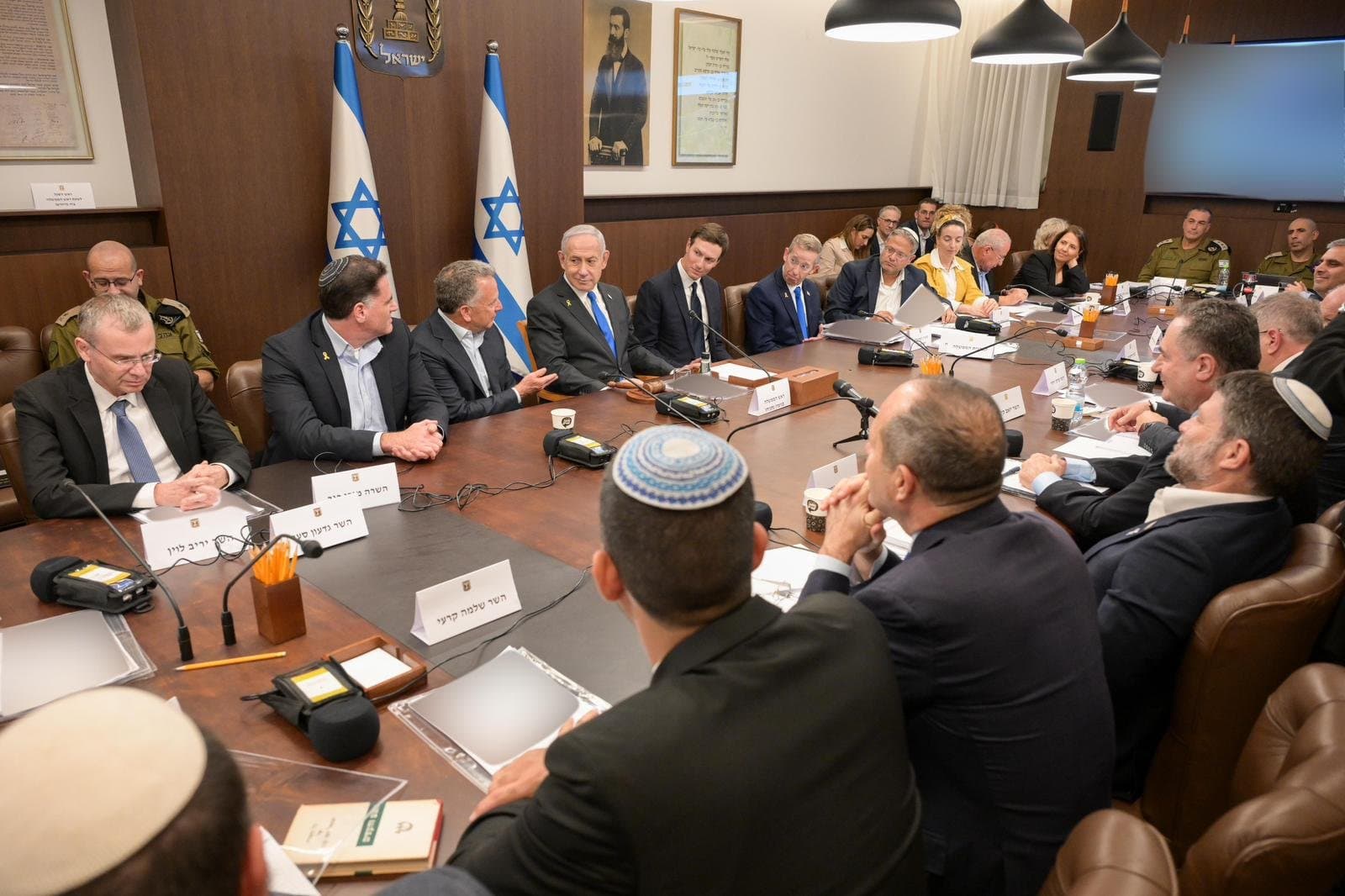
After the marathon cabinet meeting in Israel, a ray of light flooded Gaza for the next day in the Palestinian enclave. The said council approved the agreement for the ceasefire and the ceasefire. All this leads to the end of the war and is expected to be felt and implemented.
In particular, Israel and Hamas signed a ceasefire agreement and a prisoner exchange, as part of US President Donald Trump's peace initiative, which aims to end the two-year war in Gaza.
The government has just now approved the framework for the release of all of the hostages – the living and the deceased.
— Prime Minister of Israel (@IsraeliPM) October 9, 2025
The ceasefire agreement announced in the early hours of Thursday and celebrated in Israel and the Palestinian territories, constitutes the most substantial step towards ending Tel Aviv's war with Hamas, which has only been going on for two years, but has destroyed 80% of the infrastructure of the besieged Strip, with at least 67,200 dead and almost 170,000 injured, since October 2023.
The agreement document was made public:
SCOOP: this is the agreement document between Israel and Hamas under the title "Comprehensive End to the Gaza War" - including the signature of the mediators. More details of my story – at @kann_news
— Gili Cohen (@gilicohen10) October 9, 2025
Hostages return to their families
The Office of Israeli Prime Minister Benjamin Netanyahu has officially announced that the Israeli government has approved the framework for the release of Israeli prisoners, dead and alive.
This officially marks the start of the 24-hour deadline for the ceasefire to begin, followed by the release of prisoners after 72 hours.
The aggression will stop completely, after the Israeli government approved the agreement.
This includes the suspension of all military operations, including airstrikes, artillery bombardments and ground operations, as well as the complete cessation of aerial surveillance activities over the areas from which Israeli occupation forces will withdraw during the first 72 hours.
Palestinian organizations must show that they are actively aiming to find all hostages, alive and dead, within this time, otherwise the ceasefire may be declared invalid.
This is a very difficult task and a gray area, as tunnels have been blown up, houses - hideouts have been bombed by planes and it is certain that some hostages are under rubble. At the moment, the Civil Protection of Gaza is decimated and with very few machines, if any.
Netanyahu's thank-you message
We are in the midst of a decisive development. For the past two years, we have been fighting to achieve our war goals, and one of the main goals is the return of the hostages – all of them, dead and alive. And we will achieve it. We could not have achieved this without the extraordinary help of President Trump and his team – Steve Witkoff and Jared Kushner.
They worked tirelessly with Ron and his team, our team. Those efforts, combined with the courage of our soldiers who entered Gaza, created a combined military and diplomatic pressure that isolated Hamas. I believe that's what brought us to this point. I want to personally thank both of you, Steve and Jarrett.
It was a long time, you worked non-stop, but you didn't just work, you invested your mind and heart as well.
"We know that this is for the good of Israel and the United States, for the good of decent people everywhere, and for these families who will finally be able to be reunited with their loved ones. I want to thank you also on behalf of you and on behalf of the people of Israel," the Israeli prime minister said, thanking the United States, Trump and his envoys, from the Cabinet.
200 American soldiers in Israel
US forces will establish a coordination center in Israel to oversee Trump's Gaza peace plan, Al Jazeera reported. They will manage the entry of aid, logistics operations and security efforts.
The first units, totaling 200 soldiers, have already begun arriving in Israel. No deployment of US forces is expected inside Gaza.
White House press secretary Caroline Leavitt, however, clarified that the 200 American soldiers sent to Israel will be tasked with monitoring the peace agreement in Israel and will work with other international forces on the ground. The clarification concerns any misunderstandings about the role of the American soldiers, who will participate in logistics operations and the coordination of humanitarian aid.
This is NOT true and taken out of context.
To be clear: up to 200 U.S. personnel, who are already stationed at CENTCOM, will be tasked with monitoring the peace agreement in Israel, and they will work with other international forces on the ground. https://t.co/V8UoUSrjA5
— Karoline Leavitt (@PressSec) October 9, 2025
Which Israelis voted against the agreement?
National Security Minister Ben-Gvir, Finance Minister Smotrich, Colonies Minister Strok, Development Minister Wasserlauf and Cultural Heritage Minister Eligiau voted against the deal. It is unclear whether a motion of no confidence will be brought against Benjamin Netanyahu.
In practice, there is no question of a majority, as Yair Lapid has assured the US that he will give a vote of tolerance to the Netanyahu government.
Hamas leader in Gaza announces end of war
The exiled Hamas leader in Gaza, Khalil al-Haya, announced that the organization had received guarantees from the United States, Arab mediators and Turkey that the war in the Palestinian enclave had definitively ended.
"We declare the end of the war today and the beginning of a permanent ceasefire," al-Haya said, according to Reuters.
The agreement includes the opening of the Rafah border crossing in both directions, he added.
Based on the agreements, Israel will release all Palestinian minors and women.
The organization received guarantees from mediators and the US government, all of whom confirmed that the war was over, he added.
We ended the war in Gaza
US President Donald Trump said Thursday afternoon that the hostages in Gaza are expected to be released on Monday or Tuesday. Trump opened a cabinet meeting at the White House to discuss the deal reached on Wednesday, under which hostages held by Hamas militants will be released as part of the first phase of a broader plan for Gaza. He said he believes the deal will lead to lasting peace.
We ended the war in Gaza, said the American president and announced that he would soon depart for the Middle East. As you know, last night we made great progress in the Middle East - something that many said would never happen, he said. We ended the war in Gaza and, on a broader basis, we created peace - and I believe it will be a lasting peace. We secured the release of all the hostages, who should be released on Monday or Tuesday - and this process is complicated, he stressed.
"Last night, we reached a momentous breakthrough in the Middle East, something that people said was never going to be done. We ended the war in Gaza, and really, on a much bigger basis, created peace."
🇺🇸 @POTUS discusses peace in the Middle East as he kicks off Cabinet meeting.
— The White House (@WhiteHouse) October 9, 2025
Trump avoided taking a position on the prospect of a two-state solution."I have no opinion. I will accept whatever they agreed to," he told reporters at the White House.
Asked about the expectations that Palestinians can have, the American president stated: We will create something where people can live... We will create better conditions for people.
Trump also said that there would be a withdrawal of Israeli forces and disarmament in the second phase of the deal, but the priority right now is the return of the remaining hostages. At this point, the US president commented that the bodies of some hostages may be difficult to find.
Donald Trump appeared willing to deliver a speech to the Israeli parliament."I was asked to speak to the Knesset and... I agreed if that's what they wanted," he told reporters.
The invitation to Trump:
It is my profound honor and privilege to officially invite the greatest friend and ally of the Jewish people in modern history, @POTUS @realDonaldTrump, to deliver a formal address to the nation before the Knesset.
Israel awaits The Peace President.
— Amir Ohana – אמיר אוקנא (@AmirOhana) October 9, 2025
Marathon meeting in Israel
In Israel, the Security Council met first, and then the marathon Cabinet meeting began. The meetings brought government turmoil as the far-right Minister of National Security threatened to withdraw his party from the government if Hamas was not disarmed, while he also vetoed the release of certain Palestinian prisoners. US envoys Jared Kushner and Steve Witkoff also took part in the Cabinet meeting.
Prime Minister Benjamin Netanyahu at the government meeting together with President Trump's Special Envoy to the Middle East, @SteveWitkoff, and with the President's son-in-law, @JaredKushner.
— Prime Minister of Israel (@IsraeliPM) October 9, 2025
What does the agreement include?
The deal, reached after indirect negotiations in Egypt and announced by Donald Trump via his platform, Truth Social, was signed by representatives of both sides and is expected to be approved by the Israeli security cabinet.
What are the key points of the first phase?
- Israel will cease military operations within 24 hours of the agreement's approval.
- Hamas will release about 20 live hostages within 72 hours of the cessation of hostilities. The bodies of the rest will follow.
- Israel will release about 2,000 Palestinian prisoners, including 250 serving long sentences for serious offenses.
- The Israeli army will withdraw from some areas of Gaza.
- Humanitarian aid to Gaza will be significantly increased.
According to the director of the United Nations Office for Public Works, approximately $52 billion will be needed to rebuild Gaza.
However, this is only the first phase of a multi-layered plan. The most difficult issues (e.g., full withdrawal, Hamas disarmament, future governance) are deferred to subsequent negotiations.
Where will Israel withdraw? What is the yellow line?
According to a map released by Trump:
- Israel currently controls over 80% of Gaza.
- In the first phase, it will withdraw to an imaginary border called the Yellow Line, leaving about 58% of the territory under Israeli control.
- The IDF will remain in key areas, such as Rafah and Khan Yunis, areas where thousands of displaced Palestinians live.

In detail, the withdrawal foresees three phases:
- Yellow line: Partial withdrawal and release of hostages
- Red line: Second withdrawal supervised by the International Stabilization Force
- Safe zone: Final withdrawal from most areas, but with Israeli forces remaining in some places, as the final withdrawal map has not been published.

Why the agreement now?
The current situation seems to have pushed both sides to make concessions.
For Israel: International isolation and domestic pressure on the Israeli prime minister to return the hostages and end the war have increased recently. American intervention is considered critical and rejecting the agreement could cost the support of his main ally. Benjamin Netanyahu seems to be counting on being able to withstand the reactions of the far-right wing of his government, where many insist on the disappearance of Hamas, especially if the agreement appears favorable to Israel.
For Hamas: It faces military pressure, without having managed to seriously harm the Israeli army. At the same time, it is under pressure from allies such as Qatar, Egypt and Turkey to make compromises. The Hamas leadership, mainly outside Gaza, seems to consider that the hostages now function as an argument for the continuation of the war by the Israeli side, and not as a negotiating advantage. It hopes that through negotiations, it will maintain a political role, despite the risk of marginalization.
What is the difference compared to previous ceasefires?
There is no strict timeline. Unlike previous agreements, which allowed a few weeks to reach a final solution, this agreement does not set a time limit – which may make it more durable.
Trump seems determined to put pressure on both sides, with threats but also with practical diplomatic intervention.
Despite the announcement of the agreement, hostilities have not completely stopped, especially around Gaza. Bombardments have decreased but continue sporadically.
Is this the end of the war?
Not yet. This agreement is just the first step – and perhaps the easiest.
It is unclear how much ground the Israeli army will give up, while Israeli media talk about maintaining control over most of Gaza, when the Palestinians seek its complete withdrawal.
Disarming Hamas remains a difficult and uncertain issue. The possibility of amnesty or exile for its fighters, as envisaged in the Trump plan, seems unlikely to be accepted.
Other open issues that remain to be negotiated and resolved are the following:
- What will be the form of governance in Gaza after the war?
- Who will undertake the reconstruction?
- What will be the role of the International Stabilization Force?
- Who will guarantee compliance with everything beyond Trump's statements?
- Is there a possibility of an international peacekeeping force?
Could war flare up again?
Yes, there are many potential risks of renewed fighting. However, at this point, an immediate outbreak seems the least likely. The most likely scenario is a fragile ceasefire that will last weeks or even months, with negotiations continuing and the risk of a resurgence fading.
Is there hope?
Compared to previous failed ceasefire attempts (November 2023, January 2025), the current situation looks different. Both sides – Hamas and Netanyahu – seem to appreciate that they can gain more from an agreement than from continuing the fighting. This is decisive and gives hope.
But for the plan to proceed:
- Regional powers must remain active.
- International leaders must take risks.
- Hamas must be convinced that continuing violence serves neither its own purpose nor that of the Palestinians in general.
- The Israeli elections must not undermine the process.
- And, finally, Trump should remain active in the effort for a lasting peace and diplomatic repositioning of the Middle East.
There are many ifs, but two years after Hamas' bloody strike in October 2023 and the devastating Israeli response, we may be the closest we've come to the end of the conflict.