
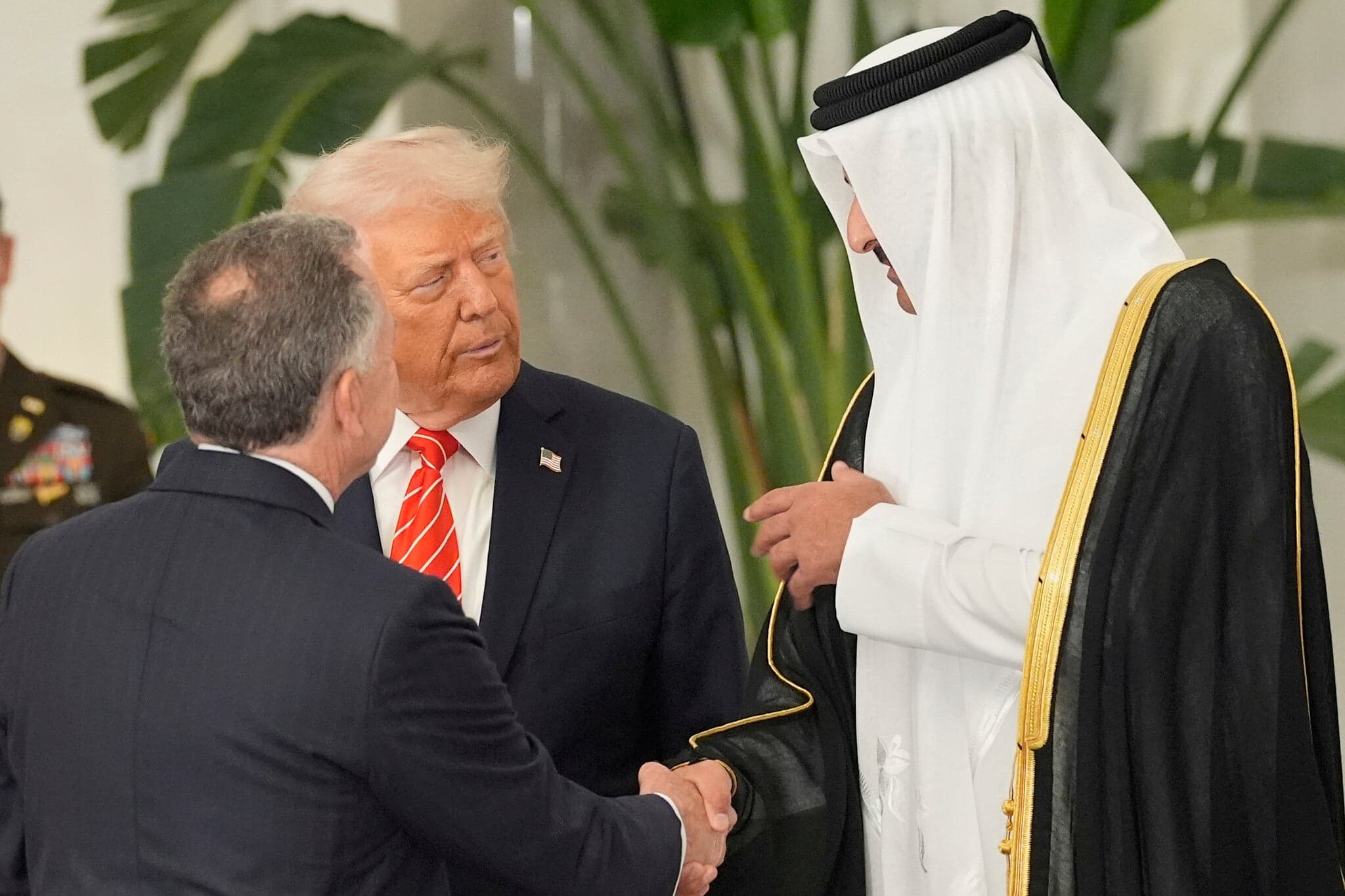
Israeli and Qatari officials met in New York on Sunday, according to a report, in the first of a series of trilateral meetings set up by US envoy Steve Witkoff, who is looking to mend ties that were frayed by Israel’s botched September strike on Hamas offices in Qatar.
According to Axios, which cited two unnamed sources, the meeting was hosted by Witkoff and was attended by Mossad chief David Barnea and a senior Qatari official.
It was the highest-level meeting between the countries since the strike.
Qatar and Israel do not have diplomatic relations, though Doha has played a key role in mediating with Hamas and has a close relationship with the US, especially under President Donald Trump.
According to the sources cited in the report, Witkoff set up a mechanism to “enhance coordination, improve communication, resolve mutual grievances, and strengthen collective efforts to prevent threats.”
Sunday’s meeting likely focused on moving the Gaza ceasefire to its second phase, nearly two months after it was secured in early October, the report said. Prime Minister Benjamin Netanyahu said Sunday that the truce’s first phase is “almost” complete, and that he expects the next stage to begin soon.
The report did not specify how frequently such meetings will be held under the new mechanism.
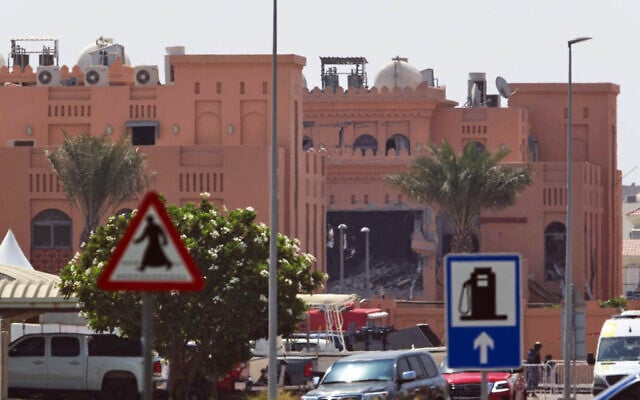
Though the September 9 strike failed to kill the key Hamas leaders it was targeting, it did kill several lower-level members in the terror group, along with one Qatari guard. Following the attack, Qatar — which had until then played a key role in negotiations between Israel and Hamas amid the war in Gaza — refused to serve as a mediator.
The failed strike also sparked anger from the US, and led to a renewed push to pressure Netanyahu to agree to a ceasefire in Gaza.
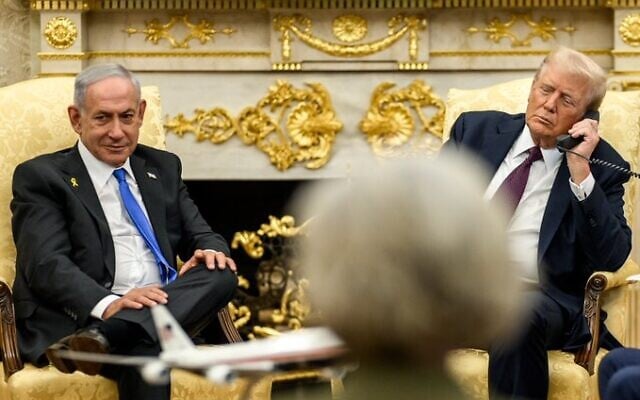
In late September, at Trump’s request, Netanyahu spoke to Qatari Prime Minister Mohammed bin Abdulrahman bin Jassim al-Thani in an Oval Office phone call, during which he apologized for violating Qatari sovereignty.
After the apology, Qatar returned to its mediation role, and just over a week later, Hamas and Israel both agreed to the first phase of Trump’s new 20-point Gaza peace plan.
The ceasefire began on October 10, and three days later, all 20 living hostages were released from captivity, in accordance with the first phase of the agreement. Hamas was also required to release the bodies of the deceased hostages, though it has released their remains gradually over the past two months, as it says it has needed to locate them in Gaza’s rubble.
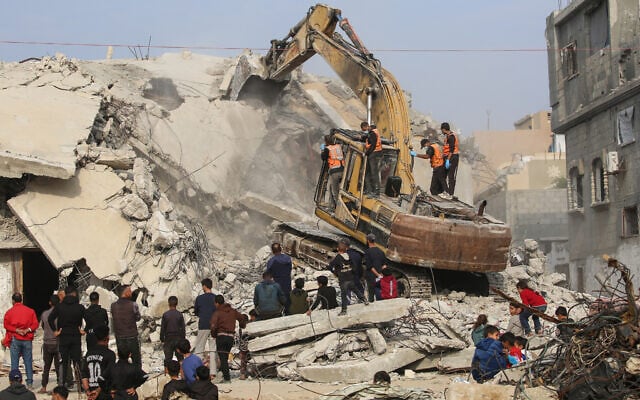
As of Sunday’s meeting, the body of one slain hostage, Master Sgt. Ran Gvili, remains in Gaza, and Israel has insisted that Hamas return his remains, as stipulated in phase one of the ceasefire.
The ceasefire’s second phase will tackle the issue of Hamas’s disarmament and the demilitarization and rebuilding of the Gaza Strip, as the US plans to deploy the International Stabilization Force in the Strip at the beginning of 2026.
Qatar’s prime minister said in an interview Sunday that his country will not foot the bill for rebuilding Gaza, despite speculation that it would be the main backer of reconstruction.
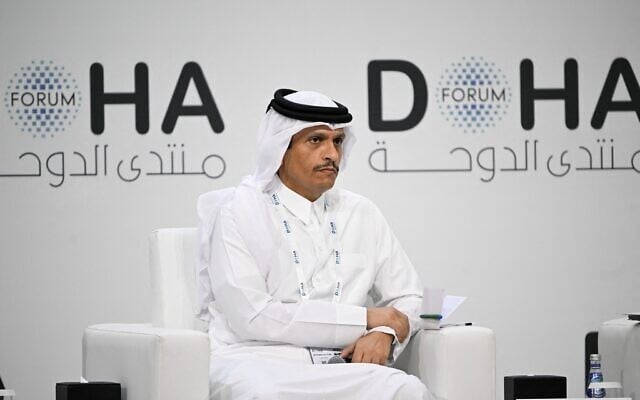
“We are not the ones who are going to write the check to rebuild what others destroyed,” Al Thani said during an onstage interview at the Doha Forum, an annual diplomatic conference. “When you are talking about Gaza,” he went on, “Israel flattened this land.”
He indicated that Qatar will limit its funding to humanitarian aid, declaring that it will continue supporting the Palestinian people and do what it can to alleviate their suffering.
If Qatar does not back reconstruction projects in Gaza, it is even more unclear who would be willing to do so, as Doha had been seen to place fewer conditions on its support than other wealthy Gulf countries such as the UAE and Saudi Arabia, which have insisted they will not offer funds, absent a clear pathway to the establishment of a Palestinian state, which Israel rejects.
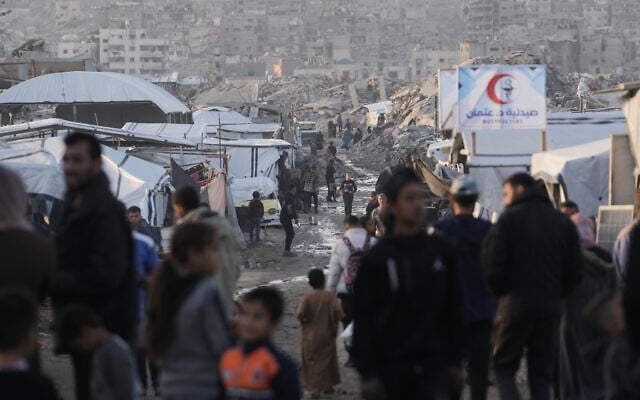
Phase two of the deal also pertains to the establishment of governance and security mechanisms that will be responsible for administering postwar Gaza in place of Hamas.
A US official told The Times of Israel on Friday that while the US looks to announce the transition by year’s end, the process may not be finalized by then, as the mediators have yet to secure agreements from Hamas about its relinquishment of power and disarmament.
Hamas has said it is willing to hand over control of Gaza to a government of Palestinian technocrats, but has come out against the idea of foreign bodies taking charge and has publicly asserted that it will not give up its weapons, insisting it has a right to armed resistance against Israeli rule.
The mediators are nevertheless working to coax Hamas into agreeing to a disarmament plan that would begin with its surrender of heavy weapons such as rockets and missiles and, at a later stage, lighter weapons as well, the US official said.