


The risky rescue operation that allowed María Corina Machado to leave Venezuela and arrive in Oslo to receive the Nobel Peace Prize was marked by a series of incidents that almost left her stranded in the Caribbean Sea.
The Venezuelan opposition leader, known for her confrontation with the regime of Nicolás Maduro, remained incommunicado for hours in rough waters, until an extraction team managed to locate her and bring her to safety, according to The Wall Street Journal.
In the early hours of Tuesday, after more than three hours adrift in the Gulf of Venezuela, Machado and her small group of companions were rescued by a team led by Bryan Stern, an American combat veteran.
The GPS on the boat they were traveling in had fallen into the water, and the backup device also failed, preventing them from reaching the planned rendezvous point. This situation triggered a race against time in extremely dangerous conditions, with waves up to three meters (10 feet) high and no communication with the outside world. Upon confirming that Machado was safe, Stern informed his team with the message: “Jackpot, jackpot, jackpot.”
In a proof-of-life video sent to U.S. officials and shared with The Wall Street Journal, Machado appears on the boat, visibly affected by the waves, and declares: “My name is Maria Corina Machado. I am alive, safe, and very grateful.”
Stern, who heads an organization specializing in high-risk extractions made up of former special operations and intelligence members, named the mission Operation Golden Dynamite, alluding to the Nobel Peace Prize winner and Alfred Nobel, the inventor of dynamite.
Machado's journey lasted almost three days. She traveled overland from the outskirts of Caracas to a fishing village on the Venezuelan Caribbean coast, and then crossed by boat to the Dutch island of Curaçao, a sea voyage of approximately twelve hours. From there, a private jet took her to Oslo, where she arrived shortly after the Nobel Prize ceremony, which was accepted on her behalf by her daughter.
The operation, funded by private donors and without US government funding, involved more than 30 people under the coordination of Stern and his Tampa-based firm, Grey Bull.
Stern told The Wall Street Journal that he maintained constant communication with senior U.S. military commanders before and during the operation, sharing real-time locations, describing blockades, and requesting support when they lost contact with Machado's vessel.
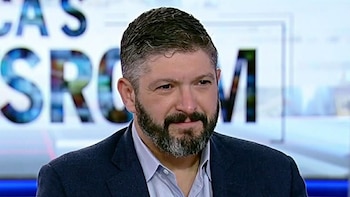
Although the State Department and the Pentagon referred inquiries to the White House, and it did not respond, U.S. officials at various levels followed the development of the mission through messages and voice notes sent by Stern and his team.
The extraction of Machado represented an exceptional challenge, since she was a widely recognized figure who had gone underground after being excluded from the 2024 elections, in which her party was declared the winner by the United States, although Maduro did not recognize those results.
Stern compared the difficulty of moving Machado to that of relocating a high-profile political figure in the United States: “Moving Maria is like moving Hillary Clinton,” he said.
The plan considered at least nine different scenarios, from air rescues to routes through Guyana or Colombia. To throw off potential pursuers, the team spread false rumors about Machado's whereabouts, suggesting she was in Europe, en route to Colombia, or even aboard a U.S. flight.
Stern denied any collaboration with Venezuelan authorities and stressed that the operation was carried out without help from the regime or the Venezuelan armed forces.
On Monday afternoon, Machado left her hiding place in disguise and wearing a wig. The team took precautions to avoid digital tracking.
Upon reaching the beach, the operatives encountered mechanical problems with the vessel, a fishing boat deliberately chosen for its modest appearance to avoid attracting the attention of U.S. forces, who have intensified the destruction of vessels suspected of drug trafficking in the region.
The engine repair caused a twelve-hour delay, and the group set sail at nightfall instead of in the early hours of the morning, as planned.
During the crossing, adverse weather conditions hampered progress and caused one of the crew members to suffer severe seasickness.

However, the bad weather also helped the boat evade maritime radar. Stern expressed concern about the possibility of being mistaken for smugglers and attacked by U.S. forces, which have sunk more than twenty vessels in the area recently. Therefore, he notified U.S. defense officials of their presence and requested that they refrain from any action that could jeopardize the operation.
The rendezvous at sea became complicated when Machado's boat deviated 25 miles (40 kilometers) from the agreed-upon point. After hours of uncertainty and exchanges with U.S. Navy officials, communication was re-established around 11:00 p.m.
Stern's team located the vessel, verified that the occupants were unarmed, and transferred Machado to the main ship. Stern documented the rescue with a satellite photograph sent to U.S. officials, in which both appear exhausted but smiling.
On the journey to Curaçao, Machado spoke mainly about her daughter, whom she hadn't seen for two years. Once on the island, Stern briefly contacted Dutch authorities but avoided giving details so as not to compromise them with the Venezuelan regime.
Machado stayed in Curaçao for only a few hours, taking advantage of the twenty-four-hour window that allows formal entry into the country, before boarding the private flight to Oslo at 6:42 a.m.
“miracle”.