
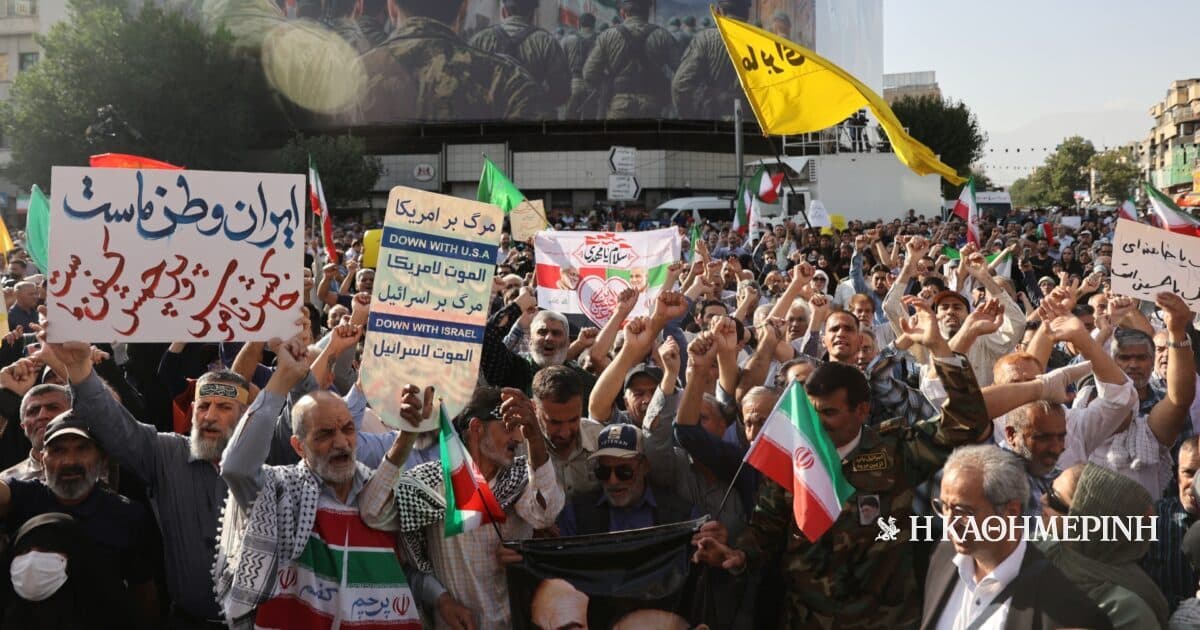
Limited options to respond to the escalation of conflict in Middle East, it seems to have the Iran despite constant threats of retaliation against American military bases and ships.
The Iranian authorities, while they had sought to prevent US involvement with serious threats of retaliation, are now in a difficult position, as their options are limited and downright dangerous.
Although Iran still has a powerful arsenal of shorter-range weapons, such as missiles and drones, many of its deterrent systems, which relied on the use of long-range ballistic missiles, have been destroyed by Israeli air strikes in recent days. The United States, for its part, has strengthened its defensive presence in the region by dispersing its navy and strengthening its air defense systems, making its military networks more difficult targets.
Furthermore, the American president, Donald Trump has warned Iran of a possible broader American military intervention, targeting Iran's supreme leader, Ayatollah Ali Khamenei Despite the threats, Iran appears to have limited capabilities to respond immediately to such a challenge.
Strategic responses and strategic alliances
Iran's main strategic force remains the so-called Axis of Resistance. However, even this strategic factor now appears to be limited, as the Israeli military has severely damaged Hezbollah's arsenal in Lebanon. Iran has also seen its influence over other pro-Iranian groups such as Kata'ib Hezbollah in Iraq waning.
This armed group, which includes the Houthis in Yemen, has threatened to attack American ships in the Red Sea if the US continues to support Israel. Despite the threats, Iran’s actual strategic response remains uncertain, as Iran knows that a military escalation by paramilitary groups would immediately trigger a US response, which is on full alert.
Threats to the Strait of Hormuz
Iran also has the potential to disrupt shipping with a more drastic move, its possible decision to close the Strait of Hormuz, a strategically important area that handles about 20% of the world’s oil trade. Iranian politicians have advocated for the closure in recent days, which, while it would cause an immediate increase in oil prices, could seriously damage the Iranian economy. At the same time, such an action could bring other Iranian adversaries into the region, most notably the Gulf Arab states, which have expressed their disapproval of Israel’s attacks and could take action to protect their own interests.
Long-term reaction?
Rather than taking immediate action, Iran may decide to take a longer-term view, avoiding bringing other enemies into the war or provoking a full-scale military escalation. Iran’s experience shows that it often delays its response to attacks, and as Foreign Minister Seyed Abbas Araghchi said, Trump’s decision will have lasting consequences.