Israeli Air Force Strikes Fordow Again
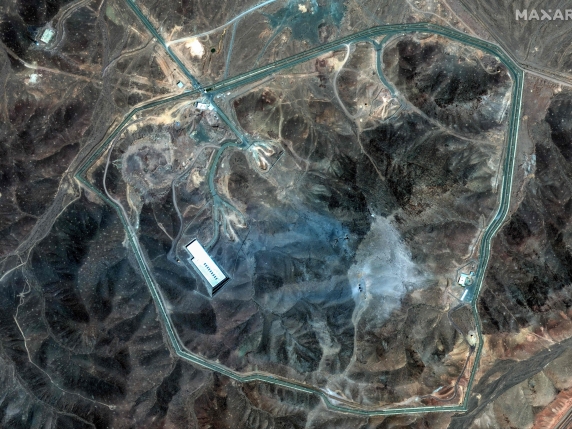
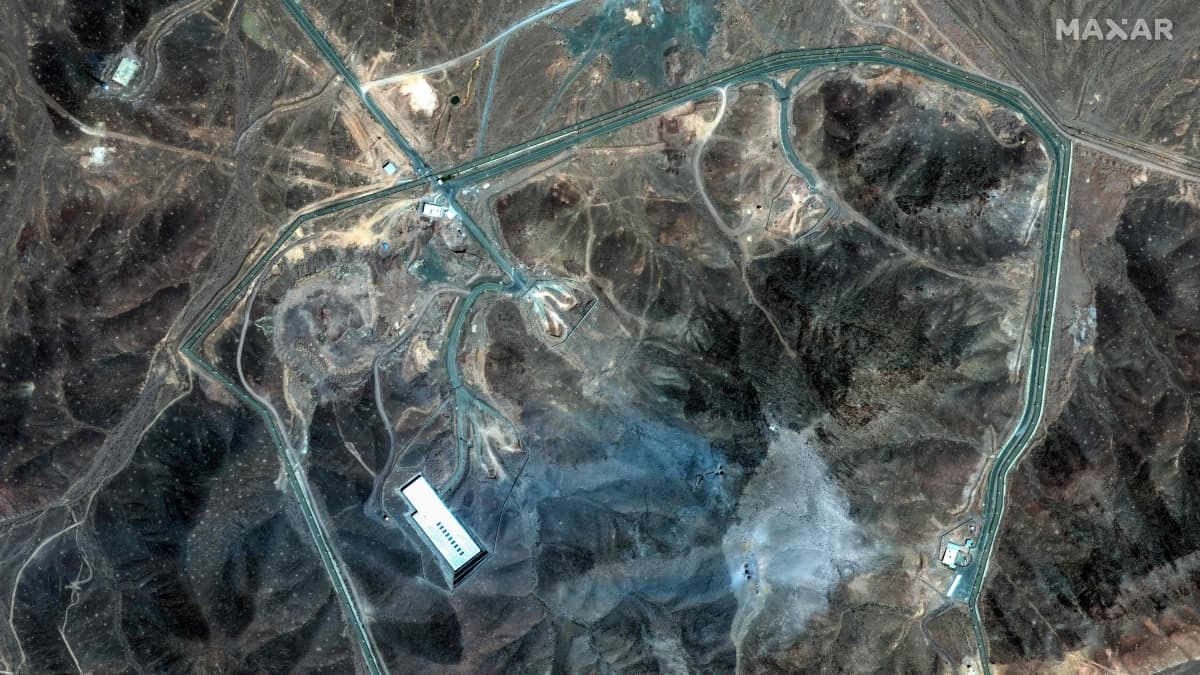
The Israeli air force returned to Fordow and bombed the access roads to the site inside the mountain. Strange that they did not do so on the eve of the American strike when there were dozens of trucks and bulldozers at work around the tunnel entrances.
The new IDF attack may be a way to hinder recovery activities, to keep pressure on a primary target, a further signal that Operation Midnight Hammer decided by Donald Trump may not have completely closed the dossier. As many suggest.
The director of the IAEA, Rafael Grossi, reiterated yesterday that the plant has suffered significant damage but no one, not even his agency, is able to say how deep it is. There is less doubt, however, about Natanz and Isfahan, as satellite photos have shown the destroyed buildings, revealed with greater precision how at least two super bombs dropped by B-2s on the first target and the 30 cruise missiles of the Georgia submarine aimed at the second have compromised the structures already hit by the devices launched by the Israelis.
Grossi's opinion, increasingly unpopular with the Islamic Republic, follows the euphoric comments of the American president and is balanced by the opinion of numerous experts but also of representatives of the US administration.
In summary:
1) The strike was a well-coordinated action, proof of the Pentagon's global strategic capacity. 2) The role of logistics was notable with the fleet of tanker aircraft that enabled the Spirits and over a hundred aircraft to carry out the incursion.
3) The GBU have caused significant destruction.
4) The actual outcome will be known only after intelligence and other reliable sources have the opportunity to discover what happened in the Fordow bunker. And not only there. They are asking for time. The president, instead, reacted by calling the articles that played down the attack fake news: we destroyed everything. The experts' reservations
Expert Jeffrey Lewis, via Twitter, without downplaying the scope of the raid, expressed many reservations in detail, with some doubts shared, in different tones, by senior US officials. There is no certainty about the quantity of enriched uranium present at the time of the strike inside the tunnels: the Iranians claim to have transferred it, a move also considered probable by the Americans. Did they also do it with the trucks spotted? Or did the vehicles add earth to the covering bastions? It is possible that some of the material was taken to safety in another protected depot in the Natanz area and spared until today by the Rising Lion offensive. A possibility excluded by Republican Senator Mulling who cited intelligence sources: they did not have time.
Furthermore, scientists are believed to have nearly 400 kilograms of enriched uranium at their disposal, enough to proceed — if authorized by Leader Khamenei — toward the Bomb. The final lesson is the usual one: the war option can only slow down but not completely stop the atomic program. A principle equally clear even before The Donald took off the double formation of B-2s, one coming from the Pacific and the other arriving from the Atlantic. Added to this was a small debate about the power of the GBU. One party believed that there was no absolute guarantee of full success, another — including the Pentagon — replied: we have tested it and have been preparing for its use for a long time. In other words, trust us.
Leaving aside the balance sheet, there is a constant warning in diplomatic and military circles about the existence of a parallel (secret) path by the Ayatollahs in atomic research. Studied to evade international checks, entrusted to a small group of scientists and Pasdaran, designed to resist the enemy's harsh opposition. The Israelis did not wait for the United States or even Trump to act. Sabotage, computer viruses, eliminations, supplies of faulty technology to Iran through front companies in the West, maneuvers and much more were not enough to induce the Islamic Republic to give up.
Guido Olimpio answers subscribers' questions today, Tuesday 24 June, at 12 in the new meeting of the Conversazioni del Corriere. Live video appointment. Hosted by Maria Serena Natale.
To send us questions and reflections, follow live and then review the event just connect to this page .