
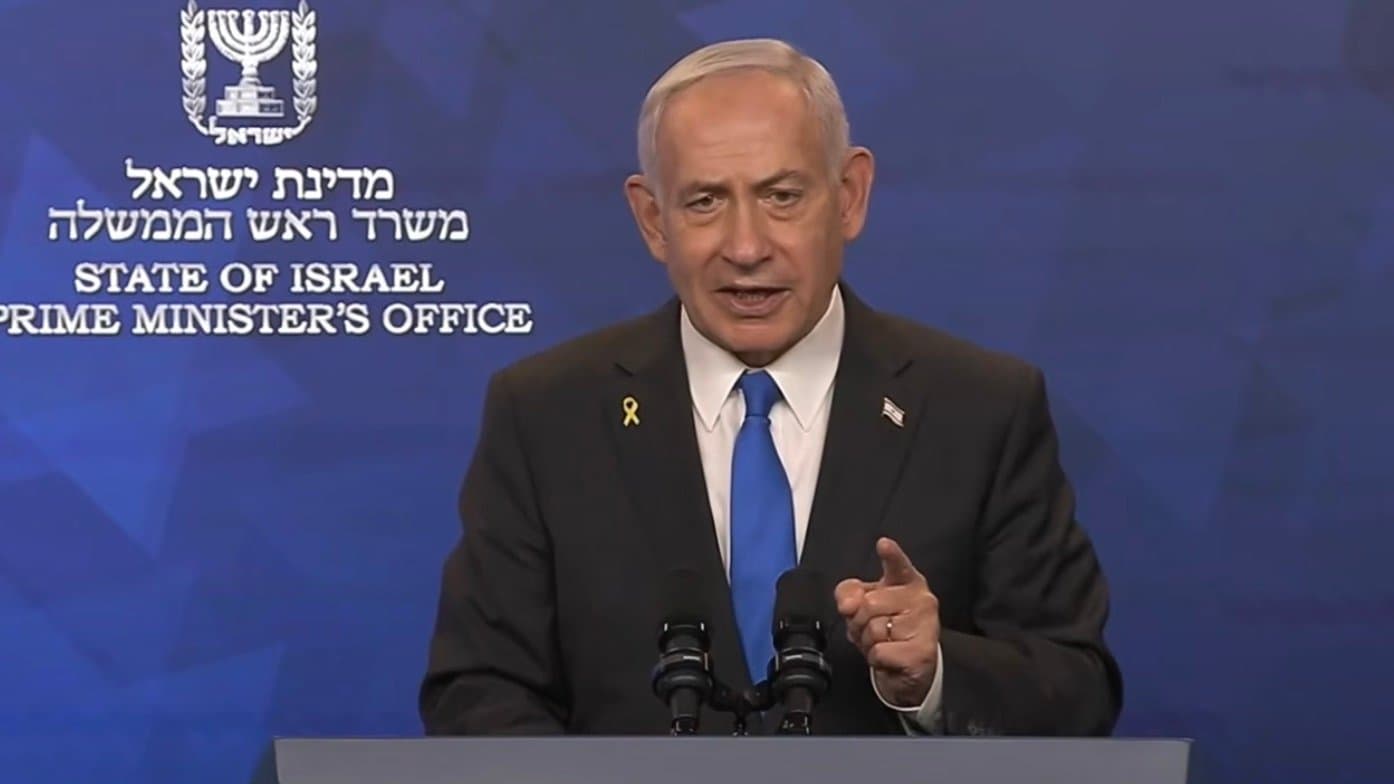
Prime Minister Benjamin Netanyahu indicated Friday that Israel will resume the war against Hamas if the terror group is disarmed, issuing the threat just hours after his cabinet signed off on a hostage-ceasefire deal, the first phase of US President Donald Trump’s plan to end the war in Gaza permanently.
“Hamas will be disarmed, and Gaza will be demilitarized,” Netanyahu said in a video statement from his Jerusalem office. “If this is achieved the easy way, great. And if not, it will be achieved the hard way.”
The premier has issued this warning before, but it was the first time he has done so since the agreement came into place.
The Trump plan envisions Hamas’s weapons being “decommissioned” and Gaza being demilitarized; the deal signed on Thursday only covered the initial points of the 20-point proposal focused on the hostage-Palestinian security prisoner swap, a partial Israeli pullback in Gaza, and a ceasefire.
While accepting the terms of the hostage-prisoner release, Hamas has said that it is not prepared to give up its weapons, though an Arab diplomat has told The Times of Israel that creative solutions can be advanced to deal with the issue in a manner that is satisfactory to all sides.
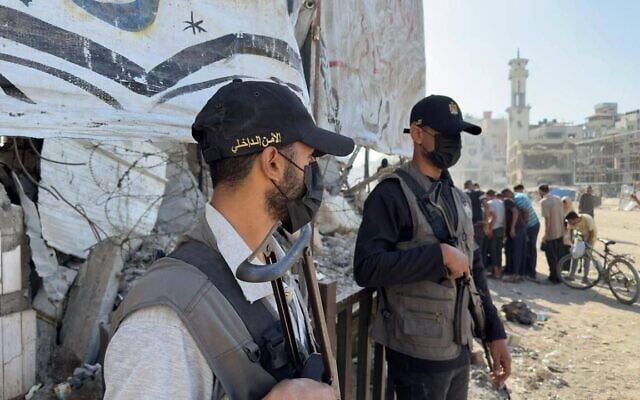
Within hours of the initial Israeli pullback, several Hamas gunmen were spotted patrolling the streets of Gaza on Friday. It is unclear how widespread that phenomenon is, but the images of the gunmen, carried by Hamas-affiliated media, appeared aimed at pushing a narrative that the terror group is still in control of parts of the Strip and seeks to remain as such.
Netanyahu used much of his video address to hail the agreement, framing it largely as a hostage deal, rather than one that ends the war, amid anger from his far-right coalition partners regarding that point, along with their opposition to the release of nearly 2,000 Palestinian prisoners, including 250 serving life sentences for involvement in attacks against Israelis.
Netanyahu stressed that he did not listen to those who argued that it would not be possible to bring the hostages home.
“I believed that if we applied heavy military pressure, combined with heavy diplomatic pressure, we would absolutely be able to return all of our hostages,” he said. “And that is exactly what we did.”
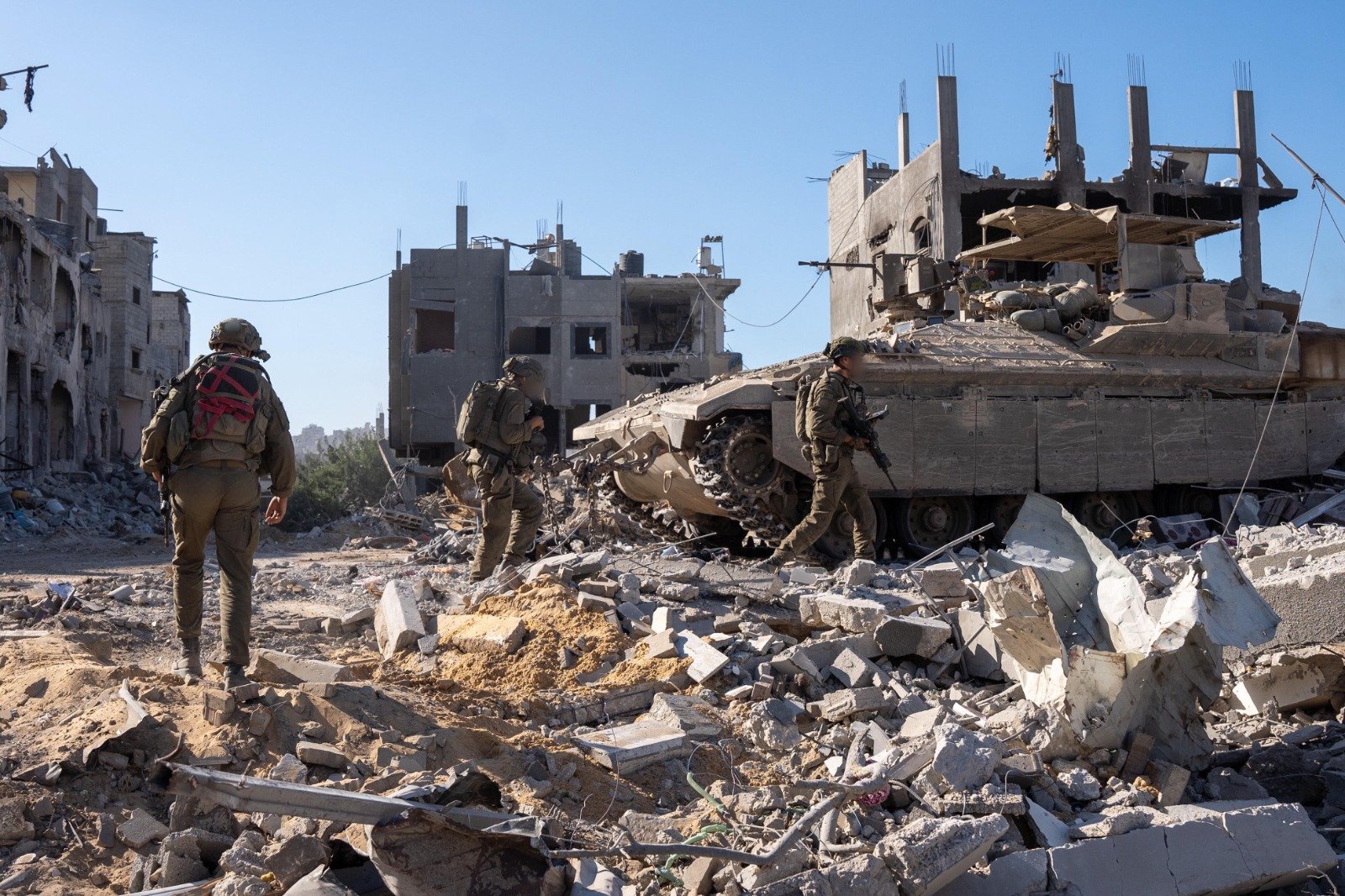
Netanyahu emphasized, as he often does, that he faced intense domestic and international pressure — not to order the IDF to enter Rafah, not to take the Philadelphi Corridor, not to operate in other theaters, and to end the war and leave Gaza while Hamas, Hezbollah and other enemies were “at the height of their power.”
Netanyahu continued by blasting analysts and journalists who argued, as he put it, “that there is no way to bring back the rest of the hostages without giving in to Hamas’s main demand — that the IDF will leave the Strip entirely, including from the buffer zone, including from the Philadelphi corridor, including from the dominant ground, with all its implications.”
He said that he knew that if the IDF went into Hamas’s last major stronghold, Gaza City, as he had directed, “Hamas will want to save its rule.”
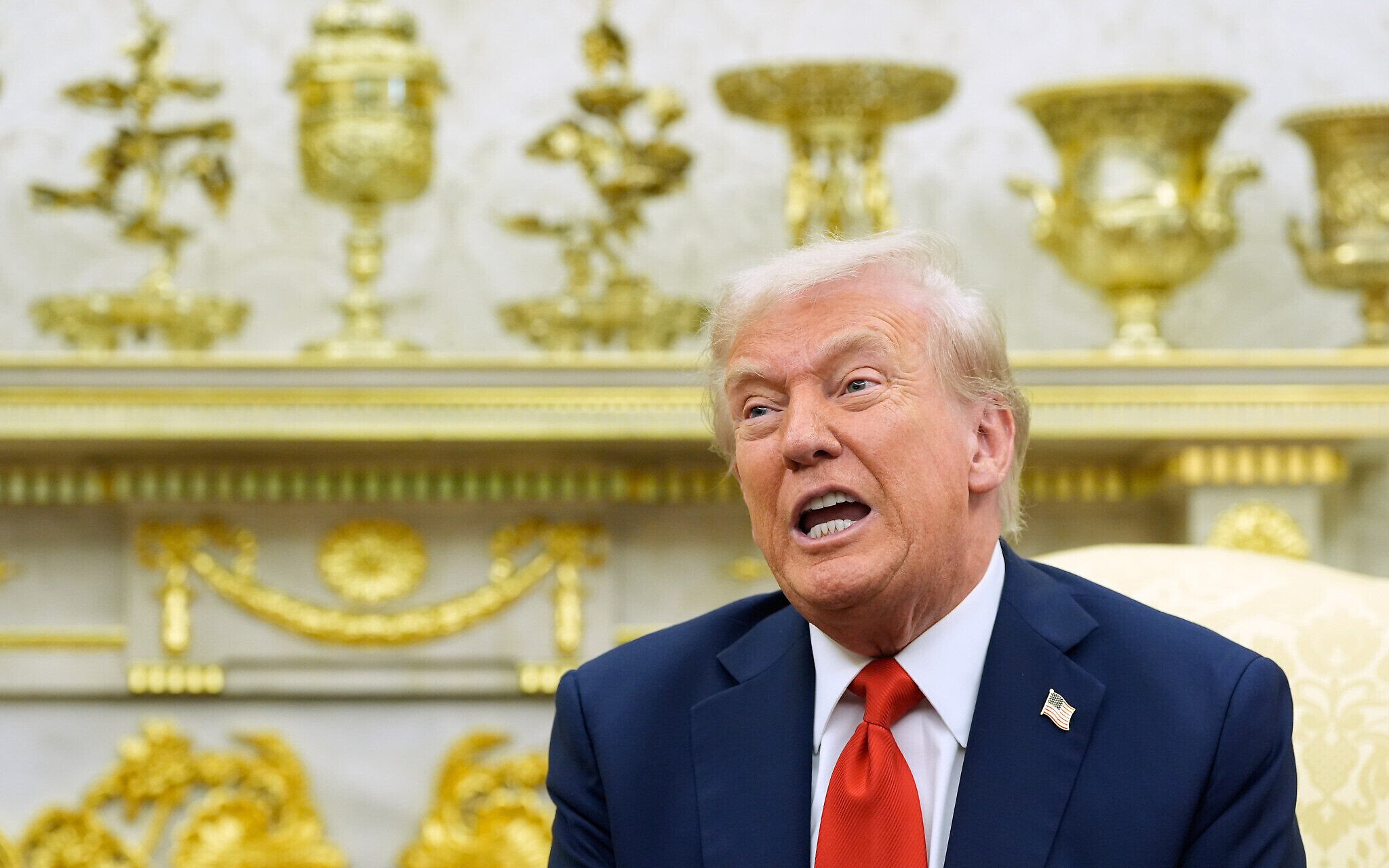
Netanyahu added that he knew that if massive diplomatic pressure on Hamas was applied “from our big friend President Trump, this powerful combination will cause Hamas to give back all of our hostages, while the IDF remains deep inside the Strip and holds all the key positions.”
One consideration guided his decision-making, said Netanyahu: “The security of Israel.”
“That means achieving the goals of the war, including returning the hostages, removing the ballistic and nuclear threat from Iran that endangered our existence here, and breaking the Iranian axis, of which Hamas is a central component.”
Netanyahu denied that the current deal had been available earlier. “Hamas never agreed to release all of our hostages while we remain deep inside the Strip,” he insisted.
The deal indeed leaves Israel in control over over 50% of the Strip even after Hamas releases all 48 remaining hostages, though it does envision an eventual pullout from the entire Strip, save for a narrow buffer zone around the perimeter that will remain for the foreseeable future.
Subsequent withdrawals will be based on progress in the decommissioning of Hamas weapons and the establishment of an International Stabilization Force that will gradually replace the IDF.
Still, these terms were not among the points that Israel and Hamas agreed to on Thursday.
“Hamas agreed to the deal only when it felt the sword resting on its neck,” said the premier, “and it is still on its neck.”

In the war, he said, “We are attaining massive victories, victories that are changing the face of the Middle East.”
He warned that Israel’s fight against Iran and its proxies is not over, and significant challenges remain. At the same time, said Netanyahu, there are important opportunities to “expand the circle of peace around us.”
“In the current stage, we are focused on freeing our hostages,” said Netanyahu, promising to bring the bodies of slain hostages “to a Jewish burial.”
“We will work to locate everyone as soon as possible, and will do it as a holy obligation of mutual responsibility,” he said amid mounting concerns that Hamas may not be able to locate the bodies of several of the dead hostages.
After praising IDF troops and recognizing the sacrifice of the families of the fallen, Netanyahu thanked Trump “for his world leadership, and for his unceasing efforts to put together this plan to bring back our hostages.”
He also thanked top Trump aides Steve Witkoff and Jared Kushner, along with Strategic Affairs Minister Ron Dermer and Israel’s negotiating team, made up of top officials from the various security agencies.
The Simchat Torah holiday two years ago turned into a day of national mourning, said Netanyahu. “This Simchat Torah (on Tuesday) will be, God willing, a day of national happiness. Happiness over the return of all our brothers and sisters.”