
As time goes by, details emerge about the American strikes against Iran's nuclear facilities.
The US military gave details about which facilities were hit and which military assets were used, while President Donald Trump welcomed the attack on social media.
From the number of bunker buster bombs dropped to where they hit, here's what we know so far.
How Operation Midnight Hammer evolved
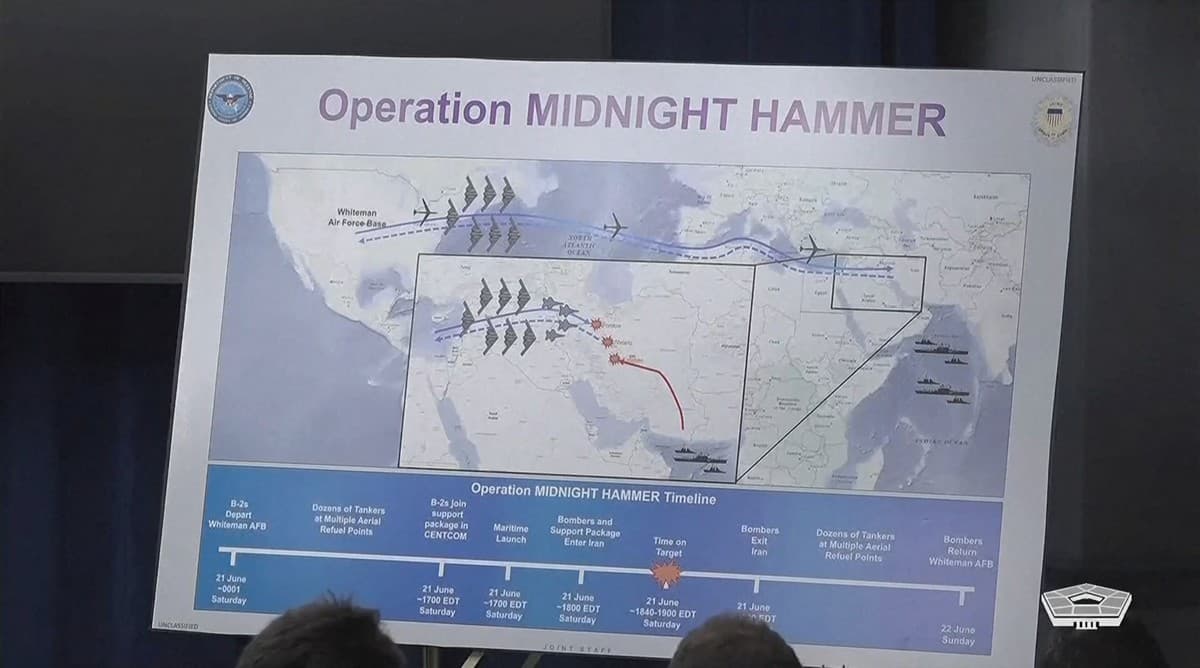
The highest-ranking US military official gave details of how the attack, dubbed Operation Midnight Hammer, unfolded. General Dan Kane, chairman of the US Army Joint Chiefs of Staff, said that at midnight on Friday, a large package of B-2 strike bombers took off from the US, flying east into the Atlantic.
To maintain the element of surprise, some bombers flew west toward the Pacific. During the 18-hour flight, the planes underwent multiple refueling rounds.
As the seven B-2 bombers entered Iran, the US deployed several decoys, according to General Caine, and a US submarine launched more than two dozen Tomahawk missiles at the Isfahan nuclear site.
Around 6:40 p.m. Eastern Time on Saturday, the first B-2 bomber dropped two GBU 57 Massive Ordnance Penetrator bombs, known as shelter-in-place bombs, on Fordow.
The remaining bombers then struck their targets, General Caine said, with 14 GBU-57s dropped in total. Bunker Buster bombs are designed to explode twice. Once to breach the ground surface and again once the bomb has dug to a certain depth.
What were the weapons used by the US?
Israel has bombers in its arsenal, but it lacks the much more powerful GBU-57, which can only be launched from the B-2 bomber and is believed to be the only bomb capable of breaching the Fordow. This attack was the first operational use of the GBU-57.
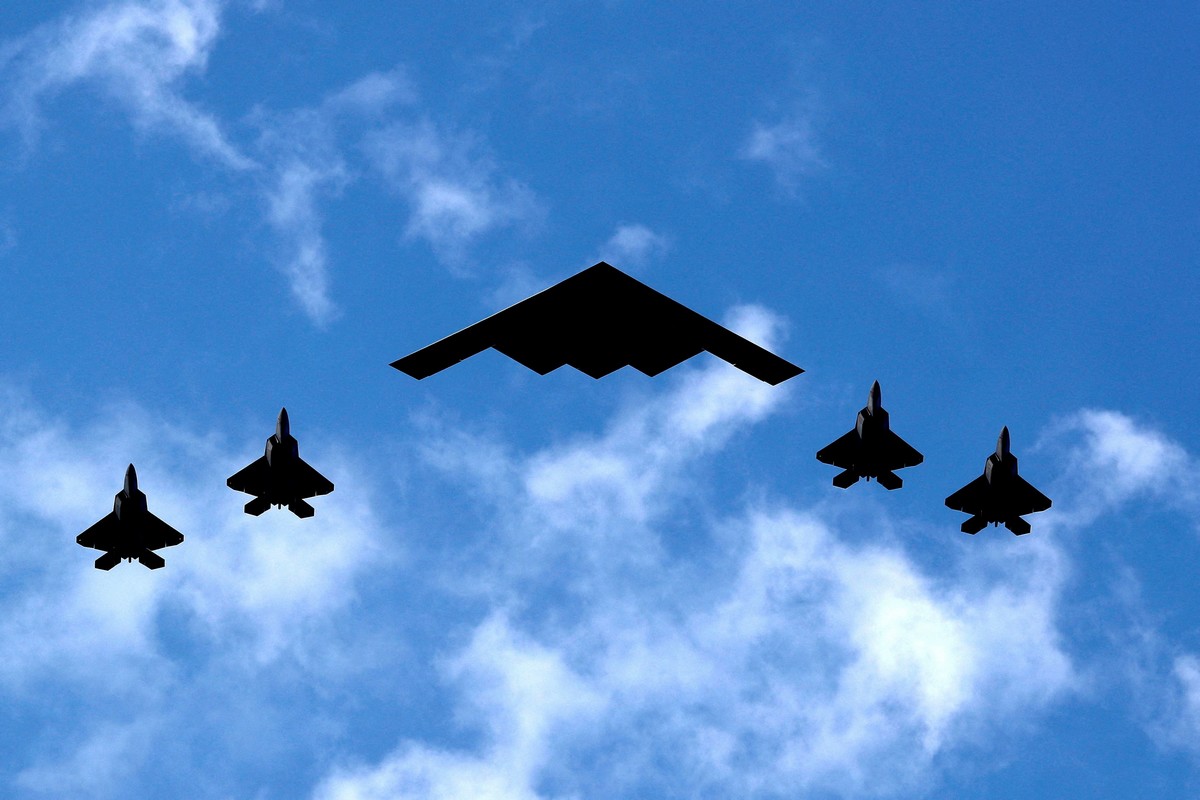
In total, more than 75 weapons were used, including 14 GBU-57 30,000lb bunker buster bombs, and 125 aircraft participated. The New York Times reported that a US official said a B-2 also dropped two of the GBU-57s on the Natanz nuclear facility.
All B-2s were returning to the US by 7.05 pm (Greece time), Gen. Kane added, and said the US military was not aware of any firing at the US aircraft by Iranian aircraft or anti-aircraft defenses on the ground.
Which locations were hit?
America says it has struck three key sites of Iran's nuclear program. They include Isfahan, where a major research base is located, as well as the uranium enrichment facilities at Natanz and Fordow.
Natanz is believed to have previously been damaged in Israeli strikes, after bombs knocked out power to the centrifuge room, possibly indirectly destroying the machines.
Details of the damage from the US strikes have not yet been released, although Mr Trump said the three sites had been destroyed. US Defence Secretary Pete Hegseth said the US had destroyed Iran's nuclear programme.
However, most of the highly enriched uranium at the Fordow nuclear facility was moved to an unknown location before the attack, a senior Iranian source told Reuters news agency. The number of personnel at the site was also reduced, the report said.
Satellite images from Fordow show trucks lining up at the entrance to the nuclear construction site in recent days.