
Just a few 24 hours after announcing that he was opening a 15-day window to decide whether to attack Iran on Thursday, Donald Trump made a historic decision: On Saturday, June 21, 2025, in the early hours of Sunday, he bombed three Iranian nuclear facilities.
Iran's nuclear facilities suffered serious damage after the attacks, the US announced, as part of a Pentagon briefing.
All eyes are now on the Islamic Republic, which has warned of irreparable consequences, while in Israel they see a unique opportunity to eliminate the Tehran regime.
Follow all developments minute by minute.
19:46
US demands withdrawal of American personnel from Lebanon
The U.S. State Department has ordered the departure of non-emergency government personnel and their family members from Lebanon due to unstable and unpredictable security in the region.
The US has already reduced its personnel in Iraq and has recommended that employees in Israel remain in shelters.
On Sunday, following reports of regional hostilities, the US embassy in Saudi Arabia announced that it was recommending its personnel exercise increased caution and limit non-essential travel to any military installations in the region, and advised American citizens in the kingdom to do the same.
In Turkey, US government personnel have been warned to maintain a low profile and avoid personal travel to the Adana Consulate's jurisdiction, which includes Turkey's 22 southeastern provinces.
CNN
19:43
Diplomatic sources on NATO: Agreement to increase defense spending to 5%
The 32 NATO member countries, including Spain, have agreed to dedicate 5% of their GDP to defense and security, a few days before the Atlantic Alliance Summit in The Hague, diplomats in Brussels announced.
Alliance negotiators tabled a final version of a draft agreement over the weekend to drastically increase their military spending and the Alliance's security spending after objections from Madrid.
The agreement would be accepted if no one raised an objection by 5:30 p.m. Brussels time, as was the case, according to diplomatic sources cited by the Athens News Agency.
The agreement provides for an increase to 3.5% of GDP in military spending stricto sensu and to 1.5% of GDP in spending related to security in the broad sense.
19:21
Iranian Health Ministry: No signs of radioactive contamination
US strikes on Iran's nuclear facilities have caused injuries, the Iranian Health Ministry announced, clarifying that none of the injured show signs of radioactive contamination.
None of the injured who were taken to medical centers after the US attacks show signs of radioactive contamination, ministry spokesman Hossein Kermanpour wrote to X, without giving details on the number of injured.
RES-MPA
19:15
German Foreign Minister: Iran has crossed a red line
It is legitimate to prevent Iran from acquiring nuclear weapons, German Foreign Minister Johannes Vandeful said, according to Reuters. He added that Iran has crossed a red line on its nuclear program and must negotiate.
Finally, he stressed that the Europeans would be involved in a possible conversation between Washington and Tehran.
19:02
Telephone conversation between Pezezkian and Macron
The Americans must be held accountable for their aggression, Iranian President Mashaun Pesekian told his French counterpart Emmanuel Macron in a phone call on Monday, Iranian news agencies reported.
18:55
US warns of high threat risk
The US government's National Terrorism Alert System (NTAS) has warned of a high-risk environment in the United States following US strikes on nuclear facilities in Iran, CBS News reported today.
18:53
Iran ready to defend itself with all necessary means
Iran is ready to defend itself with all necessary means, the Iranian diplomatic spokesman said after the US attacks on Tehran's nuclear facilities.
Iran is determined to defend its sovereignty, territorial integrity, national security and population by all necessary means, Esmail Baghai wrote in X, condemning an unacceptable attack committed by a state that possesses nuclear weapons (...) against a country that does not possess nuclear weapons.
18:32
Israel strikes dozens of targets in Iran
Israel announced that its fighter jets hit dozens of targets in Iran today, including a long-range missile base in Yazd, in the center of the country, according to the French Agency (AFP).
An Israeli military statement said that about 30 fighter jets struck dozens of military targets across Iran, including the Imam Hussein strategic missile control center in the Yazd region, where long-range Khorramshahr missiles were stored.
The statement also confirmed attacks on missile launchers in Bushehr province, where Iranian media reported a huge explosion, as well as in Ahvaz in the southwest and central Isfahan.
18:27
Pakistan condemns US attacks on Iran
Pakistan has condemned the attacks ordered by Donald Trump against its neighbor Iran, a day after Islamabad announced it would nominate the US president for the Nobel Peace Prize.
The Pakistani Foreign Ministry spoke of an unprecedented escalation of tension and violence. It warned that further escalation of tensions would have serious consequences for the region and beyond.
Meanwhile, Pakistani Prime Minister Shehzad Sharif called Iranian President Massoud Peskov to stress that his country condemns the US attacks, according to a statement by the Pakistani leader.
18:13
Muslim countries to set up contact group
The Organization of Islamic Cooperation announced that it will establish a ministerial group to establish regular contacts with international and regional parties with the aim of supporting de-escalation efforts and ending aggression against Iran.
In a joint statement following a meeting of the organization's foreign ministers in Istanbul, the 57-member group condemned Israel's aggression against Iran, stressing the urgent need to stop Israeli attacks and great concern about the dangerous escalation.
The statement makes no mention of the US attacks on Iran. However, it calls on the international community to take deterrent measures to stop this aggression and hold Israel accountable for the crimes it has committed.
18:05
Iranian president attends protest against US attacks
Iranian President Masoud Peskov participated in a demonstration in Tehran to denounce the US attacks carried out against several nuclear facilities in Iran.
Revenge, revenge!, the protesters shouted with their hands raised, while the Iranian president tried to make his way through the crowd that had gathered in Enghelab (Revolution) Square, in the center of Tehran.
18:02
Third emergency meeting of the UN Security Council
The Guyana mission, which holds the presidency of the UN Security Council in June, announced an emergency meeting at 9:00 p.m. (Paris time) following the US attacks on Iran. This will be the third meeting of the Council since the start of the war between Iran and Israel.
17:55
What has happened in the last few hours:
- The US struck three sites in Iran - Fordow, a uranium enrichment plant hidden in a remote mountainside that is vital to Iran's nuclear ambitions, Natanz and Isfahan/
- Israeli officials said they fully cooperated with the US in planning these attacks
- The US contacted Iran through diplomatic channels to say that the airstrikes were all it intended to do - later, US Defense Secretary Pete Hegseth said that the attacks were not aimed at regime change in Tehran.
- It is not certain how much damage the attacks caused to the nuclear facilities, but the US confirms that they destroyed the Iranian nuclear program.
- The UN nuclear watchdog said no increase in radiation levels outside the facility had been reported.
- Iranian lawmakers voted to close the Strait of Hormuz, which lies between Oman and Iran and is the world's most important route for seaborne oil transport. Iran's top security body will make the final decisions on the future of the Straits.
17:46
The Organization of Islamic Cooperation condemned the Israeli attack on Iran
The Organization of Islamic Cooperation, in a joint statement by its members, following the Istanbul meeting, condemned the Israeli attack against Iran and expressed its concern about the dangerous escalation, as reported by Reuters.
17:39
Rubio: The world is safer after the attacks on Iran
US Secretary of State Marco Rubio praised the results of the US overnight strikes on Iran, stressing that the world is safer after the US strikes.
17:35
Why did Trump bomb Iran now?
US President Donald Trump made the decision after more than a week of Israeli attacks on Iran, according to the BBC's North America correspondent, Gary O'Donoghue.
He believed, from what it seemed, that the Iranians were obstructing the negotiations, he said in his response.
Trump and the National Security Council saw an opportunity as Iran found itself at its weakest moment, according to Gary O'Donoghue.
Iranian militias in the region have been decimated and degraded, and their missile stockpiles have also been depleted.
17:30
Democratic senator: US attacks are unconstitutional
Democratic US Senator Adam Schiff, from California, has argued that US attacks on Iran are unconstitutional because President Donald Trump did not seek congressional approval.
It is not legal without the green light of Congress, the senator stressed, speaking to CNN.
The top Democrat on the Senate Armed Services Committee, Senator Jack Reed, similarly told MSNBC that the attacks constitute a violation of the laws and the Constitution by the president in many ways.
17:15
Rubio: We don't want war with Iran
US Secretary of State Marco Rubio has warned Iran not to retaliate for US strikes on Iranian nuclear facilities, saying such action would be the worst mistake they have ever made.
Rubio, who is also the national security adviser, made the remarks on the show during an interview with Fox News. He also reiterated that the United States is not seeking war with Iran. Earlier, US Vice President J.D. Vance had stated that the US is not at war with Iran.
17:03
Reports of Israeli strike on Iranian port city Busher
Explosions were heard in the city of Busher, in southwestern Iran, according to Tehran's state media, which reported Israeli attacks in the area.
Bushehr is home to Iran's only operational nuclear plant and is close to several Gulf capitals. The Fars news agency said the attacks targeted two sites, but did not say whether the nuclear plant was the target.
Raphael Grossi, director of the International Atomic Energy Agency, warned last week that a direct attack on the Bushehr nuclear plant would result in a very high release of radioactivity, which would affect people within a radius of hundreds of kilometers from the plant.
16:56
Iran: Nuclear know-how will not be destroyed by bombs
Iran's nuclear know-how will not be destroyed by bombing. We will continue to defend it. We will prevent the enemies from achieving their goals, promised Iranian Foreign Minister Abbas Araghchi.
The nuclear industry has roots in our country and this national industry will not disappear, assured Behrouz Kamalvand, spokesman for the Atomic Energy Organization of Iran, according to the ISNA news agency.
16:54
Iran: No danger to residents
There is no danger to residents of areas near the nuclear facilities. Residents of Natanz, Isfahan and Fordow can continue to live normally, government spokeswoman Fatemeh Mohajerani told state television.
16:44
UN Security Council meeting
The United Nations Security Council will meet later today at the request of Tehran and following the United States' attacks on its main nuclear facilities with high-yield bombs, according to diplomatic sources cited by Reuters.
16:32
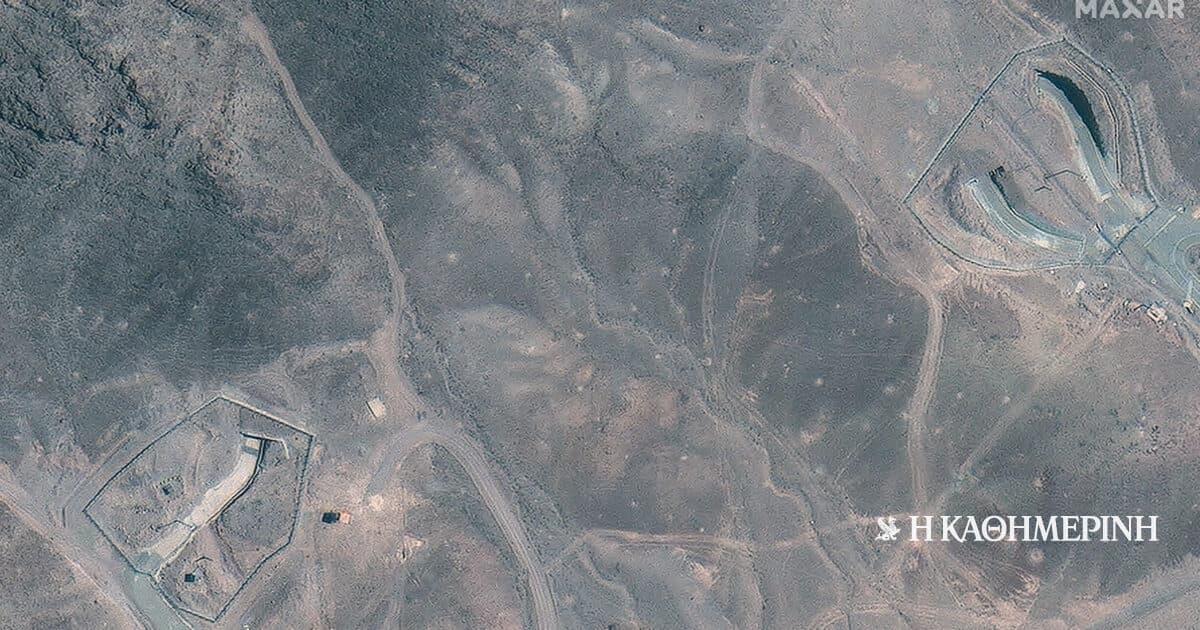
Six craters at Iran's Fordow nuclear power plant
Satellite images released by the American space company Maxar were reproduced in the media and on social networks this morning, in particular by the television station i24NEWS.
These images depict a total of six craters at the Iranian Fordow nuclear plant, which was bombed by the United States.
16:22
Who will make the final decisions on the Strait of Hormuz in Iran?
Iran's top security body to decide on closing the Strait of Hormuz after parliament approves, according to Press TV.
Iran's Supreme National Security Council is to make the final decision on closing the Strait of Hormuz, according to Iranian television Press TV, after the measure is approved by parliament.
The decision to close the Strait, through which about 20% of the world's oil and gas flows, is not yet final. However, Esmail Koshari, a member of parliament and commander of the Revolutionary Guards, told reporters that the measure is on the agenda and will be implemented whenever necessary.
16:16
Iranian parliament approves closure of Strait of Hormuz
According to information reported by Iranian state media and reposted by Reuters, Iranian lawmakers have voted to close the Strait of Hormuz.
The Straits, located between Oman and Iran, are the world's most important route for seaborne oil transportation. The Islamic Republic will be the first to be affected, dragging the entire world along.
According to the U.S. Energy Information Administration (EIA), 21% of global oil consumption and a quarter of liquefied natural gas (LNG) trade pass through this strait. Specifically, 20 million barrels of oil are transported through the Strait of Hormuz every day, according to Carsten Fritz and Barbara Lambrecht, experts at Commerzbank.
16:12
The main points of the briefing from the US Pentagon
US Secretary of Defense Pete Hegseth and the Chairman of the US Joint Chiefs of Staff, General Dan Kaine, provided a briefing on the US attacks on Iran from the Pentagon. Here is a summary of the key points of the briefing:
- Hegseth said the US carried out a midnight strike on three nuclear facilities in Iran, at Fordow, Natanz and Isfahan.
- We destroyed the Iranian nuclear program, but it is worth noting that the operation did not target Iranian forces or the Iranian people, Hegseth added.
- This mission was not and is not aimed at regime change, Hegseth added.
- Regarding the details of the operation, Kane said the bombers took off from the US, while some headed west towards the Pacific Ocean as decoys.
- Kane stressed that about 75 weapons were used precision, including 14 Massive Ordnance Penetrators - also known as bunker busters.
- Hegseth stressed that no shots were fired at the US during the operation, adding that the bombers were returning to the United States.
15:59
J.D. Vance: The US is not at war with Iran
During the US Pentagon briefing earlier, US Vice President J.D. Vance gave a brief interview to NBC News, in which he stressed that the United States is not at war with Iran.
We are at war with its nuclear ambitions, he said, adding that the US believes it has destroyed Iran's nuclear program.
Vance also responded to some of the criticism Trump has received, saying it is not true that the operation was outside his presidential authority, as House Democratic leader Hakeem Jeffries had earlier disputed.
The vice president added that the US and its allies will now work to permanently dismantle Iran's nuclear program.
Vance is also scheduled to appear on an ABC News show later this morning.
15:49
Hegseth: Iran is welcome at the negotiating table
Responding to questions from reporters during a Pentagon briefing, Pete Hegseth stressed that Washington has repeatedly called on Tehran to return to the negotiating table.
They know exactly what the American position is, what steps they can take to achieve peace, and I hope they do so, he said.
15:46
US forces remain on high alert
Kane said that US forces remain on high alert and are fully prepared to respond to any retaliation from Iran.
He also added that retaliation would be an incredibly bad choice on their part.
15:43
Dan Kane: The three nuclear facilities suffered serious damage
The head of the US Joint Chiefs of Staff, Air Force General Dan Kane, said it would take time to fully assess the extent of the damage suffered by Iran.
The final assessment of the damage will take time, but the initial assessment indicates that all three facilities suffered extremely severe damage and destruction, he said.
15:33
B-2 bombers were used in the attack on Iran
Describing the US military equipment in their attack on Iran, Hegseth said that American stealth B-2 bombers were used, entered, exited, and returned from Iran's nuclear facilities without the world knowing at all.
The large aircraft are considered the only aircraft capable of carrying weapons that can strike Iran's most secure nuclear facility, at Fordow, which is buried deep under a mountain.
The attack included the longest B-2 bomber mission since 2001 and the first operational use of the MOP - Massive Ordnance Penetrator, the US Defense Secretary added.
He reiterated Trump's statement that the US does not seek war, but added that we will act quickly and decisively when our people, our partners, and our interests are threatened.
15:21
Hegseth: The operations were planned for months
Hegseth thanked all the military personnel who participated in the operations, describing them as warriors, all of them.
He also mentioned that all the Americans who participated in the attacks acted impeccably.
The US Secretary of Defense also acknowledged our allies in Israel for the support they provided, adding that the operations had been planned for months.
15:18
Hegseth: Retaliation from Iran will be met with force
The US Secretary of Defense stressed that President Trump seeks peace, adding: President Trump said no to nuclear weapons, he seeks peace and Iran must follow that path.
Hegseth then went on to read Trump's social media posts from last night, in which he warned that any retaliation from Iran would be met with much greater force.
15:15
Hegseth: The operation in Iran was brave and brilliant
Hegseth went on to say that many presidents dreamed of delivering the final blow to Iran's nuclear program, but none were able to until Trump.
He added that the operation in Iran was brave and brilliant.
When President Trump speaks, the world must listen, he further noted, adding that no other country but the US could do this.
15:11
Hegseth: The US destroyed Iran's nuclear program
US Defense Secretary Pete Hegseth began the Pentagon briefing by saying that last night's attacks were aimed at degrading and destroying Iran's nuclear capabilities.
The attack destroyed the Iranian nuclear program, but did not affect Iranian military forces or civilians, he stressed.
15:06
Iranian President Blames US for Israeli Aggression
Iranian President Masoud Peskov has accused the US of being the main cause behind Israel's attacks on Iran, according to comments broadcast by Al Jazeera.
More specifically, he accused the US of being responsible for Israel's actions against Iran. Although they initially tried to conceal their role, after the decisive and deterrent response of our country's armed forces and the obvious incompetence of the Zionist regime [of Israel], they inevitably came to the fore, he said, referring to the US.
Despite the losses the country has suffered, the time has now come to put aside differences and activate the great potential of the people, Pezheskian noted.
14:59
NYT: Trump's attack solidifies Netanyahu's political comeback
Twenty months ago, in October 2023, following the Hamas attack on Israel, Benjamin Netanyahu's political career was at a critical juncture. As prime minister, he was at the helm when the deadliest military blunder in the country's history occurred, devastating his security credibility and leading to a collapse in support for his government.
The surprise attack by the United States on Iran, combined with recent Israeli attacks, amounts to the ultimate political vindication for Netanyahu. For decades, he has dreamed of eliminating Iran's nuclear program, describing it as the greatest threat to his country's future and making its destruction his highest military priority.
14:51
Damage to 240 buildings in Israel
According to the Israeli military command, about 240 buildings in Israel have been seriously damaged or destroyed by Iranian missile attacks since the start of the conflict on June 13. Also, about 9,000 people have lost their homes, according to the same source.
14:48
Washington Post: Gulf countries are preparing
Bahrain and Kuwait, two Persian Gulf countries that host American military bases, have begun preparing for the possibility that the conflict between Israel and Iran could spill over into their territory, following American attacks on Iranian nuclear facilities, reports Abi Cheeseman in her response to the Washington Post from the Middle East.
14:40
Iranian Red Cross: US attacks caused no casualties
The US attacks on three nuclear facilities in Iran caused no casualties, said the head of the Iranian Red Cross, H. Kolivad.
Fortunately, there were no casualties during last night's attacks on Iranian nuclear facilities, he said, according to state television.
14:38
Trump has no public events planned for today - Pentagon update at 8:00 (local time)
US President Donald Trump has no public events scheduled for today, as he and his team are closely monitoring Iran's reaction to his decision to launch attacks on three Iranian nuclear facilities, CNN reports.
The chairman of the US Joint Chiefs of Staff, General Dan Kaine, and US Secretary of Defense, Pete Hegseth, will brief reporters on the US operation from the Pentagon at 8 a.m. (local time).
14:35
Cobra meeting in Britain - Defense Council in France
British Prime Minister Keir Starmer will chair the Cobra meeting on Sunday afternoon, which will take place in the wake of the US attacks on Iran.
Earlier, British Foreign Secretary David Lamy confirmed that the country was not involved in the US attacks.
French President Emmanuel Macron will convene a Defense Council meeting this evening, the Elysee Palace announced, as reported by the French Agency.
14:30
Pope Leo: International diplomacy must prevent irreparable disaster
Pope Leo stated that the international community must make efforts to avoid a war that could lead to irreparable destruction and that diplomacy must replace conflict.
Every member of the international community has a moral responsibility: to stop the tragedy of war before it turns into an irreparable disaster, Pope Leo said during his weekly prayer, according to Reuters.
No armed victory can compensate for the pain of mothers, the fear of children, the stolen future. Let the guns be silenced by diplomacy, let nations carve out their futures through peaceful efforts, not through violence and bloody conflicts, he added.
In this dramatic scenario, which includes Israel and Palestine, there is a risk of forgetting the daily suffering of the population, especially inGaza and other territories, where the need for adequate humanitarian aid is becoming increasingly urgent, Pope Leo said.
14:26
China condemns attack on Iran
China strongly condemned the US attack on Iran and its nuclear facilities supervised by the International Atomic Energy Agency, the Chinese Foreign Ministry said on Sunday.
This move seriously violates the United Nations Charter and increases tensions in the Middle East, the ministry said in a statement on its website.
China called on the parties involved in the conflict, especially Israel, to stop the attacks as soon as possible and start dialogue and negotiations, the ministry said.
14:20
The attack in Fordow caused injuries to several people
The attack in Fordow left several people injured, according to the Tasnim news agency, which is closely affiliated with the Iranian government. The news agency cited Morteza Heydari, deputy governor of Qom, the Iranian province where Fordow is located.
So far, there has been no radiation risk to residents in the area, even those living within 500 meters of the facilities, Qom governor Akbar Behnamju told Tasnim.
14:15
Russia condemns attacks on Iran
Russia, a long-time ally of Iran, has strongly condemned the US attacks on the country. In the government's first official statement on the attack, the Russian Foreign Ministry called the attacks irresponsible, stressing that they constitute a serious violation of international law, the UN Charter and UN Security Council resolutions.
He called on the Security Council to put an end to the actions of Israel and the United States.
14:07
What has happened in the last few hours:
- US President Donald Trump announced that US warplanes had carried out a very successful attack on three Iranian facilities, including the uranium enrichment facility at Fordow. He warned Iran not to retaliate and said that Defense Secretary Pete Hegseth would provide more information about the attack later today.
- The Fordow nuclear facility is hundreds of meters underground and is considered to be capable of being hit only by 30,000-pound bombs, Massive Ordnance Penetrator. According to reports in American and Israeli media, such bombs have been used in Iran, but it is not clear where.
- The Iranian Foreign Ministry condemned the American attacks as an act of aggression against its peaceful nuclear facilities, which, it said, were struck at dawn on Sunday, local time. The Iranian ministry announced that it was determined to defend its territory and its people with all force and means. Iran has long maintained that its nuclear program is intended exclusively for political purposes. According to the Israeli military,
- Israel and Iran exchanged new attacks on Sunday morning. The Israel Defense Forces said its aircraft struck at least ten targets in Iran. Israeli emergency services said the attacks caused fires and injured 16 people.
13:52
A radical shift in Trump's foreign policy
Trump's decision to strike Iranian nuclear facilities marks a radical shift from his long-standing reluctance [...] to engage in conflicts abroad, and from the rhetoric of the White House just two days ago, notes the Wall Street Journal.
Donald Trump had stated that he would give Iran a maximum of two weeks to avoid possible American attacks, but ultimately decided to proceed with them together with his ally, Israel.
13:46
Iranian Foreign Minister: We must react
Iran's Foreign Minister, Abbas Araghchi, said he does not know what scope there is for diplomacy following the United States' attack on Iranian nuclear facilities.
They crossed a very important line by attacking the nuclear facilities... We must react based on our legitimate right to self-defense, Araghchi said.
Iran has several options available when asked if his country is considering closing the Strait of Hormuz, a vital sea route in the Persian Gulf critical to global oil and gas exports.
Iran's top diplomat said he has contacted several foreign ministers in the region and almost all of them are very concerned and interested in playing a role in ending Israeli aggression.
13:39
Kremlin: No Putin-Trump conversation planned
Russian President Vladimir Putin does not plan to speak with his American counterpart, Donald Trump , the Kremlin announced after the US attacks on Iran's nuclear facilities, adding, however, that a telephone conversation could be organized quickly, according to the state news agency TASS.
Russia and Iran signed a comprehensive cooperation agreement in January, cementing their close strategic alliance, although the agreement does not stipulate that the two countries are obligated to defend each other in the event of an attack.
13:34
13:33
Turkey: The risk of conflict expansion is increasing
US attacks on Iranian nuclear facilities have increased the risk of the regional conflict spreading to the global level, the Turkish Foreign Ministry said, adding that Ankara is deeply concerned about the possible repercussions of the attacks.
In a statement, reported by Reuters, the Turkish ministry also said that the conflict should not be allowed to escalate into a widerworld war, calling on all parties to act responsibly and immediately end the attacks. It also said that only negotiations would resolve the dispute between Tehran and Washington over Iran's nuclear program.
13:30
13:29
Israel assesses results of US attacks on Fordow
Donald Trump declared last night that he destroyed three nuclear facilities in Iran (Fordo, Natanz and Isfahan), however, the Israeli army announced today that it is assessing the extent of the damage. More specifically, according to information from the French Agency (AFP), the Israeli army is checking the results in the Fordow area.
13:24
US-Israel coordination on attacks on Iran
The US attacks on Iranian nuclear facilities were carried out in coordination with the Israeli military, Effi Devrin, the Israeli military's chief spokeswoman, said at a press conference.
He did not provide further details on the manner and extent of cooperation between the two armies during the attacks.
13:22
France did not participate in the attacks or in their planning
The French Foreign Minister assured, in a message to X a few hours after the American attacks on Iranian nuclear facilities, that France did not participate in the attacks or in their planning. He also announced that he had learned of the attacks carried out by the United States with concern.
The minister said that France calls on the parties to show restraint to avoid escalation that could lead to an expansion of the conflict.
Jean-Noel Barrot also recalled that France has repeatedly expressed its very strong opposition to Iran acquiring nuclear weapons and that it is convinced that a sustainable resolution of the issue requires a solution to be achieved through negotiations within the framework of the Treaty on the Non-Proliferation of Nuclear Weapons.
13:17
Iran was preparing for an attack on Fordow
According to satellite images published by Maxar Technologies, a satellite technology company, in the three days leading up to the US attacks, intense and unusual activity was observed near a tunnel entrance to the Fordow nuclear plant in Iran.
On June 19, an analyst reported that 16 trucks were parked near a tunnel entrance. The next day, the vehicles had moved northwest, away from the facility, but more trucks and bulldozers were visible near the entrance. Analysis by the Open Source Centre in London had suggested that Iran may be preparing the facility for an attack.
Source: Satellite image by Maxar Technologies
13:13
Iranian Foreign Minister to meet Putin on Monday
"I will go to Moscow this afternoon and (...) I will have serious consultations with the Russian president tomorrow," said Iranian Foreign Minister Abbas Araghchi, on the sidelines of a meeting of the Organization of Islamic Cooperation (OIC) in Istanbul, according to information from the French Agency (AFP).
The French Le Figaro speaks of a clear signal that the country has nuclear protection, that of Russia, commenting on the Aragchi-Putin meeting expected tomorrow.
13:05
13:01
Extraordinary meeting of the KYSEA at 19.00
The Government National Security Council (GNCSC) will hold an extraordinary meeting at 7:00 p.m. on developments in the Middle East.
12:58
12:58
Damage to Iran's Fordow nuclear plant after US attacks
Satellite images taken and analyzed by the American news agency Associated Press (AP) show that the underground Fordow nuclear facility in Iran has been damaged after US airstrikes targeted the facility.
The images taken by Planet Labs PBC also appear to show that the mountain that houses the nuclear facility was also damaged, the AP reports. While the US news agency initially estimated that the entrances had been damaged, it now reports that Iran had likely buried them before the US attack.
The mountain, which was previously brown, has turned gray in places and its contours look slightly different compared to previous images, suggesting that an explosion caused the scattering of debris around the facility, the AP added. For the American news agency, this suggests the use of American bombs specially designed to destroy the facility's shelters.
Source: Satellite images analyzed by the AP
12:54
The Revolutionary Guards threaten - Harsh retaliation
Iran will defend itself with all necessary means, Iran's foreign minister said, as the Revolutionary Guards warned the United States of harsh retaliation, according to statements reported by the French Agency (AFP).
12:51
What options does Iran have?
Iran must choose between three strategic courses of action in response to the US attack overnight, according to analysis in the BBC.
- Do nothing. This could save it from further US attacks. It could even choose the diplomatic route and return to negotiations with the US. However, doing nothing would make the Iranian regime look weak, especially after all its warnings of serious consequences in the event of a US attack. It may decide that the risk of weakening its influence outweighs the cost of further attacks.
- Retaliate harshly and immediately. Iran has a significant arsenal of ballistic missiles, which it has been building and hiding for years. It has a list of about 20 US bases in the wider Middle East from which to choose its target. He could also launch a barrage of attacks against US Navy warships using drones and other means.
- Retaliate later, at a time of his own choosing. This would mean waiting until the current tension subsides and launching a surprise attack when US bases are no longer on high alert.
12:39
A battle for survival for the Tehran regime
Israeli Prime Minister Benjamin Netanyahu feels vindicated, reports Hugo Macega, speaking to the BBC from Jerusalem.
From his 1995 book, Fighting Terrorism, to his famous speech to the United Nations Security Council in 2012, when he showed a picture of a bomb to explain how close, in his view, Iran was to acquiring a nuclear weapon, Netanyahu has long sent a signal to the world that someone must stop Iran.
Israel hopes the bombings will lead to a movement against Iran's supreme leader, Ayatollah Ali Khamenei , and to the overthrow of the Islamic Republic that has been in power since the 1979 revolution, according to the BBC correspondent.
This puts Tehran in a kind of life-or-death emergency. The country has repeatedly rejected any deal that would oblige it to abandon uranium enrichment on its soil, a key US demand, saying it is its right.
As they find themselves in their weakest position in 50 years, Iran's leaders will come under international pressure to accept a deal that will inevitably prevent the resumption of activities related to their nuclear program.
The alternative will be more conflict, which will lead to the end of the Khamenei regime and an uncertain future for the country.
12:29
Revolutionary Guards: No attack destroys nuclear technology
We categorically state that Iran's peaceful nuclear technology cannot be destroyed by any attack, Iran's Revolutionary Guards assured, according to Reuters information.
12:21
Iranian Foreign Minister: US and Israel blew up negotiations
Iranian Foreign Minister Abbas Araghchi said that last week both Israel and the US decided to blow up diplomacy.
In a post on X, the Iranian minister said that during last week's negotiations with the US, Israel decided to blow up diplomacy.
The same thing happened, he added, during talks with European officials, but the US decided to destroy those diplomatic efforts. Araghchi then asked: What conclusions would you draw?
For Britain and the EU High Representative, it is Iran that must 'return' to the table. But how can Iran return to something it never abandoned, let alone destroyed?, the Iranian minister noted.
12:15
Iran with its back against the wall
Iran is struggling to withstand such a massive blow, says Ali Harb, Al-Jazeera correspondent in Washington. The credibility of the Iranian government […] is at stake, according to him, who adds:
There is also no guarantee that, in the absence of a response from Iran, Israel will stop its attacks aimed at overthrowing the Tehran regime, nor that the United States will not join in new attacks. Tehran could opt for a limited counterattack, with missiles against a base hosting American forces in Iraq. But that also carries the risk of escalation, the correspondent emphasizes.
Iran has its back against the wall, the Lebanese newspaper L'Orient Le Jour estimates for its part. Of course, the regime is resilient and its security apparatus remains in place. It can thus choose a long war and an escalation of tension to improve its position in negotiations. But this would be a very dangerous game for Iran. The harder Iran reacts, the more the United States will be involved in this war and the more the only stake will be the survival of the regime and its regional allies, including Hezbollah, which will also be involved in the conflict.
12:08
Huge bomb in attack on Iran
A senior Israeli official told the American website Axios that B-2 bombers were used in the attack. These advanced aircraft can carry the massive 13,600-kilogram GBU-57 Massive Ordnance Penetrator bomb, according to the Times of Israel newspaper.
This is capable of destroying the Fordow facility, which had remained unscathed during Israel's attacks, while significant damage had already been caused to the Natanz and Isfahan nuclear facilities, according to the Israeli media outlet, which explains that the bomb in question is capable of penetrating to a depth of approximately 61 meters before exploding.
12:01
Iran launches more missiles at Israel
Iran launched a new barrage of ballistic missile attacks on targets across Israel this morning, causing damage to buildings but relatively few casualties, according to Israeli authorities, just hours after US President Trump announced that the US military had struck three Iranian nuclear facilities.
At least 16 people were injured in the Iranian attack, most of them lightly, according to Magen David Adom, Israel's emergency service. One man was rushed to hospital in moderate condition with shrapnel wounds, according to a medical source.
11:57
Tel Aviv: Thank you, Mr. President
In a video posted by the former editor-in-chief of the Israeli media outlet, I24News, it appears that banners with a photo of Donald Trump and a background in the colors of the American flag have been hung on a central street in Tel Aviv. Thank you, Mr. President is written on them.
11:52
Where did the US attack Iran?
Source: New York Times analysis based on satellite imagery from Airbus, Maxar Technologies and Planet Labs, local news reports, and verified photos and videos from social media.
11:48
Antonio Costa deeply worried - Prayer for calm
European Council President Antonio Costa appealed for calm. In a post on X, he expressed deep concern.
I call on all parties to show restraint and respect for international law and nuclear security, he stressed, adding: Diplomacy remains the only way to achieve peace and security in the Middle East region. Too many civilians will once again become victims of further escalation.
11:44
Red Cross: Fears of irreversible consequences
The military escalation in the Middle East threatens to provoke a war with irreversible consequences, the president of the International Committee of the Red Cross warned after the attacks by the United States.
The intensification and expansion of major military operations in the Middle East could plunge the region – and the world – into war with irreparable consequences, said Mirjana Spoliaric, president of the International Committee of the Red Cross.
11:40
Israel: Two Iranian fighter jets neutralized
In a Twitter recap of the past 24 hours, the Israeli military claims to have shot down two F-5 fighter jets in Iran. Eight launchers, six of which were poised to fire at Israel, were shot down, the Israeli statement added.
More than 20 Israeli Air Force and Space Force fighter jets struck dozens of military targets in Iran, including a military facility containing components for the production of explosives, according to the Israeli armed forces.
11:33
Iran warns of attacks on US bases
Before the US attacks on Iran, Iranian officials warned that the country would attack American bases in the Middle East if the United States joined Israel's war, as reported by the New York Times.
Many of Iran's missile systems could be positioned in more advantageous positions to maximize the country's firing range, the newspaper said. Several US bases and locations with US military presence are likely within range of Iran's ballistic missiles.
Source: CSIS Missile Defense Program
11:27
Britain was informed before the attack - Did not participate
Britain did not receive a request from the US to use the base on Diego Garcia (a joint British-US base in the Indian Ocean) in American attacks on Iran, but was informed before the attack, British minister Jonathan Reynolds said.
He added that Britain has deployed military assets to the region and would take all necessary measures to defend its key allies if they were threatened. Reynolds also said that Prime Minister Keir Starmer is in contact with allies.
There was no request, the Minister for Business and Trade said in an interview with Sky News. I know that often, because of the British military bases of RAF Akrotiri (in Cyprus) or Diego Garcia, sometimes such a request is made. In this case, no such request was made.
Reynolds noted, however, that Britain had been informed of the attack.
"I can't tell you exactly when we found out, but we were informed, as one would expect," the British minister stressed.
11:19
Fears of rising oil prices
The US attacks have taken the conflict to a new level and many fear this will worsen an already bad situation, Carol Nakhle, CEO of Crystol Energy, told the BBC.
This fear will be reflected in a higher geopolitical premium added to oil prices - no one knows how much this will be, but as a rule, the greater the fear, the greater the premium, he added.
Brent closed the week on Friday at $77.01 a barrel, after rising nearly 20% in the last month.
Despite the rise, oil prices are still lower than they were at the same time last year.
The cost of crude oil affects everything from the cost of car fuel to food prices at the supermarket.
11:17
The Houthis see a declaration of war against the Iranian people
Yemen's Houthi rebels, who are backed by Iran, announced that they consider the US attacks a declaration of war against the Iranian people.
The reckless Trump administration's aggression against three Iranian nuclear facilities constitutes a blatant declaration of war against the brotherly Iranian people, the Houthi government said in a statement, adding that its armed forces are ready to target American ships and facilities in the Red Sea.
11:14
Rally in Tel Aviv, but also fears of Black Monday
The Tel Aviv stock market, which is open today, is up more than 4% after the United States attacked Iran's nuclear facilities. Today's rally follows a 6% rise in the Israeli stock market's main index last week.
However, according to Christopher Debic, investment strategist at Pictet Asset Management, there is a fear of a Black Monday on stock markets in Asia, Europe and the United States. The first reaction will be very violent at the opening, with very speculative positions, especially in oil prices, which may also jump, the analyst commented. If the situation calms down, the market will stabilize in a second phase or may even recover, he estimated.
11:08
Starmer: Iran must return to negotiations
The British Prime Minister urged Iran to return to the negotiating table after the United States attacked its nuclear facilities.
Iran can never be allowed to develop nuclear weapons and the US has taken steps to mitigate this threat, Keir Starmer said in a post on X, calling Iran's nuclear program a serious threat to international security.
We call on Iran to return to the negotiating table and achieve a diplomatic solution to end this crisis, he stressed.
11:05
11:04
Israeli President Herzog: US attack is historic
The president of Israel just issued a statement, calling Donald Trump's attack on Iran historic.
Isaac Herzog said that Trump's words show the deep and courageous alliance between the US and Israel.
However, he also warned that the campaign is not over, adding that the coming days may be sensitive, complicated and difficult, and urged Israelis to continue to follow the authorities' instructions to save lives.
11:02
11:02
Concern in the Middle East
Saudi Arabia expressed its deep concern, according to a statement published in X. The country's Foreign Ministry told X that it wants a political solution to end the crisis, according to Reuters.
Meanwhile, Oman , which has been mediating talks between Washington and Tehran over Iran's nuclear program, said US attacks on Iran threatened to escalate the war and were a violation of international law, state media reported.
Qatar announced that it deplores the worsening and dangerous tensions following the US bombings, which will lead to disastrous consequences at the regional and international levels, according to a post by its Foreign Ministry on X.
10:59
10:58
The EU called on all parties to take a step back
"I call on all parties to take a step back, return to the negotiating table and avoid any further escalation," European Union foreign policy chief Kaia Kallas wrote on Twitter on Sunday.
EU foreign ministers will discuss the situation tomorrow, he added, noting that Iran must not be allowed to develop nuclear weapons, as this would pose a threat to international security.
10:57
10:56
Iran's letter to the IAEA
The head of Iran's Atomic Energy Authority, Mohammad Eslami, sent a letter to the International Atomic Energy Agency calling on it to conduct an investigation into the US attacks on Iran.
Eslami spoke of an illegal action that must be examined, while emphasizing that the head of the IAEA, Raphael Grossi, must stop his inaction, condemn the US attacks and take appropriate measures.
Reuters reported that Eslami also told Grossi that Iran had taken the necessary steps to defend its sovereign rights and would take appropriate legal action.
10:49
The International Atomic Energy Agency is on standby
Readiness at the International Atomic Energy Agency (IAEA). Its director general, Rafael Grossi, announced an emergency meeting on Monday at the UN agency's headquarters in Vienna, Austria, in the wake of the US attacks on three Iranian nuclear facilities.
"Given the urgent situation in Iran, I am calling an emergency meeting of the Board of Governors for tomorrow," he wrote in X.
10:46
10:45
All eyes on Iran
Immediate retaliation, retaliation later or no reaction are the three most likely options for Iran, commented the BBC's security correspondent, Frank Gardner.
While the British Media's Middle East correspondent reported that the entire region is holding its breath this morning, waiting to see whether the latest developments mark the beginning of the end of this conflict or the beginning of an even more deadly phase of it.
10:42
10:41
The timeline of US attacks on Iran:
- Shortly after midnight local time, Donald Trump announced that the US had carried out attacks on three nuclear facilities in Iran – Fordow, Natanz and Isfahan.
- A short time later, Iran officially confirmed that the three nuclear facilities had been attacked.
- Israeli Prime Minister Benjamin Netanyahu said in a statement that President Trump and the United States had acted with great force.
- UN Secretary-General Antonio Guterres called the US move a dangerous escalation.
- Donald Trump addressed the nation, warning Iran that it must now make peace or face much greater consequences.
- Israel announced that Iran had launched a new attack on it.
- The International Atomic Energy Agency announced that there was no increase in radiation levels at Iranian nuclear facilities after the attacks.
- The Israeli army announced that its air force had launched a new series of attacks against military targets in western Iran.
10:37
What has happened in the last few hours:
- The United States has bombed three major nuclear facilities in Iran, drawing the country directly into the conflict between Israel and Iran.
- Donald Trump said the attacks had completely destroyed Iran's uranium enrichment facilities and urged Tehran to make peace or face much bigger attacks in the future.
- In response, Iranian Foreign Minister Abbas Araghchi warned of eternal consequences, calling the attacks outrageous.
- The United Nations nuclear agency said no increase in radiation levels had been detected.