This is Index's geopolitical column, World Game, where we provide weekly analyses of the most important developments in international politics and conflicts. Analysts help us understand global processes, great power interests, and their impact on world politics.
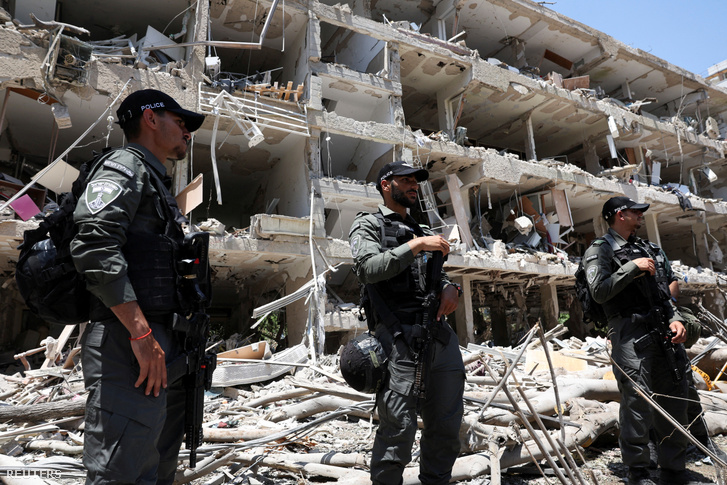
The impact of the Israeli-Iranian conflict is not limited to the Middle East or the global economy; the developments also have broader geopolitical significance. Regardless of whether the parties actually reach a standstill or how durable a ceasefire proves to be, the events of the past few days can already be interpreted as a kind of butterfly effect, that is, a local conflict has triggered political reactions that have also stirred tensions between distant regions and influenced decision-making. Not long ago, there were fears that a serious armed conflict would erupt between India and Pakistan, but this ultimately averted, partly thanks to the diplomatic intervention of the Trump administration. At the same time, the two countries' different foreign policy orientations have now become strikingly apparent in connection with the Israeli-Iranian conflict.
India did not join the Shanghai Cooperation Organization (SCO) statement, which – although Pakistan and Iran are also members – condemned Israel’s attacks on Iran. In doing so, India indirectly pointed to the complex regional web of interests surrounding the conflict, which is creating geopolitical tensions beyond the warring parties. The SCO, founded in Shanghai in 2001, initially consisted of China, Russia, Kyrgyzstan, Kazakhstan, Tajikistan and Uzbekistan. Iran became one of the newest members in 2023, during India’s presidency.
The Shanghai Cooperation Organization issued a statement strongly condemning the Israeli attacks on Iranian territory. According to the document, Israel's actions"violate Iran's sovereignty, harm regional and international security, and pose a serious risk to global peace and stability." The member states stressed their support for resolving the situation surrounding Iran's nuclear program exclusively through peaceful, political and diplomatic means. India specifically called on the two Middle Eastern countries to resolve their differences through dialogue.
Index's Péter Klemensits, Senior Research Fellow at the Eurasia Center, analyzed the geopolitical consequences of the Israeli-Iranian conflict in South Asia. We asked the researcher about the different foreign policy positions of India and Pakistan.
India is balancing on a geopolitical minefield
According to Péter Klemensits, by not joining the SCO's condemnatory statement, India demonstrated its strategic autonomy on the one hand, and on the other hand, it showed that it did not wish to openly confront any of the parties involved. As he pointed out, unlike many SCO member states, which do not have close diplomatic relations with Israel and can therefore make strong statements, India has significant strategic interests in both Iran and Israel.
“If New Delhi had taken a position in this conflict, it would have jeopardized its interests in the Middle East in the medium and long term, which India cannot afford to do,” the researcher added. He explained that India is somewhat of an outlier in the Shanghai Cooperation Organization – a bloc dominated by China and Russia – as New Delhi sometimes pursues strategic interests that are at odds with the collective position. This divergent position is also accepted within the organization, and in the future it is expected to give more space to different perspectives.
However, Péter Klemensits emphasized that India's membership is beneficial for the organization, and the reverse is also true.
“This mutual benefit allows the Shanghai Cooperation Organization to move forward despite this minor setback. The SCO provides India with a strategic platform to engage with key regional players and strengthen ties in Central Asia, which is essential for its geopolitical interests. However, potential challenges also exist. Since the dynamics within the SCO are influenced by China and Russia, any significant divergence between India’s independent foreign policy and the collective interests of the organization could cause tensions. Problems could arise in particular if India’s security or economic priorities differ from those of other influential member states. In addition, India’s strong stance could affect the organization’s cohesion,” the researcher said, adding that if India’s stance challenges norms within the SCO, it could both destabilize unity and promote acceptance of different perspectives, potentially leading to more inclusive dialogue among member states.
Péter Klemensits highlighted that the Israeli-Iranian conflict can also be characterized as an ever-growing challenge to India's foreign policy.
Unlike the United States and some European countries, which are hostile to Iran, India's relationship with Tehran is deep-rooted and has withstood many tests. For India, diplomacy and promoting negotiations are the surest path to a quick resolution
– the researcher stated.
He quoted Kabir Taneja, deputy director of the strategic studies program at the Delhi-based Observer Research Foundation, as saying that India's decision not to join the SCO declaration can be interpreted in the broader context of the great power balance between China and the United States.
The Eurasia Center’s senior fellow also pointed out that Israel is India’s largest defense supplier, importing an estimated $2.9 billion worth of military equipment, including drones, radars, missiles, and surveillance systems, over the past ten years. Despite Israel’s military operations in Gaza since October 2023, defense exports to India have reportedly not stopped. Meanwhile, India is developing Iran’s Chabahar port to provide access to Central Asia and Afghanistan. Before the 2019 U.S. sanctions, following Washington’s withdrawal from the Iran nuclear deal, Iran was India’s third-largest oil supplier, with imports worth $12.1 billion.
Peter Klemensits pointed out:
India is therefore in a very delicate situation, needing Iran for its economic interests, but also Israel for its security and protection.
The researcher believes that India's decision not to join the SCO statement condemning Israel indicates an independent foreign policy and a nuanced approach to international relations.
By not joining the majority position, India emphasizes its sovereignty and the importance of not limiting geopolitical developments to established regional blocs, especially those shaped by the influence of China and Russia. This stance reflects India’s desire to maintain a balance between its historical ties with Israel and its engagement with global powers. This approach signals a new kind of neutrality, in which India selectively forges partnerships based on its strategic interests. At the same time, it also opens the door to closer engagement with Western countries. Thus, India’s current diplomatic posture is neither classical neutrality nor full alignment with the Western bloc. Rather, it outlines a pragmatic foreign policy strategy that allows India to navigate global geopolitical forces while protecting its national interests.
– explained Péter Klemensits to Index.
However, New Delhi's alliance with Western powers, especially the United States and Israel, also carries significant risks in a geopolitically complex environment influenced by Iran, China and Russia. The researcher believes that this strategy could strain India's historic ties with Iran, a key oil supplier for India's energy security. Supporting Western initiatives could provoke Tehran and complicate bilateral trade and diplomatic relations, especially in light of US sanctions on Iranian oil. India's close ties with China could also be at risk, as aligning with the West could further escalate tensions in light of existing border disputes and economic rivalry.
"In other words, while New Delhi's Western cooperation may bring strategic benefits, it also carries serious risks that could undermine India's economic stability, foreign relations, and regional influence in the balance between great powers. In order to protect its national interests, it is essential for India to manage these alliances carefully," said Péter Klemensits.
Pakistan has sided with Iran, but is maneuvering cautiously
Unlike India, Pakistan, also a member of the Shanghai Cooperation Organization and a major rival of New Delhi, has firmly sided with Iran. According to the senior fellow at the Eurasia Center, Islamabad's statements on Iran can be interpreted as both a symbolic gesture and a potential strategic shift in its Middle East policy. While it reaffirms its historical solidarity with Palestine and Iran, it also signals that Islamabad's alliances and priorities may change due to the changing geopolitical situation.
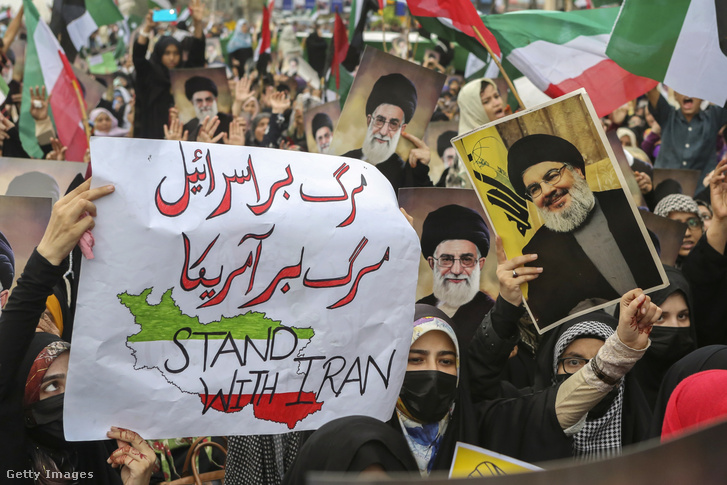
"Pakistan's leadership has publicly expressed its strong support for Iran, which it interpreted as part of Islamic solidarity. In terms of practical assistance, Pakistan likely intended to provide diplomatic support, information sharing, and humanitarian assistance, avoiding direct military intervention in order to maintain good relations with Saudi Arabia and other Gulf states," the researcher pointed out.
Regarding Pakistan's interests, he said: its goals include increasing its regional influence, counterbalancing relations with India and Israel, and strengthening its leading role in the Muslim community."Although the rhetoric suggested support for Iran, Pakistan's actual actions are more determined by its own strategic interests and relations with other key players in the region," Péter Klemensits stated.
Last week, a senior Iranian official made a surprising statement on Iranian state television: he said that Pakistan would use nuclear weapons against Israel if Israel attacked first. In his statement, he specifically mentioned Pakistan’s long-range Shaheen-3 missile. However, the researcher says that Iranian statements should be treated with caution: while Iran and Pakistan share concerns about regional stability and have informal security consultations, there is no concrete evidence that formal consultations on nuclear strategy have taken place.
A realistic scenario is that Pakistan will further strengthen its military and diplomatic ties with countries critical of Israel, most notably China and Russia. The deepening of ties with Beijing and Moscow can be interpreted in part as a response to India’s foreign policy, as both countries have historically supported Pakistan and could serve as alternative allies against India’s Western rapprochement. Increased cooperation with China – for example, through the China-Pakistan Economic Corridor – could strengthen Pakistan’s military capabilities and economic stability. In the case of Russia, closer ties could bring new defense purchases while reducing dependence on the United States
– explained Péter Klemensits.
Regarding the latest developments, the Eurasia Center’s Senior Research Fellow noted that a genuine and lasting ceasefire between Israel and Iran could further strengthen India’s growing ties with Israel and provide an opportunity for deeper economic and military cooperation. It would also allow India to act as a mediator in regional conflicts, thereby improving its international standing. On the other hand, Pakistan, which has traditionally been a supporter of Iran, should reconsider its diplomatic strategy, especially if the ceasefire signals a substantive change in Iran-Israel relations.