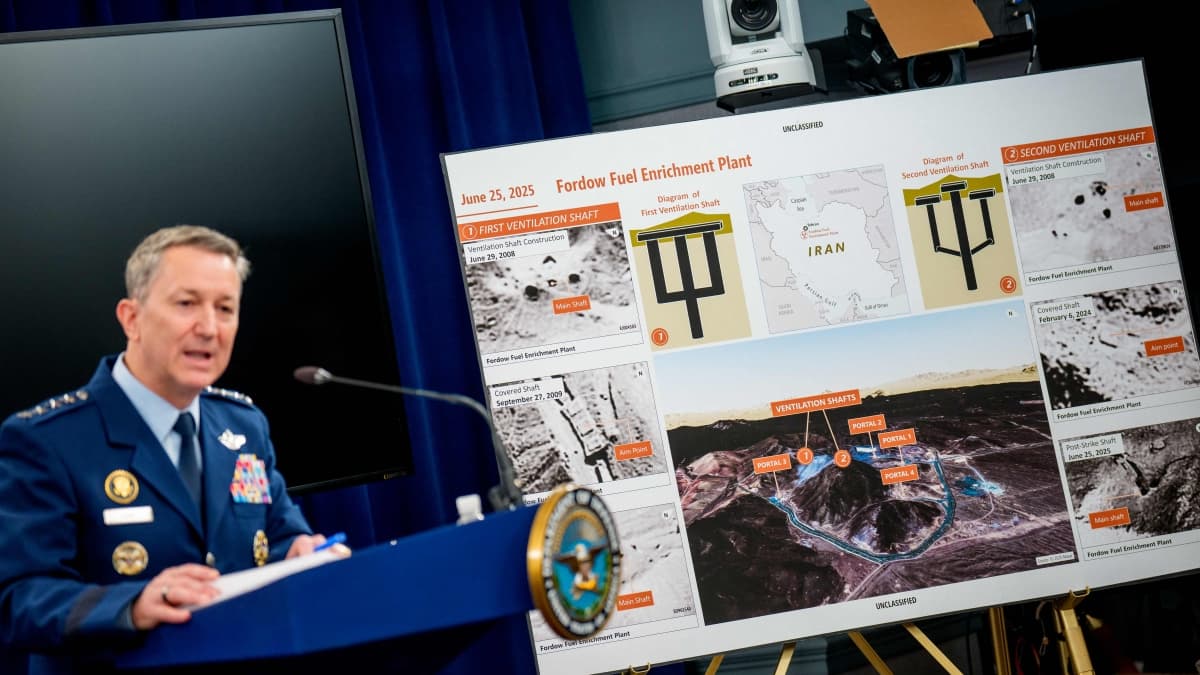
General Caine explained the operation that led the US to bomb key sites in Iran's nuclear program, and in particular Fordow, the key point: Each of the bombs went exactly where we wanted it to go.
He was unwilling, or unable, to confirm that the sites had been wiped off the face of the Earth — obliterated, as President Donald Trump put it.
But Dan Caine, the chairman of the Joint Chiefs of Staff, was keen to point out in a rare, crowded and far from serene press conference how effective Sunday morning's raid, which led the United States to bomb Iran for the first time, had been: All the bombs we fired, he said, went where they were supposed to.
Caine had at his side the head of the Pentagon, Pete Hegseth. It was he who attacked the media - and especially Cnn and the New York Times - guilty of having relaunched an initial analysis by US intelligence according to which the American attack would have slowed down (by weeks, or months), but not cancelled, the Iranian nuclear program.
Caine was tasked with detailing an enormously complex operation: the culmination of 15 years of planning .
In 2009, a Defense Threat Reduction Agency officer was taken to a vault in an undisclosed location to be briefed, for security reasons, on something that was happening in Iran. What followed was a very long period of secret preparation: People who knew couldn't talk to their wives, their families, anyone, the general said. Over time, he said, the Department of Defense had a lot of people with Ph.D.s working on the program, doing models and simulations that led to us being, quietly and secretly, the largest user of supercomputer hours in the United States of America.
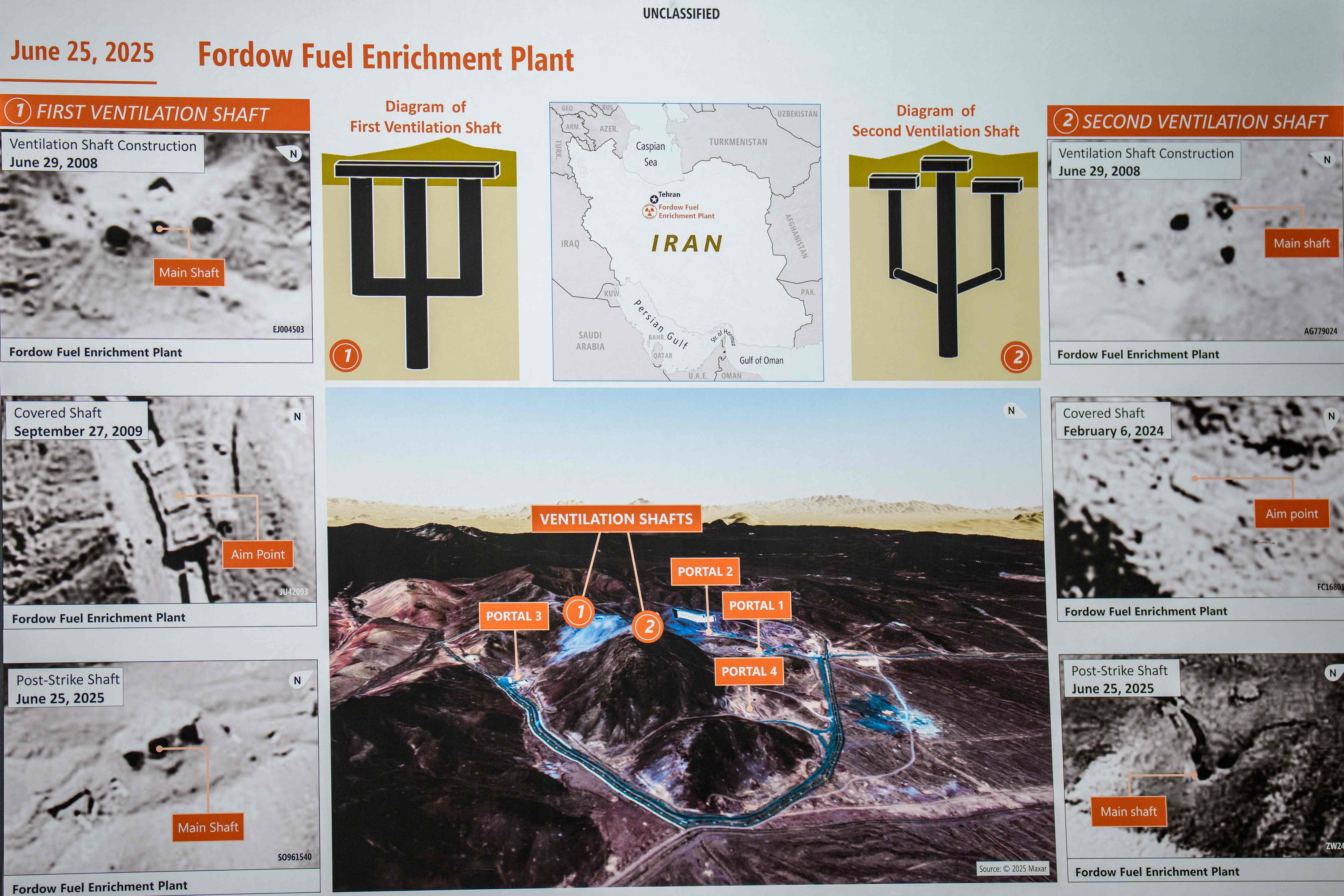
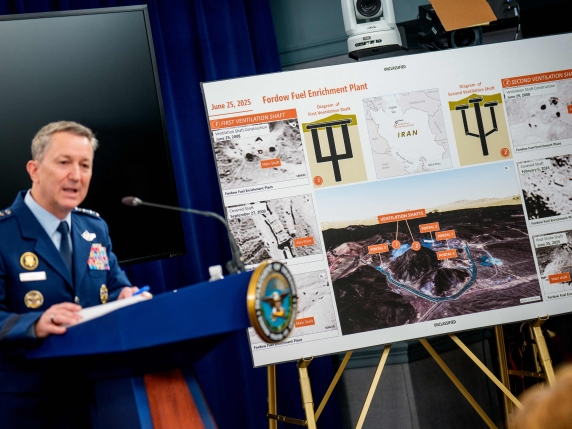
Caine illustrated the level of knowledge that the US military had about the Fordow site, the heart of the Iranian nuclear program: an enrichment site that housed its centrifuges between 90 and 100 meters underground, in the heart of a mountain. You don't build a site like that if you have a peaceful program, Caine said. Before explaining how the weapons used in the attacks - the GBU 57, bombs weighing over 13 tons that can penetrate layers of concrete for dozens of meters before exploding - were designed, planned and launched to reach their target. A bomb, he added, has three effects that cause damage: the shock wave, the fragmentation and the overpressure. In this case, most of the damage was caused by a mix.
According to Caine, six bunker buster bombs were dropped on Fordow for each of the ventilation holes: and they all went exactly where they were supposed to go. Two more super bombs were dropped on the Natanz site.
Iran, aware of the impending attack, attempted to cover the ventilation shafts with concrete. I won't share the exact dimensions of the concrete cap, but you should know that we know what they were.
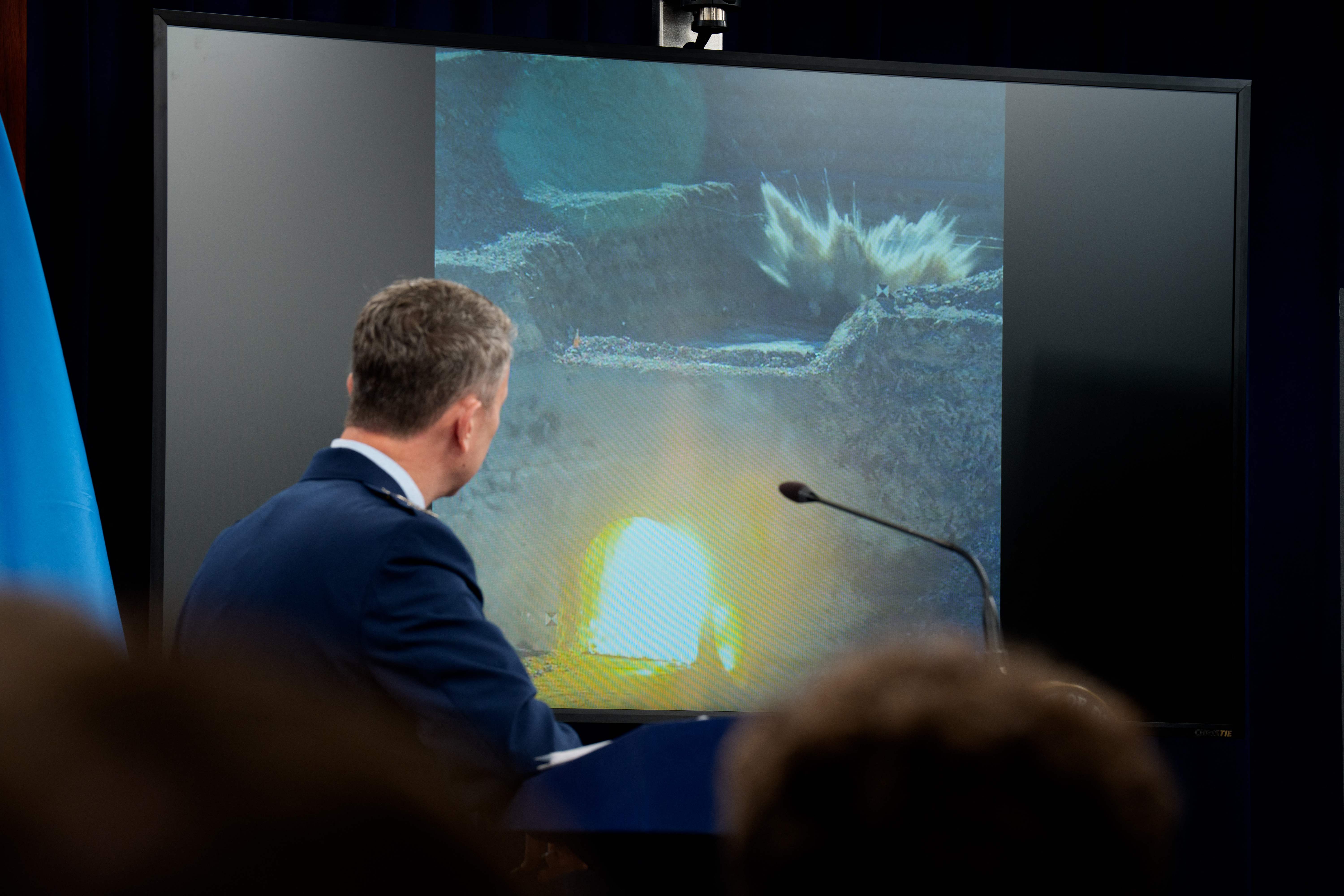
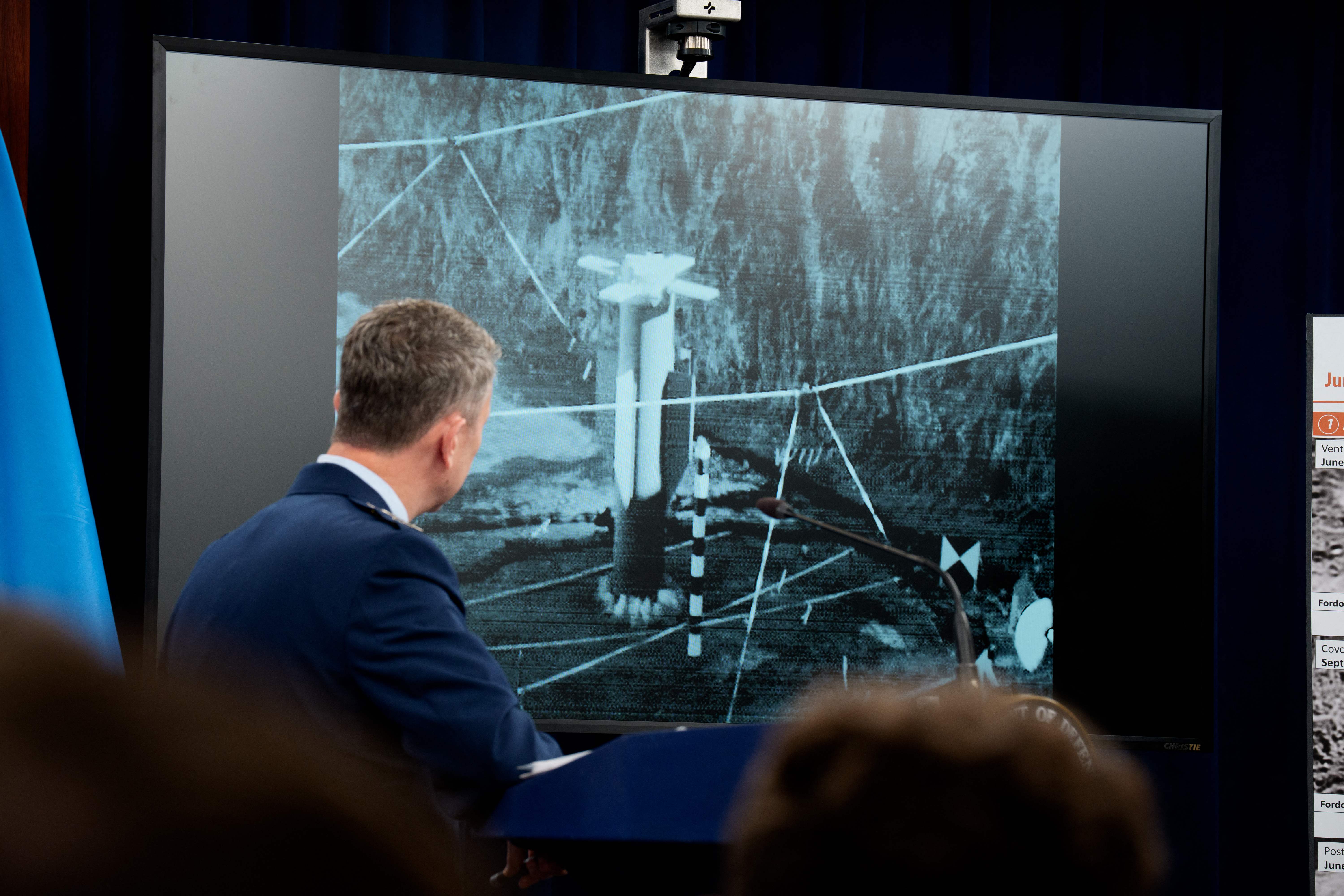
The general then showed reporters a video of one of the bombs in action, during a test
Caine described the operation, dubbed Midnight Hammer, as the culmination of 15 years of extraordinary work, and quoted the pilots of the bombers involved in the attacks, who described the flash after the bomb was dropped as the brightest explosion they had ever seen.
Answering a question about whether he had been pressured to give an overly positive assessment of the attack, he firmly denied it: No, I have not received any and no, I would not do so.