
The Gaza ceasefire agreement covers 4 of the 20 points of the Trump plan. There are still many difficult steps for Hamas and Israel. The first consequences are only now beginning to emerge, and they affect not only the parties involved.

Loading Text-to-Speech...
Donald Trump wanted this Nobel Peace Prize very much and extorted as much as he could. With his mediation in Ukraine stalled, he believed that the desired route to Oslo necessarily passed through Gaza. Two people very close to him, his son-in-law, Jared Kushner, and his special envoy, Steve Witkoff, rushed to Sharm el-Sheikh , Egypt, where negotiations were taking place on the 20-point plan that he himself had presented.
Ultimately, the Nobel Prize may have eluded him this year, but he achieved something that no one before him had achieved: to be applauded at the same time by Hamas and Netanyahu. After three days of frenetic negotiations, the warring parties agreed to the first and extremely important part of the Trump plan: to stop the war, partially withdraw Israeli troops from the Strip, open the roads for humanitarian aid, and release the last 48 Israeli hostages (of whom 20 are estimated to be alive) and 2,000 of the 11,000 Palestinian prisoners.
Without a card – After the hostages are released – hopefully, by Tuesday – Hamas will no longer have any negotiating cards in its hands and Netanyahu will be able to return to the war.
From Hamas's perspective, this is a high-risk decision. After the hostages are released – hopefully by Tuesday – they will no longer have any bargaining chips. Netanyahu will be able to return to the war, as he did after the ceasefire last January, without any internal pressure – which is why his far-right ministers did not resign from the government, despite their disagreement.
However, the Israeli prime minister did not want this deal. His goal was to occupy all of Gaza, expel the Palestinians, and create a Greater Israel, from the Jordan to the Mediterranean. He said so himself on the i24 News television channel on August 12, saying that he is determined to fulfill his messianic, spiritual mission. It is reasonable that his fellow citizens will hold him accountable for continuing the war after the January ceasefire, resulting in the loss of many hostages and soldiers, and turning Israel into a pariah of the international community.
Beaten but standing
Humanity will not soon forget the genocide, Gideon Levy wrote in the Israeli Haaretz on October 5, adding: Gaza, and Hamas, are emerging from the war standing tall. Beaten, bloodied, destroyed, destitute, but standing tall. Gaza became Hiroshima, but its soul remained alive. The Palestinian issue had been written off the international agenda – another Saudi peace agreement (with Israel) and the Palestinians would become Indians of the Middle East – but the war came and brought them back to the top of the international conversation.
The ceasefire was imposed on Israel by its great ally. Under Biden, one had the impression that in US-Israel relations it was the tail that wags the dog. Trump was the one who restored the superpower-client state relationship. He was helped in this by Netanyahu's foolishness in bombing the Hamas mission in Qatar, a short distance from the largest US base in the Gulf. In their last meeting, at the White House, Trump made him apologize to the emir of Qatar and imposed his plan for Gaza on him, after previously telling him, with smoke coming out of his ears, why are you so negative, you fucking idiot? according to Axios.
Today and tomorrow, Donald Trump is expected to take a triumphal tour of Sharm el-Sheikh, at the signing of the agreement, and in Jerusalem, alongside freed hostages. However, as important as the first step towards peace is, it covers only four of the 20 points of the overall plan. Everyone feels that the next steps will be the most difficult.
The open question – Who will oversee the implementation of the agreement? The Americans announced that they will set up a coordination center and send 200 of their soldiers to the region, led by the head of the Central Command.
The first open question is who will oversee the implementation of the agreement. The Americans have announced that they will set up a coordination center and send 200 of their soldiers to the region, led by the head of Central Command, to play this role.
As for Hamas's disarmament, the organization has agreed to hand over its heavy weapons to the Palestinian Authority, although it will try to keep some light weapons, mostly for symbolic reasons. The main role will be played by the international stabilization force, to which Turkey intends to contribute with its soldiers. In recent weeks, Tayyip Erdogan has managed to establish his country as a key mediator, alongside Egypt and Qatar, taking advantage of his good relations with both Trump and Hamas.
The West Bank was absent.
The main shortcoming of the Trump plan is that it does not foresee anything for the West Bank, which risks developing into the next Gaza with the unstoppable Israeli settlement. One would hope that the ceasefire would lead to a unified administration of Gaza and the West Bank under a renewed Palestinian administration, which could be represented by Marwan Barghouti, a prisoner of Israel for 23 years and for many a candidate Nelson Mandela of the Palestinians. However, it seems that his release will not be possible at this stage. If we add to all this Trump's attention deficit syndrome, which may lead him to soon forget about Gaza, the omens are not reassuring.
The history of the region says that peace agreements to end conflicts are like the recovery work after a volcanic eruption: we all know it will happen again and the only question is when and how violently, wrote David Sanger in the New York Times. His pessimism may be justified tomorrow, but today is another day. It is a day for tears of joy and celebrations in Tel Aviv’s Homicide Square and in the rubble of Gaza.
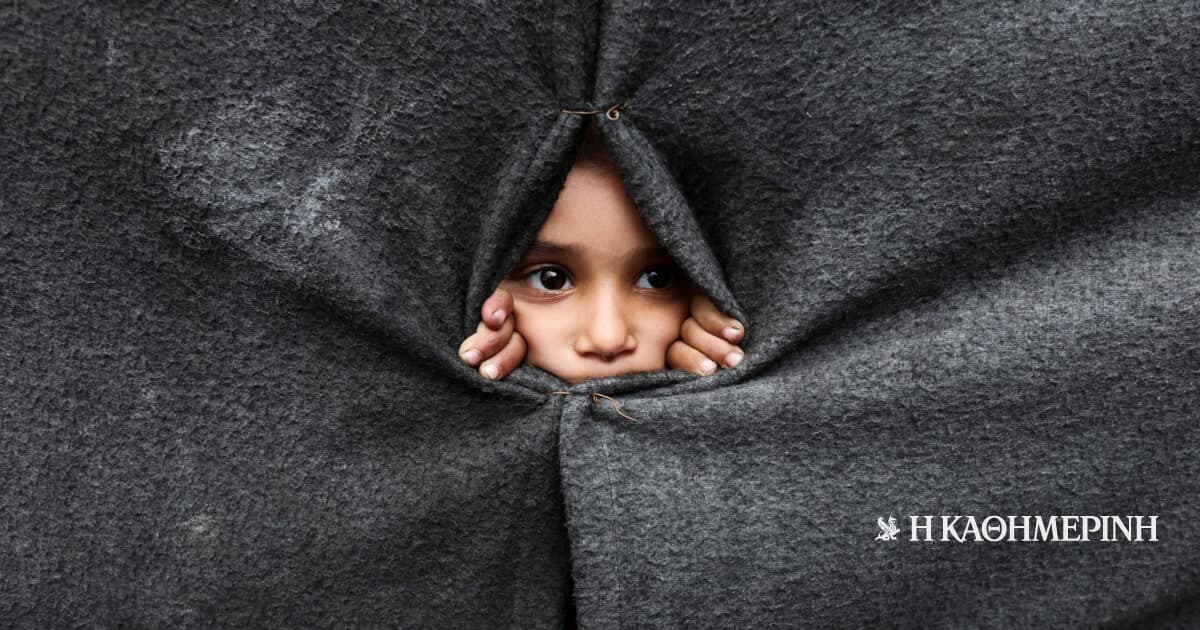
Seeing these children, who have seen all the faces of hell in two short years, dancing, laughing and singing, is like hearing all of civilized humanity singing the moving lyrics of Lefteris Papadopoulos : Defend the child/ Because if the child is saved/ There is hope.